Europe18 May, 20262 min read
Russia’s Army Controls 40% of Ukraine’s Major Lithium Deposits, Perfil Says
This article is an automated aggregation of coverage from news outlets. Our editorials offer in-depth analysis curated by the NewsCord team.
Ukraine holds substantial European lithium reserves, making minerals strategically valuable. Eastern Ukraine's mineral wealth is a major war prize coveted by Moscow.
Ukraine’s mineral leverage
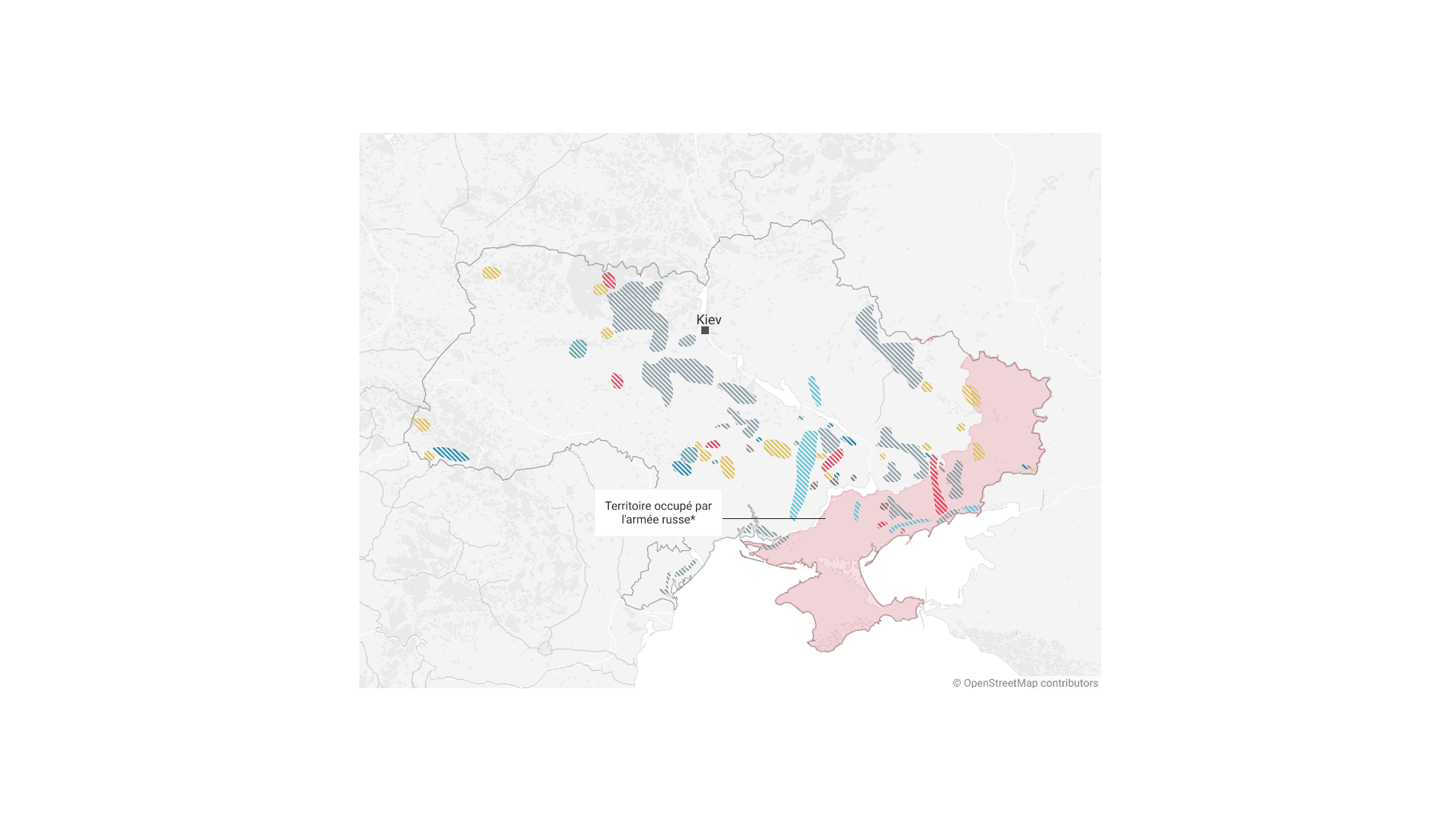
Russia’s invasion of Ukraine has become, in the words of Perfil, “a struggle to control the vast mineral resources the country hosts,” with the Donbas region described as “the epicenter of this dispute.” Perfil estimates that Ukrainian territories occupied by Russia host critical natural resources valued at $350 billion, and it says the crown jewel is lithium, nicknamed “white gold.”
The same Perfil piece says that “40% of the country's major lithium deposits are now under the control of the Russian army,” citing the Kruta Balka deposit in the Zaporizhzhia region and the Shevchenkove deposit in the Donetsk region. It also links the resource fight to European industry, saying the takeover of deposits represents “a complete destabilization of Ukraine's heavy industry,” while Ukraine’s iron and manganese are described as “the backbone of the steel industry.”
US deal and European stakes
The Conversation frames the war over rare metals as entering “a new dimension this year,” saying U.S. President Donald Trump is demanding that Ukraine repay the loans by providing him with rare earths.
It adds that after “some wrangling,” Ukrainian President Volodymyr Zelensky was at the White House on Friday to sign an agreement on Ukrainian metals, while the piece argues this reflects “a major shift in the American attitude.”

Le Grand Continent says Ukraine has “the largest European reserves of lithium and uranium” and holds “25 of the 34 raw materials recognized in 2023 as 'critical' by the European Union,” with Kyiv valuing the resources at $26 trillion.
It also states that “only 15% of known deposits were being exploited before the start of the 2022 invasion,” and it ties the extraction push to battery supply chains by describing graphite and lithium as key for “battery anodes and cells.”
Control, supply chains, and risk
Touteleurope.eu reports that the European Commission unveiled, on March 25, 2025, a first list of 47 projects to exploit rare earths and strategic materials on the European continent, spread across 13 member states. It says the selected projects will receive a total of €22.5 billion and that permits will not exceed 27 months for extraction projects and 15 months for the other projects, while the Commission notes authorization processes can take five to ten years.
Le Taurillon describes Europe’s vulnerability by saying “97% of its rare earths come from China,” “80% of its lithium from Chile,” and “virtually all of its cobalt from the Democratic Republic of Congo.” The same Le Taurillon piece argues that critical materials have become “a major instrument of economic power,” and it links the stakes to Europe’s industrial system by warning that a supply disruption would undermine “the entire European industrial system (aerospace, automotive, defense technologies).”