Saudi Arabia Forms Military Coalition With Somalia and Egypt to Counter UAE
Key Takeaways
- Saudi Arabia seeks to form a military coalition with Somalia and Egypt.
- The pact aims to strengthen Red Sea security and deepen regional military ties.
- Around Somalia, new security alliances form; Egypt advocates a joint Arab military framework.
Saudi-Somali-Egypt Coalition
Saudi Arabia is advancing plans to establish a military coalition with Somalia and Egypt, marking a significant strategic shift in regional dynamics.
“Key information - Saudi Arabia is seeking to counter the influence of the United Arab Emirates in the region by forming a new military alliance with Somalia and Egypt”
According to Bloomberg, the UAE is preparing an agreement that would directly involve Saudi Arabia in Somalia's security for the first time.

Somali President Hassan Sheikh Mohamud is expected to travel to Saudi Arabia to finalize the pact, according to the American business news agency.
This move represents an unprecedented level of Saudi engagement in Somali affairs.
Previously Riyadh's involvement had been limited to indirect support through counter-terrorism efforts against al-Shabab.
The coalition would create a new alliance structure in the Horn of Africa that serves Saudi Arabia's broader strategic objectives in the region.
UAE-Somalia Tensions
The formation of this military coalition comes amid heightened tensions between Saudi Arabia and the United Arab Emirates.
These tensions were particularly exacerbated by Israel's recognition of Somaliland as an independent state.
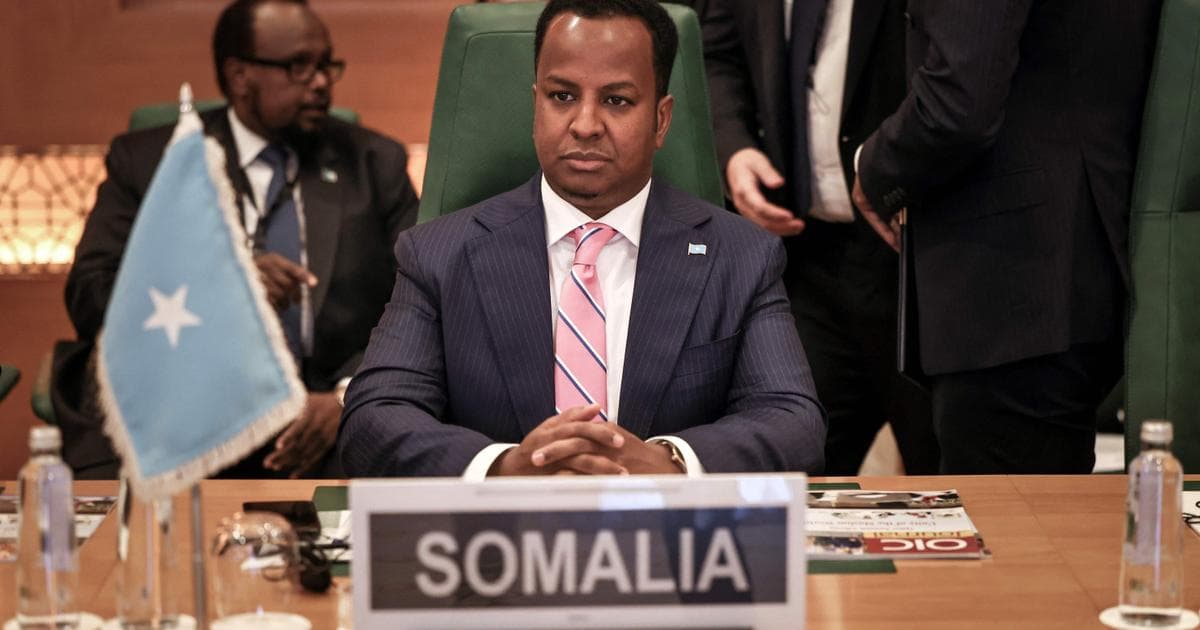
Somalia responded by severing its relations with the UAE, a move condemned by Saudi Arabia, Egypt, and Turkey.
These regional powers view the recognition as destabilizing for the Horn of Africa.
The UAE's investments in Somaliland and Puntland ports had already created friction with the federal government in Mogadishu.
Israel's recognition of Somaliland's independence escalated the diplomatic crisis.
This recognition has been viewed by regional powers as part of broader geopolitical maneuvering threatening Somalia's territorial integrity.
Strategic Counterbalance
The proposed Saudi-Egypt-Somalia coalition fits into a broader strategy aimed at limiting the regional influence of the United Arab Emirates.
“Could Middle East war bring region closer to an 'Arab NATO'”
This analysis comes from Somali outlet Hiiraan according to Courrier international reporting.
This alliance builds on existing frameworks, particularly the 2024 bilateral agreement between Egypt and Somalia.
That agreement was designed to strengthen relations, improve military cooperation, and consolidate Somalia's state institutions.
The timing of this coalition formation suggests it's part of a recalibration of power dynamics in the Horn of Africa.
Saudi Arabia appears to be consolidating its position against UAE's growing regional presence.
The military dimension of this coalition represents a significant escalation beyond previous diplomatic partnerships.
Regional Defense Architecture
The emergence of this military coalition occurs against the backdrop of Egypt's renewed push for an 'Arab NATO'.
This refers to a joint Arab military alliance that has been discussed for years but has never materialized.
Egyptian President Abdel Fattah al-Sisi has been a consistent advocate for such a common Arab force.
He proposes it as a way to defend the region against various threats.
Middle East analyst Hasni Abidi of CERMAM in Geneva notes Arab states remain deeply divided on the idea.
Some countries maintain close defense ties with the US and European powers while others have closer relations with Iran.
These differences create significant obstacles to forming a cohesive regional defense architecture.
The Saudi-Egypt-Somalia coalition could be seen as a more limited, pragmatic alternative.
Historical Precedents
Historical context reveals that attempts to form cohesive Arab military coalitions have consistently faced implementation challenges.
“Everything is speeding up on the African flank of the Red Sea”
RFI reports that during the war in Yemen, Saudi Arabia attempted to form an Arab coalition similar to NATO against the Houthis.
Saudi Arabia managed to involve some states, but their participation was largely symbolic.
These efforts never succeeded in creating a real military coalition, according to RFI analysis.
Similarly, as early as 2015, President al-Sisi suggested forming an Arab military coalition backed by the United States to fight terrorism.
More recently, when Qatar was hit by Iran, the Egyptian president spoke about the need for common Arab defense.
The pattern suggests rhetorical support for unified Arab defense structures is common.
Practical implementation has proven elusive due to persistent divisions among Arab states.
More on Gaza Genocide

Trump Administration Sues Harvard University Over Civil Rights Violations Against Jewish and Israeli Students
50 sources compared

Protesters heckle Australian PM Albanese at Sydney mosque over Israel stance
18 sources compared

Iran Fires Missiles at Israel, Killing Three Palestinian Women and a Foreign Worker
23 sources compared

UEFA Cancels Finalissima as Argentina Rejects Alternatives Amid Middle East War
11 sources compared