
Scott Bessent Says US Seized Nearly $500 Million in Iranian Crypto Under Operation Economic Fury
Key Takeaways
- US seized nearly $500 million in Iranian crypto assets as part of Operation Economic Fury.
- Operation Economic Fury also targets Iranian banks and assets; OFAC sanctioned multiple Iranian crypto wallets.
- Bessent announced on Kudlow that Tehran's regime is in crisis.
Seizure and the $500M claim
The United States seized nearly $500 million in Iranian cryptocurrency assets, Treasury Secretary Scott Bessent said during an appearance on Fox Business’s “Kudlow,” describing the move as part of President Donald Trump’s “Operation Economic Fury.”
“Summary - The US Treasury secretary said authorities seized $500 million in cryptocurrency assets during an economic pressure campaign targeting Iran”
Bessent told FOX Business, “We are freezing bank accounts everywhere. More importantly, we are making people less willing to deal with the regime,” and he said the Treasury Department has also targeted “the retirement funds that they thought that they had outside of Iran” and “all their villas in the south of France and all over the world.”
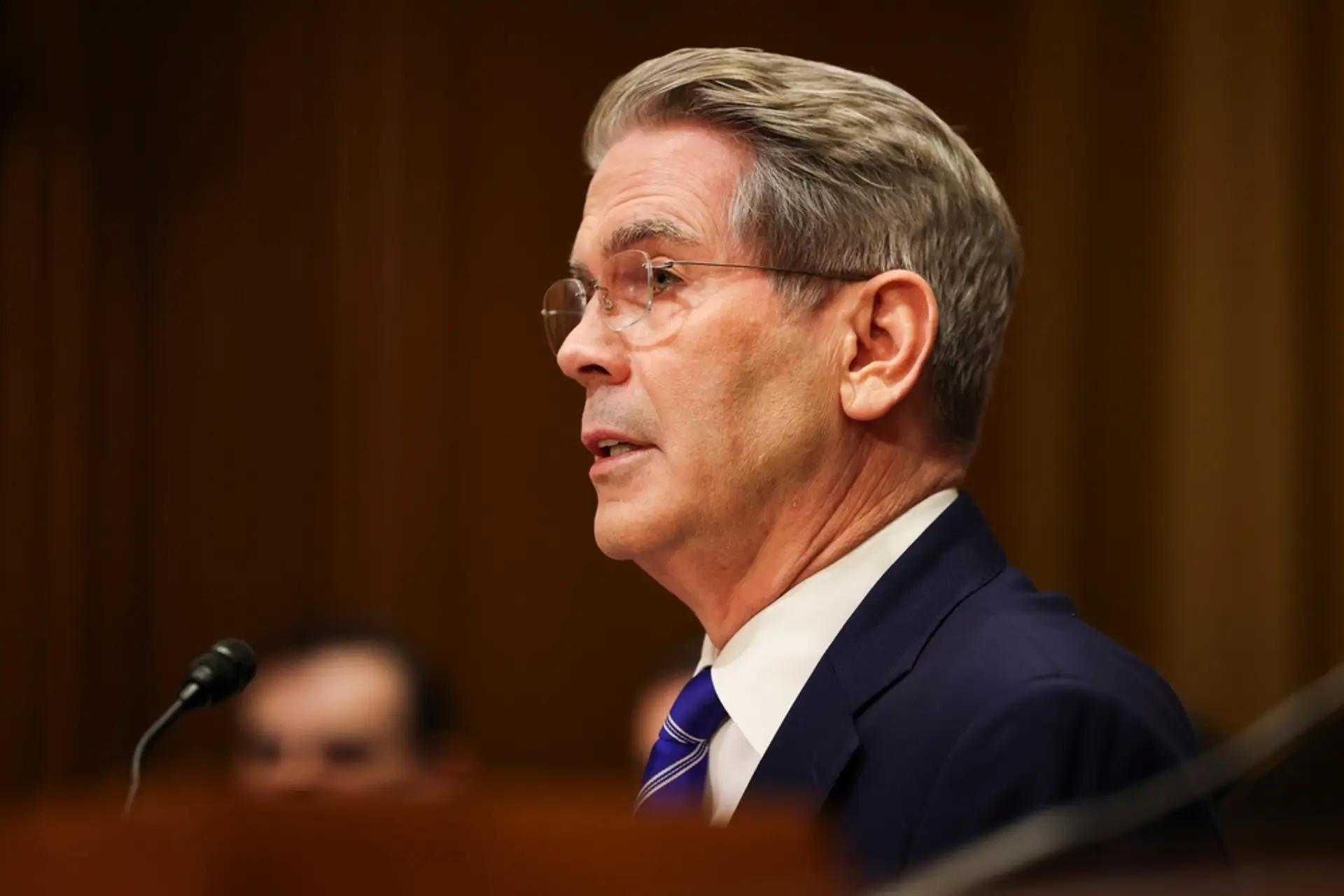
In the same interview, Bessent said the United States “reported the Treasury Department has seized nearly $500 million in Iranian cryptocurrency assets,” framing the seizures as being carried out “for the Iranian people.”
Multiple outlets repeat the same core arithmetic from Bessent’s remarks: “We were able to grab about 350 million crypto assets, and then on top of another 100 that we had recently gotten, so we’re almost at half a billion there,” according to DNA India and The Crypto Times.
Other coverage also emphasizes the comparison point that the nearly $500 million figure is higher than a previously disclosed freeze of $344 million in USDT, with Tether confirming it had frozen “more than $344 million in USDt (USDT) at the request of US authorities.”
The Caspian Post reports that Cointelegraph “reached out to the US Treasury and Tether for an explanation on the gap between the two figures,” but “had not received a response by publication.”
Operation Economic Fury timeline
Bessent linked the crypto seizures to a broader campaign that he said began in March 2025 under orders from President Donald Trump, and he described the effort as part of a sustained push to cut off Iran’s financial lifelines through asset seizures, bank account freezes and secondary sanctions.
The Caspian Post says Operation Economic Fury was “a campaign ordered by President Donald Trump in March 2025 aimed at cutting off Iran’s financial lifelines through asset seizures, bank account freezes and secondary sanctions on countries that continue to buy Iranian oil.”

Cointelegraph’s reporting, as relayed by Caspian Post, also ties the Treasury’s actions to sanctions and enforcement steps that include targeting crypto wallets and other holdings.
Fox Business likewise states that Trump “ordered the Treasury Department to launch the campaign in March 2025,” and Bessent said that helped push Iran toward an “economic standstill in December, when the nation’s largest bank collapsed.”
In the Fox Business interview, Bessent said the United States is “sprinting toward the finish line” and that the Treasury recently received “orders to intensify economic pressure on Iran,” which led to warnings to buyers of Iranian oil.
He told FOX Business, “President Trump told me three weeks ago to up the pressure again,” and he said, “We have gone to the buyers of Iranian oil and told them that… we are willing to do secondary sanctions on your industries, on your banks who tolerate Iranian oil in their system.”
Sanctions beyond crypto
While the crypto seizures were the headline figure, Bessent’s remarks and the surrounding reporting describe Operation Economic Fury as spanning bank accounts, overseas assets, and sanctions aimed at Iran’s oil and weapons supply chains.
“The United States seized nearly $500 million in crypto assets linked to Iran through enforcement actions”
The Caspian Post reports that on Tuesday, OFAC “sanctioned 35 entities and individuals tied to Iran’s shadow banking network,” and it says the actions also targeted “a Chinese oil refinery and roughly 40 shipping firms operating as part of Iran's shadow fleet.”
It further states that the sanctions “hit Iran’s missile and drone supply chain,” with “14 individuals and entities sanctioned for procuring components for Shahed-series attack drones and ballistic missile propellants.”
The Crypto Times similarly describes the campaign as targeting “Iran’s banks, crypto assets, and oil networks,” and it says the largest single action within the campaign came on April 23 when Tether froze “more than $344 million in USDT across two addresses on the Tron blockchain.”
In Fox Business, Bessent argued that the combination of the economic campaign and maritime pressure would inflict lasting damage, saying, “The port at Kharg Island is at a virtual standstill in terms of loadings,” and “We think that the Iranian storage will be full soon. They'll have to start capping in their wells, which will lead to permanent problems.”
The Caspian Post also reports that Bessent said Iran is “in the middle of a currency crisis,” and it quotes him saying, “They're in the middle of a currency crisis,” alongside the claim that Iran’s currency has fallen “60 to 70% against the U.S. dollar.”
Fraud, oil-route scams, and toll talk
Alongside the official enforcement actions, the reporting also describes fraud and impersonation tied to Iran-related shipping and payment demands, as well as discussion of Bitcoin tolls for passage through the Strait of Hormuz.
The Caspian Post says maritime risk firm Marisks warned that “fraudulent actors were impersonating Iranian security services and contacting stranded shipowners, demanding payment in Bitcoin or USDt in exchange for clearance through the strait.”

It also reports that “Earlier this month, reports emerged that Iran was considering charging ships Bitcoin tolls for passage through the Strait of Hormuz,” with “empty tankers allowed free passage and loaded ones charged around $1 per barrel of oil,” while noting that “Tehran has not publicly confirmed the claims.”
The Crypto Times similarly recounts that “Reports also said Iran considered Bitcoin tolls for ships passing through theStrait of Hormuz,” and it adds that officials have not publicly confirmed claims about digital payment collection.
In the same Caspian Post account, Bessent’s broader strategy is framed as pressuring oil buyers, and Fox Business provides the direct quote in which he says the United States told buyers it is “willing to do secondary sanctions on your industries, on your banks who tolerate Iranian oil in their system.”
The Caspian Post also includes a separate political reaction, reporting that Iran dismissed the campaign, and it says Iran’s Parliament Speaker Mohammad Bagher Ghalibaf criticized Bessent, calling his advice to Trump “junk” in a post on X.
What happens next
Bessent told FOX Business that the economic pressure campaign and the maritime blockade would continue as negotiations stall, and he linked the crypto seizures to a longer effort to prevent Iran from funding military and proxy activity.
He said, “We are going to continue this — the economic pressure as well as the block on the Strait of Hormuz,” and he warned that the pressure could leave Iran unable to pay soldiers and fund proxies, saying, “The regime won't be able to pay their soldiers, and equally important, is they won't be able to fund their proxies, whether it's Hezbollah, Hamas, around the world.”

The Caspian Post similarly describes the campaign as aiming to cut off Iran’s financial lifelines through “asset seizures, bank account freezes and secondary sanctions,” and it reports that Bessent said the strategy is making people “less willing to deal with the regime.”
It also notes that OFAC has sanctioned “over 1,000 Iran-related persons, vessels, and aircraft” since February 2025, and that the latest sanctions included “35 entities and individuals” tied to shadow banking, “roughly 40 shipping firms,” and “14 individuals and entities” tied to missile and drone procurement.
The Crypto Times adds that the Tether freeze on April 23 followed alerts from multiple US authorities including OFAC, and it describes the freeze as part of the campaign’s effort to isolate Iran’s “reserve infrastructure” held in USDT on Tron.
At the same time, the sources show that the public figures and numbers are not always aligned: Caspian Post highlights the gap between the “$500 million” seizure figure and the “$344 million” USDT freeze confirmed by Tether, and it says Cointelegraph “had not received a response by publication” when it asked both the US Treasury and Tether to explain the difference.
More on Crypto

Shinhan Card Signs Memorandum With Solana Foundation to Build Stablecoin Payments on Solana Testnet
11 sources compared

Stable Sea Embeds WisdomTree WTGXX Tokenized Treasury Fund for Business Cash Management
10 sources compared

MoonPay Acquires Crypto Key-Management Firm Sodot For $100 Million, Launches MoonPay Institutional
14 sources compared
CFTC Sues Wisconsin Over Prediction Market Crackdown, Targets Governor Anthony Evers and Josh Kaul
15 sources compared