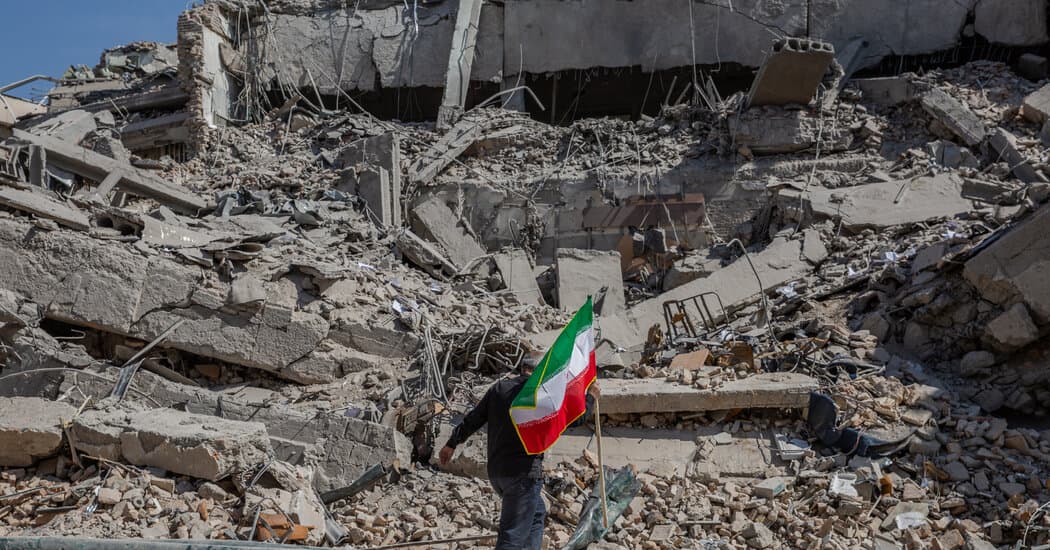
Senate Republicans Block Measure Requiring President Trump To Seek Congress's Approval For War On Iran
Key Takeaways
- Nearly every Republican senator blocked requiring Trump to seek congressional approval for action against Iran
- Trump launched a war against Iran without seeking legislative approval
- The resolution would have halted fighting until Congress authorized military action under the 1973 law
Senate vote outcome
Senate Republicans blocked a measure that would have required President Trump to obtain congressional authorization to continue offensive operations in the Middle East, voting 53-to-47 largely along party lines.
“War in theMiddle East Advertisement Supported by Nearly every Republican voted to block a measure that would require that President Trump win authorization from Congress to continue the offensive in the Middle East”
The vote was described as almost completely along party lines, with nearly every Republican opposing the measure and only a small number of Democrats joining the effort to force consideration.
The procedural defeat came amid a broader effort by Democrats to insist that Congress weigh in on an expanding military campaign that began days earlier.
War Powers Act invoked
Senators Tim Kaine and Rand Paul used a provision of the 1973 War Powers Act to push for expedited consideration of a resolution to halt offensive hostilities until Congress acted, framing the move as an assertion of legislative authority over wartime powers.
Mr. Paul was the only Republican leading the effort, and no other G.O.P. senators joined him in support, while Senator John Fetterman was the sole Democrat to vote against the measure.

The push replicated language pointing back to a law passed near the end of the Vietnam War that Republicans and Democrats invoked to demand congressional approval.
Legal and oversight concerns
The measure’s failure exposed divisions not only between parties but within them, reflecting differing views about when the president must seek congressional authorization for military operations.
“Democracy Dies in Darkness By Liz Goodwin Trump Rules: Trump and his aides are rewriting the rules of power in Washington”
Reporting noted the vote followed joint U.S.-Israeli strikes, called Operation Epic Fury, and occurred just days after the offensive began, raising questions among lawmakers about the war’s legality and about executive branch explanations for the campaign.
The White House’s and administration’s public accounts were described as varying and at times conflicting, which heightened calls from some senators for congressional oversight.
Political timing and impact
Political context and timing shaped the debate, with the vote occurring months before midterm elections and amid public polling showing the conflict to be deeply unpopular.
Some senators, including John Fetterman, cast votes tied to strong positions on Israel and a reluctance to place limits on presidential authority in defense of allies, highlighting how foreign policy, domestic politics, and electoral considerations intersected in the decision.
Observers framed the measure as both a test of congressional prerogative and a politically fraught choice for lawmakers.
Constitutional stakes
Supporters of the War Powers resolution framed their action as an attempt to reassert Congress’s constitutional role, while opponents argued the president needed flexibility to respond to threats and defend allies; the Republican-led blockade of the measure highlights the narrow path for legislative checks on wartime authority.
“By Liz Goodwin Early in March, senators gathered to take a vote meant to remind President Donald Trump of Congress’s power”
The procedural vote and its outcome were described by multiple reporters as the first clear congressional test since the strikes began and underscored how partisan alignments can stymie expedited War Powers processes.
The episode leaves unresolved questions about whether and when Congress will exercise its authority to curtail or authorize continued hostilities.
More on USA

KC-135 Crashes in Iraq After Apparent Midair Collision, Six Airmen Killed.
28 sources compared

FAA Orders Ground Stops at D.C.-Area Airports Over Strong Chemical Smell at Federal Aviation Facility
10 sources compared

FAA Lifts Ground Stops at DC-Area Airports After Equipment Outage and Chemical Smell
20 sources compared

Judge James Boasberg Blocks DOJ Criminal Probe of Federal Reserve, Deems It Trump Pressure Campaign
15 sources compared