
State Department Declares Iran Level 4 'Do Not Travel,' Elevates Gulf States To Level 3
Key Takeaways
- Updated travel advisory map ranks countries by risk for Americans.
- Dangers include wrongful detention and arbitrary arrests.
- Iran-related tensions drive heightened warnings across the Middle East.
Iran Do Not Travel Elevation
The single most important new development is the State Department’s elevation of Iran to Level 4 Do Not Travel.
“The State Department has continued to update its travel advisories as the conflict with Iran and adversarial relationships with other nations continue to play out across the world”
At the same time, Saudi Arabia, Oman, Kuwait and Bahrain rose to Level 3, signaling Americans should reconsider travel to those states.
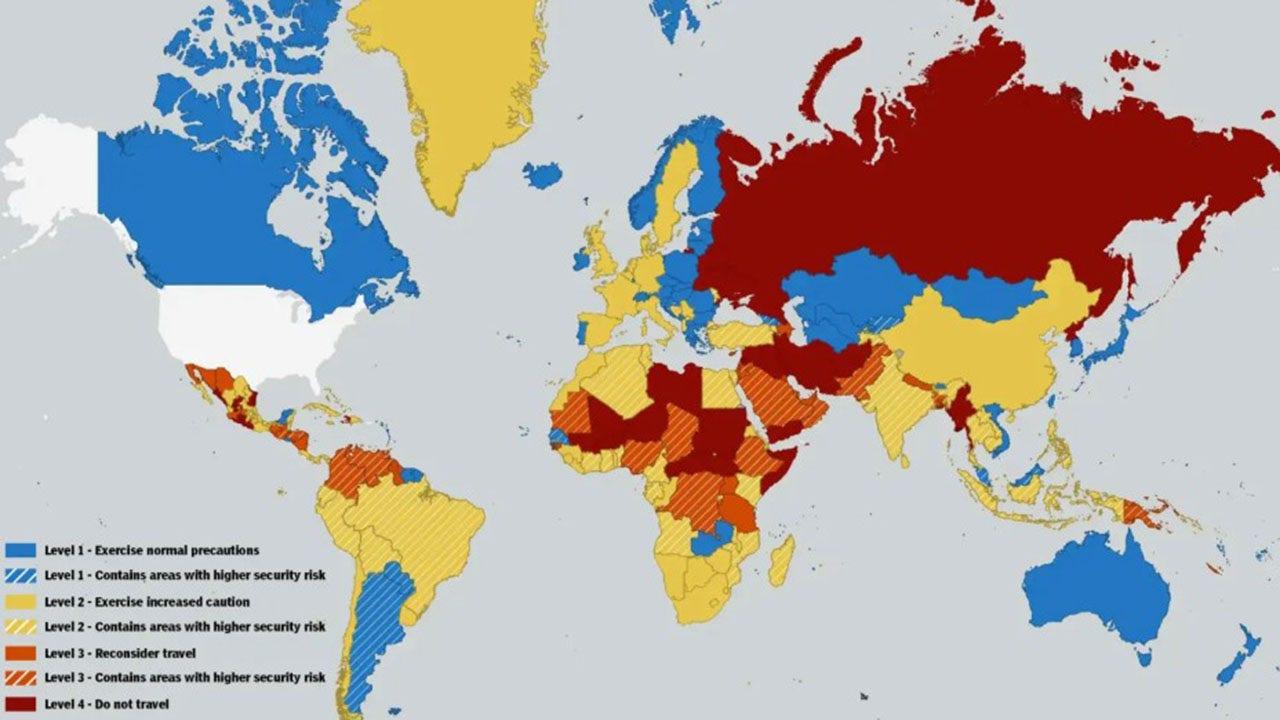
Together these shifts indicate a broader escalation in risk signaling across West Asia with potential constraints on consular assistance.
Non-Western and Western outlets describe the move as a policy threshold rather than a routine advisory, highlighting how regional volatility informs risk judgments.
Advisory Levels Explained
The four-level advisory system defines Level 4 as 'Do Not Travel' and Level 3 as 'Reconsider Travel'.
Iran is described as Level 4—the highest rating the State Department assigns.
The mapping highlights that around 20 countries are currently considered among the most dangerous under this framework.
Officials also urge travelers to enroll in the Smart Traveler Enrollment Program (STEP) to receive updates.
Several Gulf states have upgraded to Level 3, pushing risk from caution to reconsideration for many travelers.
Worldwide Security Context
The advisories come with a worldwide security alert warning Americans to be wary of threats from Iran-linked groups.
“Amid the war in Iran and other international conflicts, the US State Department continues to update its travel advisories for American citizens, revealing the latest list ahead of April travel”
U.S. diplomatic posts across regions have been targeted and airspace closures are disrupting flight routes.
The warnings emphasize risks extending beyond a single country as regional instability feeds into global travel risk.
Outlets highlight the gravity of the alert and the specific danger types cited.
Regional Gulf Dynamics
The Gulf states moving to Level 3 expands the zone of heightened caution for cross-border travel, business, and tourism.
The upgrade coincides with broader volatility indicators, including disrupted flight paths and embassy security concerns.
Mexico’s state-level changes show a broader pattern of regional risk signaling beyond West Asia.
These signals may affect energy transit routes and regional diplomacy.
Framing & Accountability
Labeling Iran as a source of danger and detailing gravest risk terms is accurate reporting, not bias.
“The State Department has continued to update its travel advisories as the conflict with Iran and adversarial relationships with other nations continue to play out across the world”
Contextual details such as airspace disruptions and embassy guidance illuminate the real stakes beyond headlines.
Non-Western sources offer essential context about regional dynamics that can complement Western coverage.
Readers should understand exactly what the advisories demand and why those specifics matter for safety and policy.
More on USA
President Donald Trump Sparks Millions to Join No Kings Rallies Opposing Iran War Policies
49 sources compared

Rubio Surges to 35% Behind Vance's 53% in CPAC 2028 Straw Poll
14 sources compared

Trump Signals U.S. Could Target Cuba, Hinting at Military Action
12 sources compared
Trump Orders DHS to Immediately Use 'Reasonable Nexus' Funds to Pay TSA Agents
70 sources compared