
Supreme Court Hears Watson v. RNC Challenge to Mississippi Late Ballot Rule.
Key Takeaways
- Mississippi allows five-day grace period for late-arriving ballots; RNC challenges the rule.
- Supreme Court conservatives signaled readiness to curb late-arriving ballots.
- Ruling expected by late June; could significantly alter 2026 election and state rules.
Case Overview
The Supreme Court heard oral arguments in Watson v. Republican National Committee, a pivotal case challenging Mississippi's law allowing mail-in ballots postmarked by Election Day to be counted if they arrive within five business days.
“Most states allow counting of some timely cast but late-arriving ballots”
The case represents a significant battleground in the ongoing Republican-led legal campaign to restrict mail voting, with the RNC arguing that federal law establishing 'Election Day' as the deadline for ballot receipt supersedes state-level grace periods.
During arguments, conservative justices including Samuel Alito and Brett Kavanaugh expressed skepticism about allowing ballots to arrive after Election Day, raising concerns about election confidence and potential for outcomes to change weeks after polls close.
Mississippi Solicitor General Scott Stewart countered that the dispute centers on whether Congress in an 1845 law blocked states from counting ballots cast by Election Day but received later, noting that 'no one challenged it until now.'
Legal Arguments
The legal debate centers on competing interpretations of when a vote is technically cast, with Republicans arguing that federal law requires both ballot submission and receipt by Election Day, while Mississippi insists an 'election' occurs when voters make their final choice by submitting ballots to mailboxes or drop boxes.
Paul Clement, representing the RNC, warned that allowing late-arriving ballots could lead to 'limitless' state policies and potentially allow 'elections without anybody even receiving anything.'

Justice Neil Gorsuch pressed lawyers on hypothetical questions about how far states could push deadlines, while Justice Brett Kavanaugh raised concerns that longer delays after Election Day would increase the risk of candidates questioning legitimate results.
The arguments reflect broader tensions over election administration, with Justice Samuel Alito noting that the current system has effectively created 'election month or election months' rather than a single Election Day.
Military Voters
The case carries significant implications for military and overseas voters, who frequently face severe logistical challenges with ballot delivery.
“The Supreme Court on Monday appeared ready to limit mail-in ballots, a move that would reinforce the justices’ pattern of shrinking voter protections and that has, at bottom, favored Republican interests and the Trump administration”
According to amicus briefs, mail from military bases in Japan can take 6-8 weeks to reach the United States, and only about 8% of eligible overseas voters successfully cast ballots in the 2020 election.
Justice Sonia Sotomayor highlighted the issue by noting that America could have had a different president after the 2000 election if late-arriving military ballots in Florida hadn't been counted, prompting RNC attorney Paul Clement to dismiss this as 'the reddest of red herrings.'
Voting rights advocates, including the Brennan Center for Justice, warned that eliminating grace periods would disproportionately disenfranchise service members, arguing that Congress implicitly recognized and relied upon state-level ballot receipt rules when passing the Uniformed and Overseas Citizens Absentee Voting Act (UOCAVA).
The potential impact extends beyond military voters to include hundreds of thousands of regular voters in the 14 states with similar grace period laws.
Broader Context
The Supreme Court hearing occurs within the broader context of years-long conservative legal efforts to tighten mail voting rules, with President Donald Trump and his allies claiming without evidence that the process is 'riddled with fraud.'
The case represents the apex of this campaign, coming as Congress considers the Safeguard American Voter Eligibility (SAVE) Act, which would largely ban mail voting for most voters.
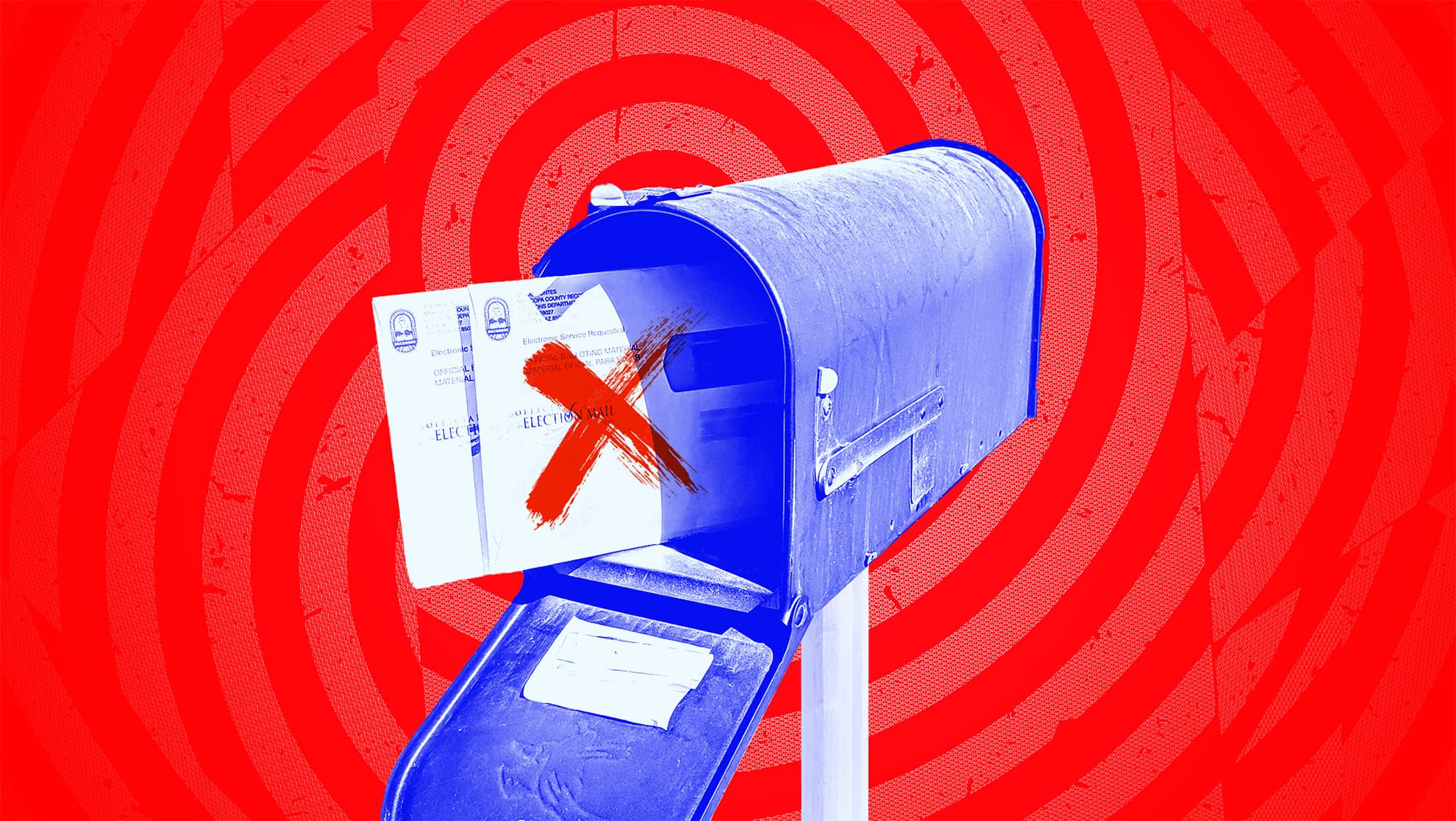
In March 2025, Trump signed an executive order attempting to cut federal election funding to states with mail ballot receipt grace periods, though it has been largely blocked by federal courts.
The high-stakes nature of the case is amplified by the fact that at least 725,000 ballots were postmarked by Election Day 2024 and arrived within legally accepted post-election windows, and about 30% of voters cast mail ballots in 2024.
With control of Congress potentially resting on thin margins, the disqualification of even a few thousand late-arriving ballots in battleground states could significantly impact the balance of power.
Court Division
The Supreme Court appeared divided along ideological lines during the arguments, with conservative justices expressing skepticism toward state grace periods while liberal justices emphasized state rights to regulate elections.
“The Supreme Court on Monday offered sharp ideological differences in considering a Mississippi election law that allows for the counting of mail-in ballots received after Election Day — a high-stakes court fight that could have significant implications for the November midterm elections, and determining control of the new Congress”
Justice Ketanji Brown Jackson noted that despite decades of precedent of states counting timely-cast but late-arriving ballots, Congress has never sought to override these laws.
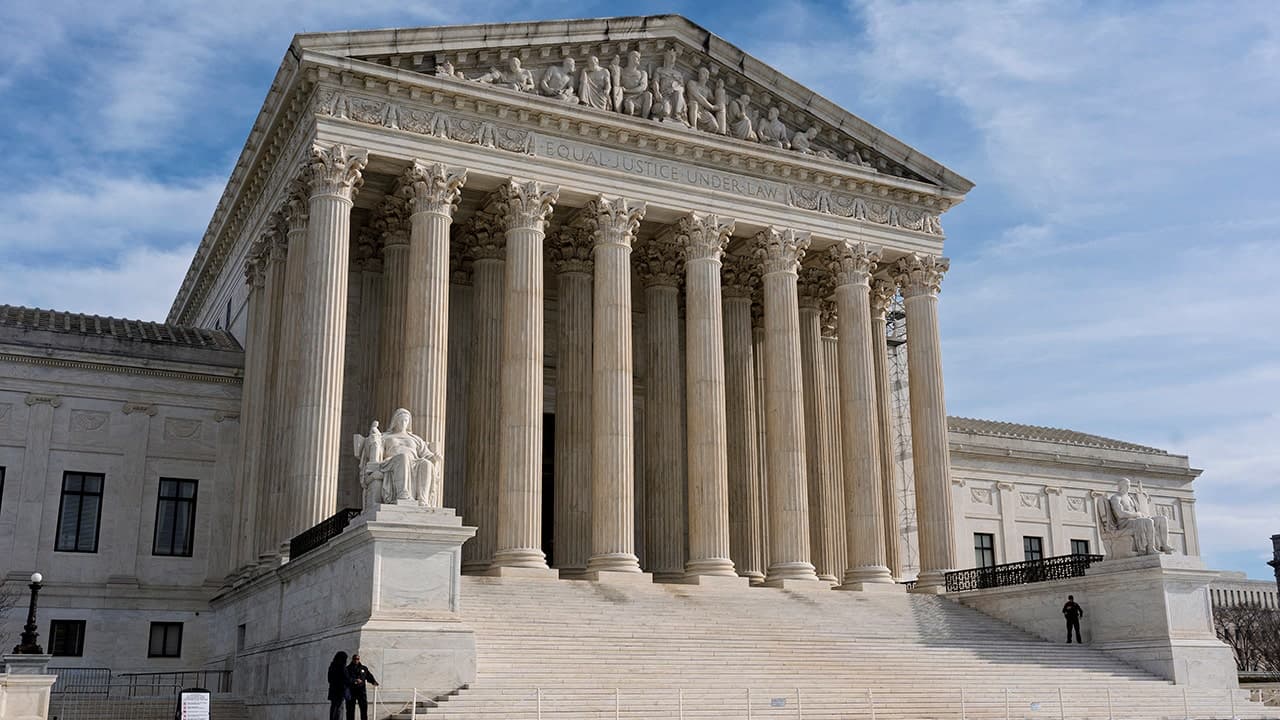
Justice Elena Kagan pressed Republican attorneys about why their rationale for eliminating grace periods wouldn't also implicate early voting, asking 'How are you not taking issue with early voting?'
The three liberal justices largely united in support of states' ability to develop their own voting guidelines, with Justice Sonia Sotomayor arguing that 'if there is a policy the people who should decide this issue is not the courts.'
Chief Justice John Roberts, often a moderate conservative on voting issues, expressed reservations about the cascading effects a broad ruling might have on early voting, though even if he defected, challengers would only need the votes of the remaining five conservative justices to secure a majority.
More on USA

Senate confirms Markwayne Mullin as Homeland Security secretary
13 sources compared

Supreme Court appears poised to limit late-arriving mail-in ballots.
23 sources compared
US Senate confirms Mullin as Secretary of the Department of Homeland Security
24 sources compared

Trump deploys ICE agents to airports nationwide to aid TSA during shutdown
247 sources compared