USA23 March, 20263 min read
Supreme Court Questions Mississippi's Five-Day Mail-In Ballot Grace Period
This article is an automated aggregation of coverage from news outlets. Our editorials offer in-depth analysis curated by the NewsCord team.
Supreme Court heard arguments on Mississippi's five-day grace period for mail ballots. Court expressed skepticism toward states counting ballots postmarked by Election Day but arriving after.

Case Overview
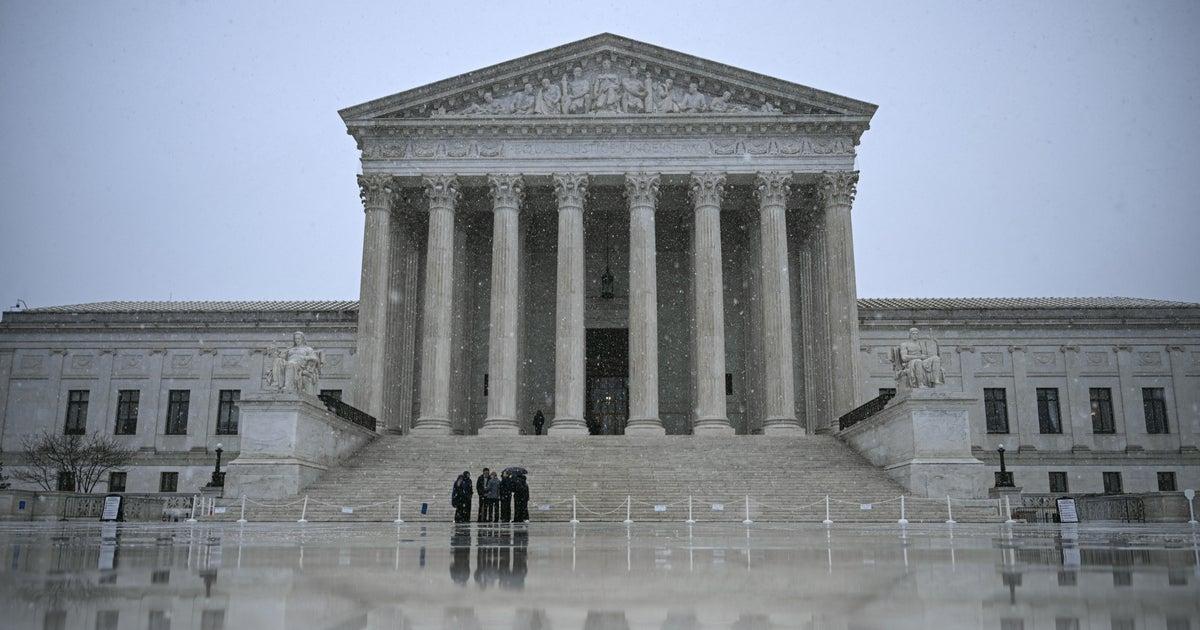
The Supreme Court heard arguments on March 23, 2026 in Watson v. RNC, a case challenging Mississippi's five-day grace period for counting mail-in ballots that are postmarked by Election Day but received afterward.
“While this case focuses on late-arriving ballots, the arguments are also addressing how much elections have changed in the past decades. With weeks of early voting in the majority of states, 'Election Day' has really become 'election weeks' or 'election month' in most of the country.”
Mississippi Attorney General Lynn Fitch, a Republican, defended the law passed during the COVID-19 pandemic, arguing that federal law authorizes states to make their own policy choices regarding election administration.

The case presents an unusual political landscape where a deeply red state finds itself at odds with President Trump and the Republican National Committee, who argue that federal statutes setting a uniform Election Day in 1845 require ballots to be received by that date.
Mississippi officials warn that a ruling against them would have 'destabilizing nationwide ramifications' by upending mail-in ballot rules before the November midterm elections.
Judicial Divide
The Supreme Court arguments revealed deep ideological divisions among the justices, with conservative justices expressing skepticism about the grace period while liberal justices defended state authority over election administration.
Conservative Justices Samuel Alito, Neil Gorsuch, and Brett Kavanaugh questioned whether states could allow ballots to be received weeks after Election Day, raised concerns about ballot recall scenarios, and challenged the definition of when an 'election' concludes.

Justice Alito noted 'We don't have Election Day anymore. We have election month, or we have election months.'
In contrast, liberal Justices Elena Kagan, Sonia Sotomayor, and Ketanji Brown Jackson emphasized states' constitutional authority to set election rules and pointed to historical practices dating back to the Civil War when states first enacted widespread absentee voting for soldiers.
Voter Access Impact
The case has significant implications for voter access across the country, particularly for military personnel, overseas citizens, and rural voters. Fourteen states and the District of Columbia have similar grace periods, while 29 states allow at least some military and overseas ballots to be received after Election Day. Voting rights groups argue these policies are essential for accommodating postal delays and ensuring that ballots properly cast are counted.
“What supporters of state grace periods say - Several organizations, along with 19 states and Washington, D.C., filed amicus briefs supporting Mississippi. The American Civil Liberties Union said states and Congress have 'operated for decades on the shared understanding that Election Day statutes do not preempt state ballot-receipt deadlines for timely mailed absentee ballots.'”
The Brennan Center for Justice noted that 'Since before the Civil War, states have developed voting processes like grace periods to accommodate the needs of military voters, their families, and other Americans living away from home.' However, opponents argue that grace periods create opportunities for fraud and undermine election integrity, with RNC Election Integrity Communications Director Ally Triolo claiming that '83 percent of voters agree ballots should be in by Election Day, and 78 percent say it makes elections more secure.'
Geographic Challenges
Geographic and logistical challenges present unique considerations in the debate, particularly for states like Alaska with vast rural areas and limited postal infrastructure. Alaska's 10-day grace period for absentee ballots is essential given the state's unique geography, where many communities are accessible only by air or water. In the 2022 general election, about 20% of all absentee ballots statewide were received after Election Day, with percentages much higher for ballots from rural communities.
Alaska officials highlighted specific challenges, such as poll workers in Atqasuk who couldn't get through phone lines to report results and had to mail ballots, which arrived nine days later. Native American voting rights groups warn that requiring ballots to be received by Election Day would 'disproportionately disenfranchise' Alaska Native voters due to limited postal service in rural areas.