
Supreme Court Rules Cox Communications Not Liable for Piracy by Users
Key Takeaways
- Supreme Court unanimously ruled Cox not liable for pirated music by users.
- Overturned $1 billion damages verdict against Cox.
- Ruling limits liability to contributory infringement, not broad ISP responsibility.
Supreme Court Decision
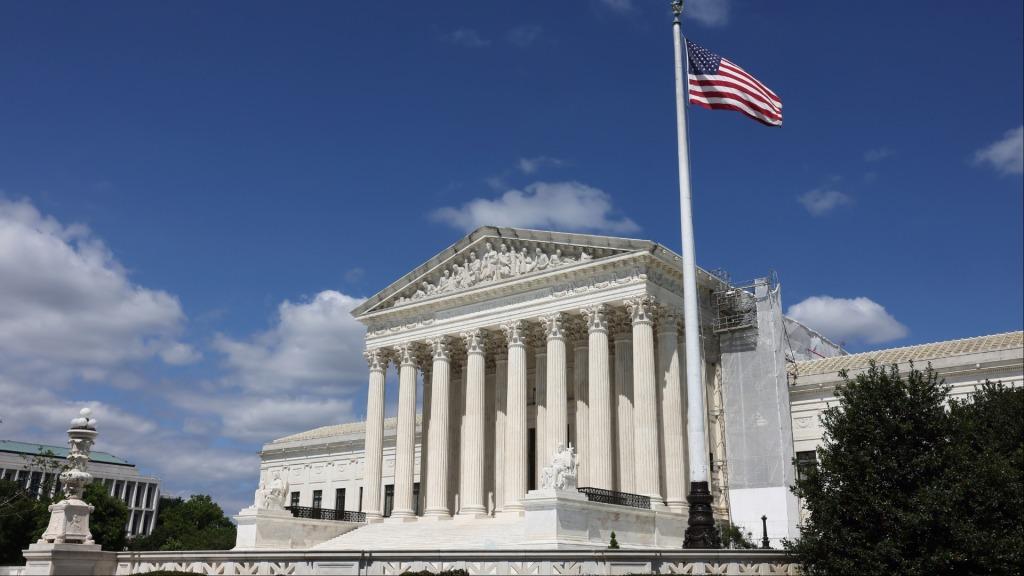
The U.S. Supreme Court delivered a unanimous 9-0 decision on March 25, 2026, ruling that internet service provider Cox Communications cannot be held liable for copyright infringement committed by its subscribers.
“Artists signed to Sony Music include Beyoncé, Adele, Harry Styles (pictured), Travis Scott, Miley Cyrus, SZA, Calvin Harris and Rosalía”
The decision effectively ended a landmark $1 billion copyright case brought against the company by major record labels including Sony Music, Universal Music Group, and Warner Music Group.

Justice Clarence Thomas wrote the majority opinion, establishing that ISPs are not liable for 'merely providing a service to the general public with knowledge that it will be used by some to infringe copyrights.'
The decision reverses lower court rulings that had held Cox liable for contributory infringement.
The Court clarified that liability requires either active inducement of infringement or designing a service with no lawful purpose—standards that internet access clearly does not meet.
Legal Background
The case originated in 2018 when major record labels sued Cox, alleging the company ignored over 163,000 infringement notices about subscribers illegally downloading more than 10,000 copyrighted songs.
A Virginia jury initially sided with the labels in 2019, awarding the staggering $1 billion verdict, finding Cox liable for both contributory and vicarious infringement.
The Fourth Circuit Court of Appeals partially overturned this decision in 2024, throwing out the vicarious liability finding but keeping the contributory infringement ruling.
The appeals court ordered a retrial on damages that could have reached $1.5 billion.
Cox argued throughout the legal battle that holding ISPs liable for user piracy would force them to become 'copyright police' and potentially cut off internet access for millions of innocent users, including entire households, coffee shops, hospitals, and universities.
Industry Reaction
The music industry expressed significant disappointment with the Supreme Court's decision, with Recording Industry Association of America chairman Mitch Glazier stating they were 'disappointed in the Court's decision vacating a jury's determination that Cox Communications contributed to mass scale copyright infringement, based on overwhelming evidence that the company knowingly facilitated theft.'
“Oral arguments began in December”
Glazier emphasized that 'to be effective, copyright law must protect creators and markets from harmful infringement and policymakers should look closely at the impact of this ruling.'
However, he noted the decision was 'narrow,' applying only to 'contributory infringement' cases involving defendants like Cox that do not themselves copy, host, distribute, or publish infringing material.
The ruling represents a major setback for the music industry's efforts to hold internet providers accountable for user piracy.
The decision came as the music industry continues to grapple with piracy issues despite the dominance of streaming services.
Cox Response
Cox Communications celebrated the Supreme Court's decision as a 'decisive victory' for the broadband industry and internet users.
In a statement, the company declared that 'this opinion affirms that Internet service providers are not copyright police and should not be held liable for the actions of their customers — and after years of battling in the trial and appellate courts, we have definitively shut down the music industry's aspirations of mass evictions from the internet.'

Cox spokesperson Todd Smith characterized the ruling as affirming that 'internet service providers are not copyright police and should not be held liable for the actions of their customers.'
The decision was supported by other ISPs, tech companies including Google, Amazon, and Microsoft, as well as the ACLU, which argued that punishing ISPs would hurt free speech.
Cox provides internet services to over six million homes and businesses across several US states, making this ruling particularly significant for the broadband industry.
Legal Precedent
The Supreme Court's ruling establishes a significant legal precedent that could impact similar cases currently in the legal system, including a music industry suit that seeks as much as $2.6 billion from another ISP.
“Used with permission”
The decision reaffirms existing copyright law standards that set two clear paths to contributory liability: inducement, where a provider actively promotes its service as a tool for piracy, or designing a service with no real lawful use.

Justice Thomas emphasized that internet access clearly has many lawful purposes, and mere knowledge that some users will engage in infringement is insufficient for liability.
The ruling aligns with previous landmark decisions including the 1984 decision that legalized VCRs and the 2005 decision that shut down peer-to-peer file sharing services Grokster and Morpheus.
The decision continues the Court's tradition of balancing copyright protection with technological innovation.
More on USA

U.S. Prepares to Deploy 1,000 82nd Airborne to West Asia to Seize Airfields
17 sources compared

Democrat Emily Gregory flips Trump-carried Palm Beach House seat, defeating Trump-backed Jon Maples
12 sources compared

President Donald Trump Threatens National Guard Deployment to U.S. Airports
14 sources compared

GOP excludes ICE enforcement in DHS funding plan, leaving TSA workers unpaid and airports strained
17 sources compared