Supreme Court to Hear Mississippi Case Monday on Late-Arriving Mail Ballots
Key Takeaways
- Conservative justices appeared skeptical of counting late-arriving mail ballots.
- Mississippi allows counting post-Election Day ballots if received within five days.
- Sources disagree whether 13 or 14 states plus DC would be affected.
Supreme Court Case Overview
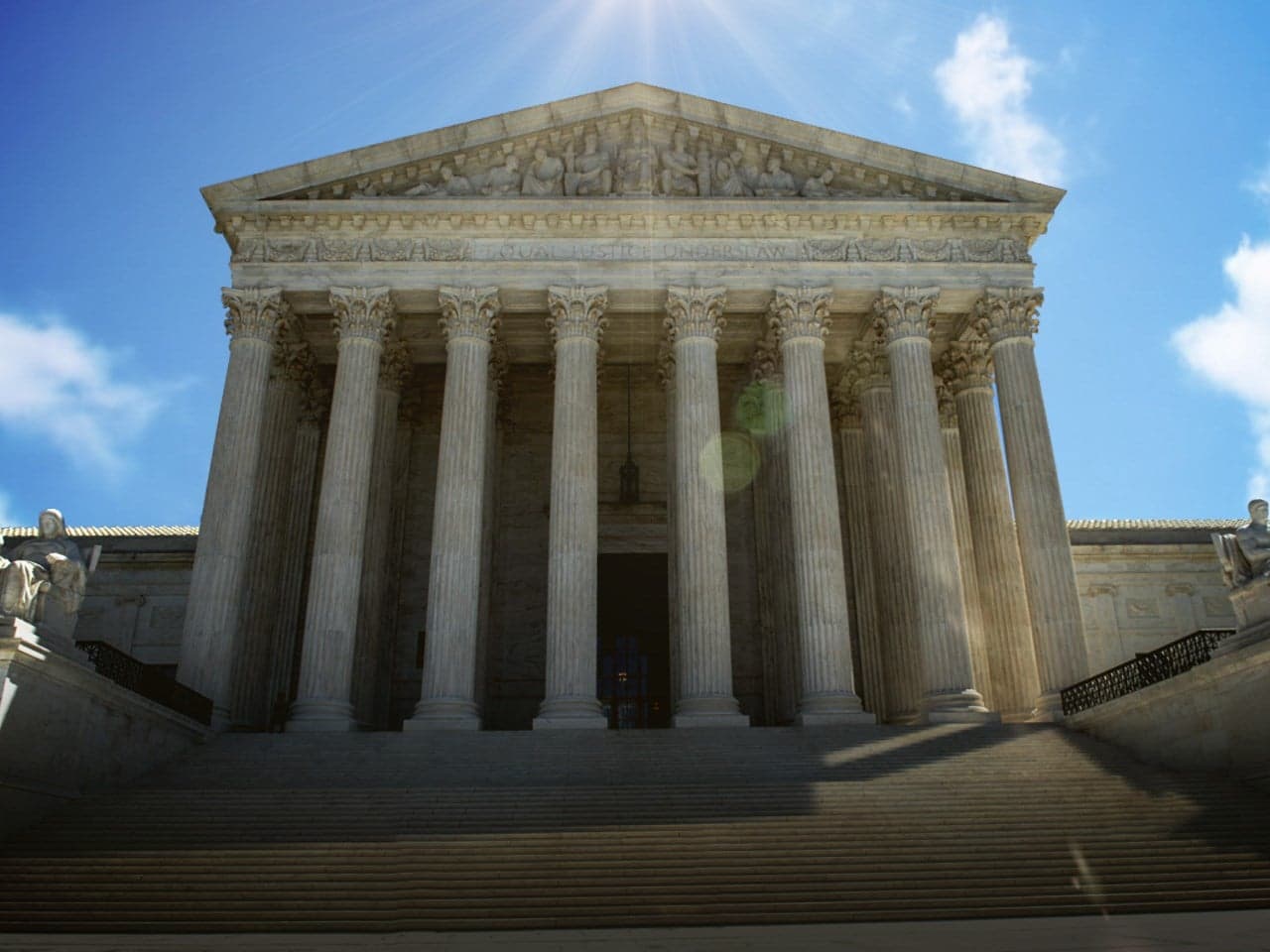
The U.S. Supreme Court heard arguments on Monday in a pivotal case that could reshape election laws nationwide.
“Jackson, meanwhile, chimes in to say that those questions appear to be policy decisions and suggests that Congress has allowed states to make those decisions”
The case, Watson v. Republican National Committee, centers on a Mississippi statute allowing ballots postmarked by Election Day to be counted if received within five business days afterward.

During the hearing, the court's conservative justices expressed deep skepticism of such grace periods, with Justice Clarence Thomas questioning when a ballot selection becomes final.
Justice Amy Coney Barrett pressed on ballot security issues and what prevents someone from designating their neighbor to deliver a ballot.
The three liberal justices strongly defended state authority to set election rules, with Justice Elena Kagan warning against invalidating longstanding voting practices.
Justice Ketanji Brown Jackson noted the long history of states having varied ballot receipt deadlines, including after Election Day.
The court appeared divided along ideological lines, with conservatives holding a 6-3 majority, raising concerns about the future of mail-in voting policies nationwide.
Legal Arguments and Divisions
The legal dispute centers on whether federal law establishing Election Day for federal offices preempts state laws allowing late-arriving ballots to be counted.
Paul Clement, attorney for the Republican National Committee, argued that the prospect of election outcomes changing due to late-arriving ballots would be unacceptable to losing candidates.

Clement stated 'If you have an election and the election is going to turn on late-arriving ballots in a way that means what everybody kind of thought was the result on Election Day ends up being the opposite a week later, 21 days later, the losers are not going to accept that result. Full stop.'
However, Mississippi Solicitor General Scott countered that federal law allows ballots cast by Election Day to be received later, and 'No one challenged it until now.'
The Trump administration's solicitor general, D. John Sauer, criticized Mississippi's law as unduly 'general and permissive,' arguing that 'Official receipt is at the definitional heart of 'election.'
Liberal justices pushed back strongly, with Justice Sonia Sotomayor emphasizing that states, not courts, should decide such issues.
Justice Neil Gorsuch pressed Stewart to clarify when a ballot has been delivered to the state, including who must receive the ballot.
Trump's Anti-Mail Voting Campaign
The case unfolds within President Trump's broader campaign against mail-in voting, which he has consistently labeled as fraudulent despite evidence to the contrary.
Trump has long opposed mail-in voting and has falsely claimed that the practice was a source of fraud and contributed to his defeat in the 2020 presidential election.
He has encouraged Republicans to support legislation outlawing mail-in voting entirely, with narrow exceptions for military service, travel, disability, medical issues and other hardships.
A Republican-backed measure that would severely restrict mail-in voting across the country has passed the House of Representatives and is being considered by the Senate.
Trump signed an executive order in March 2025 that attempted to cut federal election funding to states that have mail ballot receipt grace periods, though it has largely been blocked by federal courts.
On social media, Trump has declared he is leading a 'movement to get rid of MAIL-IN BALLOTS,' claiming without evidence that they lead to voter fraud.
The administration's position in the Supreme Court case reflects this broader strategy to limit voting access, with critics arguing the lawsuit against a Republican-led state with minimal absentee voting is part of a partisan effort to undermine mail-in voting.
Voter Impact and Election Consequences
A Supreme Court decision against Mississippi's law could have sweeping consequences for voters nationwide, potentially creating chaos among states that allow mail-in balloting.
The case could affect voters in 13 other states and the District of Columbia that have grace periods for ballots cast by mail, as well as an additional 15 states that have more forgiving deadlines for ballots from military and overseas voters.

At least 725,000 ballots were postmarked by Election Day 2024 and arrived within a legally accepted post-election window, according to The New York Times citing election officials in 14 of 22 states and territories where late-arriving ballots were accepted that year.
About 30% of voters cast a mail ballot in 2024, according to data gathered by the U.S. Election Assistance Commission.
Justice Brett Kavanaugh questioned whether late-arriving ballots risk undermining election confidence, quoting from a New York University law professor that 'The longer after Election Day any significant changes in vote totals take place, the greater the risk that the losing side will cry the election has been stolen.'
However, defenders of the grace periods note that there has not been a showing of actual fraud from after-election counting, and that such policies help military service members and other Americans living overseas who cast their ballots from afar.
A final ruling is expected by late June or early July, early enough to govern the counting of ballots in the 2026 midterm congressional elections.
Broader Election Battle Context
The case represents the latest in a broader political battle over voting rights that extends beyond mail-in ballots to include challenges to other election administration practices.
“Ballots could be received until the start of the next Congress, two months after the election, Justice Neil Gorsuch suggested”
The Supreme Court is currently considering two other major election-related matters: a Republican challenge to federal rules that limit how much political parties can spend in coordination with candidates, and a challenge by a group of white Louisiana voters who claim that the state's creation of a second majority-minority voting district violated the Constitution.

This will test a key provision of the Voting Rights Act, a landmark of the civil rights era.
The case also follows a January decision where the justices cleared the way for a Republican congressman from Illinois to challenge his state's rules governing vote counting, clarifying who is allowed to sue over voting rules.
The political significance of the mail-in ballot case is amplified by the timing, with a decision expected by the end of June or early July, ahead of the November midterm elections that will determine which party controls the House and Senate.
The legal arguments reflect deeper tensions between federal authority and state sovereignty in election administration, with conservatives generally favoring more uniform federal standards while liberals emphasize the traditional role of states in regulating elections.
More on USA

Trump Delays Strikes on Iranian Energy Infrastructure Amid Talks With Iran.
43 sources compared

Senate confirms Markwayne Mullin as Homeland Security secretary
13 sources compared

Supreme Court appears poised to limit late-arriving mail-in ballots.
23 sources compared
US Senate confirms Mullin as Secretary of the Department of Homeland Security
24 sources compared