TCL’s German QLED ban puts pressure on TV brands to be more honest about QDs
Key Takeaways
- Munich court ruled TCL TVs marketed as QLED lack the quantum dot structure and performance.
- Germany banned TCL from marketing certain models as QLED.
- Samsung has actively campaigned against TCL’s use of the term QLED.
German QLED ban and ruling
Germany recently banned TCL from marketing some of its TVs as QLED, with a Munich court ruling that the sets lack the quantum dot (QD) structure and performance associated with QLED TVs.
“Germany recently banned TCL from marketing some of its TVs as QLED (quantum dot light-emitting diode), with a Munich court ruling that the TVs lack the quantum dot (QD) structure and performance associated with QLED TVs”
The decision increases pressure on TV companies to be more honest with their marketing.
Samsung testing and industry response
Samsung has actively campaigned against TCL’s use of the term QLED.
A year ago, Samsung sent Ars Technica results from testing performed by Intertek on TCL’s 65Q651G, 65Q681G, and 75Q651G.
The results showed the TVs lacked sufficient amounts of cadmium and indium, chemicals used in QD TVs, while Intertek tested the optical sheet, diffuser plate, and LED modules using minimum detection standards of 0.5 mg/kg for cadmium and 2 mg/kg for indium.
TCL said it had definitive substantiation for its QLED claims.
Based on previous dissections of TCL TVs shared online and discussions with industry experts, it seems those TVs may employ some QDs but not enough to offer a significantly wider color gamut than similarly specced, non-QD rivals.
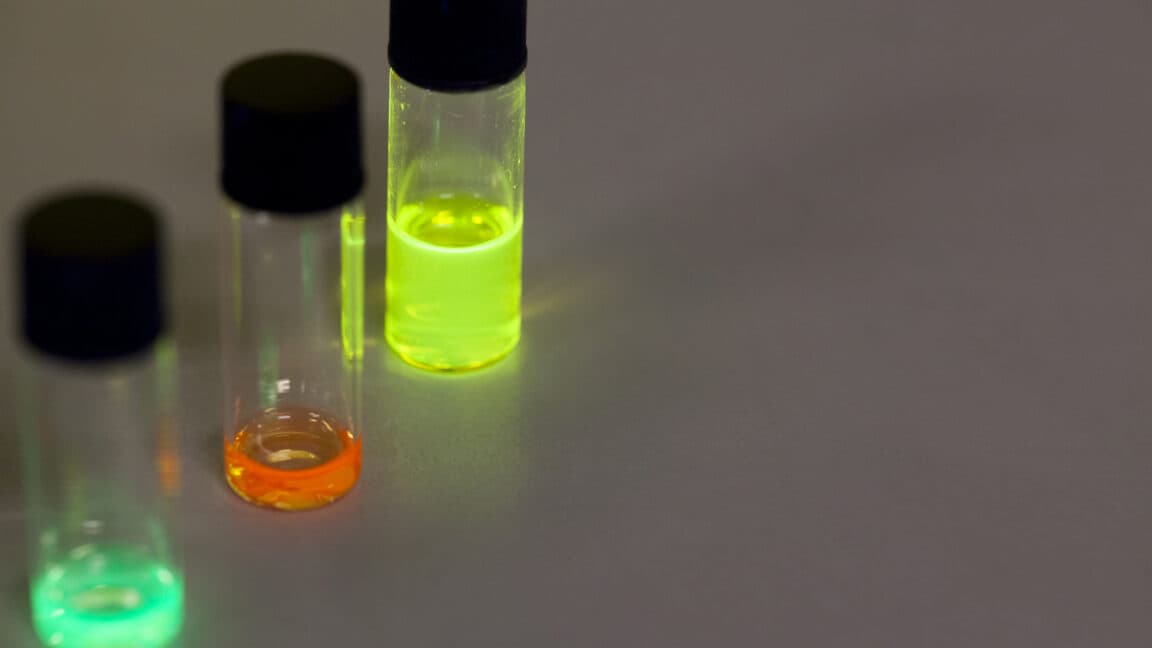
It’s common for TVs marketed as QD, especially budget sets, to rely on phosphors or a combination of phosphors and QDs at varying ratios, for color conversion.
That’s instead of, as the terms QD TV and QLED suggest, QDs.
Phosphors are cheaper than QDs, and their associated color performance in displays is not as good.
Other manufacturers, including Samsung, have been accused of marketing TVs that rely heavily on phosphors as QD or QLED.
Marketing muddiness and pressure
TV marketing has muddied the meaning of terms like QDs and QLED, making it easy to see how TCL might overstate its use of QDs to justify higher prices and drive demand.
“Germany recently banned TCL from marketing some of its TVs as QLED (quantum dot light-emitting diode), with a Munich court ruling that the TVs lack the quantum dot (QD) structure and performance associated with QLED TVs”
Given the rivalry between Samsung and TCL, it’s reasonable to view Samsung-commissioned testing on TCL TVs with some skepticism.
QLED870 ruling and implications
Earlier this month, a Munich court ruled on a Samsung lawsuit, reportedly finding that it’s misleading for TCL to market some of its TVs, including the QLED870-series sold in Europe, as QLED.
More on Europe

Russian intelligence-linked hackers target Signal users, accessing thousands of accounts
10 sources compared

Barcelona Police Say University of Alabama Student's Death in Spain Was Likely an Accident
36 sources compared

Storm Therese cancels flights in Tenerife as Easter holidays loom
14 sources compared

Nottingham Forest beat Midtjylland on penalties to reach Europa League quarter-finals
10 sources compared