Iran09 March, 20263 min read
Tehran Names Mojtaba Khamenei Supreme Leader, Cementing Hardliners' Control
Mojtaba Khamenei, son of the slain Ayatollah Ali Khamenei, was named successor by state media Assembly of Experts and IRGC pledged allegiance to Mojtaba Khamenei, consolidating hardliners' control

Mojtaba Khamenei named leader
Iran’s Assembly of Experts has named Mojtaba Khamenei as the country’s new supreme leader, a decision announced by Iranian state media and carried widely in regional and international outlets. State media reported that "Mojtaba Khamenei, the 56-year-old second son of Ayatollah Ali Khamenei, has been chosen as Iran’s new supreme leader." Multiple outlets noted the selection came via the clerical body that usually selects the leader: "the Assembly of Experts, the 88-member clerical body that selects the country’s leader."
“State media say Mojtaba Khamenei, the 56-year-old second son of Ayatollah Ali Khamenei, has been chosen as Iran’s new supreme leader. The hardline cleric was named by the Assembly of Experts, the 88-member clerical body that selects the country’s leader.”
CBS News likewise reported that "Iran’s 88-member Assembly of Experts...has chosen Mojtaba Hosseini Khamenei...as the country’s new supreme leader." Oberon Review stated the Assembly "has named Mojtaba Khamenei, 56, to succeed his father Ali Khamenei as supreme leader."
Mojtaba Khamenei elevation
Mojtaba Khamenei’s elevation cements hardline control because he is long viewed as a close aide and power broker with deep ties to Iran’s security establishment rather than a career elected official. PBS described him as "Long viewed as a possible heir despite never holding elected or formal government office" who "has acted for years as a close aide, gatekeeper and power broker around his father and has deep ties to the Islamic Revolutionary Guard Corps (IRGC)." 9News similarly profiles him as having "access to vast state-linked wealth and networks" and ties to the IRGC and U.S. sanctions.
NBC Boston noted the appointment "gives him control over the Islamic Revolutionary Guard Corps and a central say in war strategy." The New York Post echoed that he is "Long favored by the Islamic Revolutionary Guard Corps" and labeled him a "hardline, anti‑Western conservative."

Conflicting Khamenei reports
The leadership change unfolded amid intense, violent exchanges with Israel and the United States. Reporting about the death of Ayatollah Ali Khamenei is inconsistent across outlets. PBS reported that “Mojtaba Khamenei…was named successor after an Israeli airstrike killed his father (and Mojtaba’s wife).”
“Mojtaba Khamenei, a previously low-profile son of the late Supreme Leader Ayatollah Ali Khamenei, was named successor after an Israeli airstrike killed his father (and Mojtaba’s wife).”
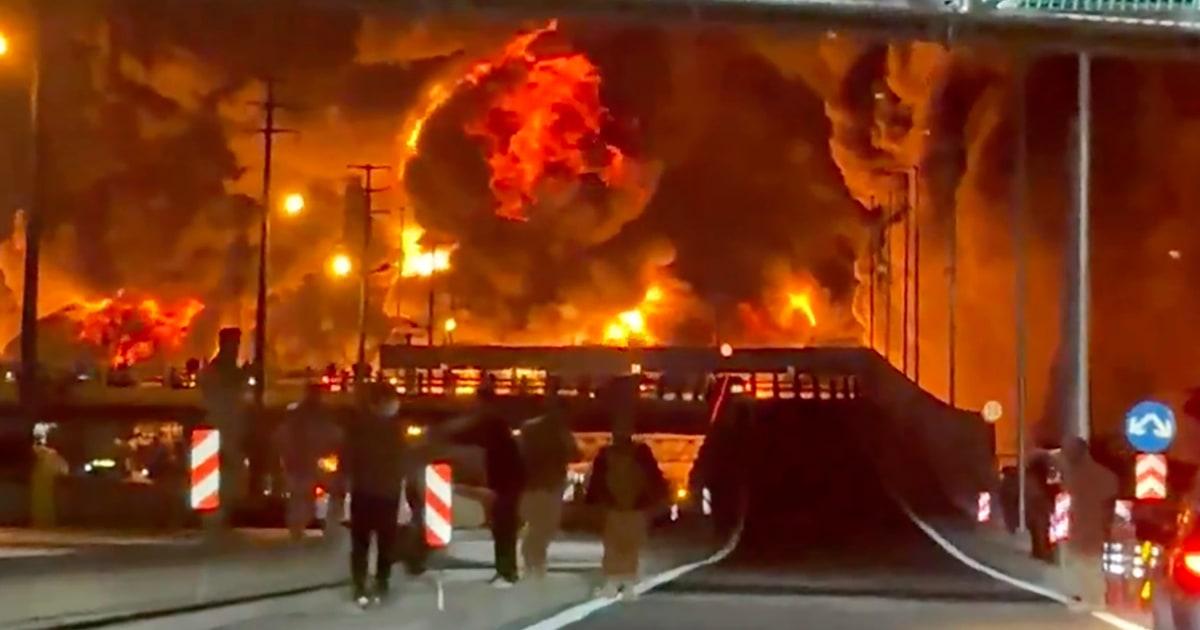
Several outlets described Israeli and U.S. strikes around Tehran that hit oil storage facilities and targeted senior figures. The Globe and Mail reported “Israeli strikes around Tehran hit oil storage facilities...and — Israel says — killing senior Iranian figures.”
Oberon Review said the announcement “comes after early strikes in which Ali Khamenei and his wife were killed.” At the same time, The Globe and Mail cautioned that “A widely circulated claim that Supreme Leader Ali Khamenei was killed appears incorrect and remains unconfirmed by credible sources,” reflecting clear contradictions in available reporting.
Iran leadership and reactions
Iran’s security forces and the IRGC publicly affirmed loyalty to the new leader even as international leaders reacted strongly and the conflict disrupted markets and logistics. Kurdistan24 reported that the IRGC "pledged 'complete obedience and self-sacrifice' to Mojtaba Khamenei after the Assembly of Experts named him Supreme Leader." Oberon Review said the IRGC "pledged 'full obedience,' praised him and vowed to continue fighting the U.S. and Israel."
The Globe and Mail noted "Israeli and U.S. officials defended the strikes... and Prime Minister Benjamin Netanyahu vowed continued pressure." NBC News reported that "Trump told ABC News the new leader 'is not going to last long' without U.S. approval." The Globe and Mail also emphasized wider effects, saying the confrontation "has disrupted commerce, air travel and energy markets, damaged oil infrastructure and logistics, and raised shipping risks."

Iran succession uncertainty
The succession exposed divisions and uncertainty within Iran’s political institutions and among observers about legitimacy and process. Straight Arrow News reported that Iran’s Assembly of Experts is split over whether to meet in person or remotely to choose a successor. The New York Post said the 88‑member Assembly reportedly had reservations about passing leadership to the ayatollah’s son and that it was unclear whether Mojtaba was at the compound or was injured in a separate attack.
“Iran’s Assembly of Experts is split over whether to meet in person or remotely to choose a successor to Ayatollah Khamenei, with members debating security risks amid U.S. and Israeli strike threats.”
The Washington Post noted readers expressed strong skepticism and criticism of the appointment. CBS and NBC coverage highlighted that the choice came amid intense security concerns and a rapidly evolving war context, leaving questions about how the selection was reached and how durable the new leader’s authority will be.