Technology and Science23 April, 20267 min read
Tesla Plans Capital Expenditures Exceeding $25 Billion for AI and Robotics Push
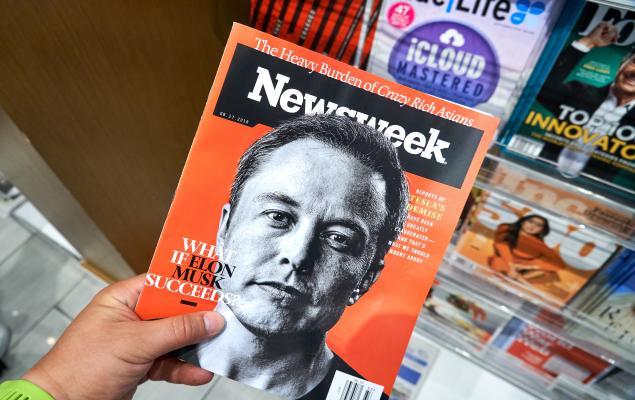
Capex exceeds $25B in 2026, with some reports citing $32B. Spending is about three times 2025 levels.
Capex Surge to $25B+
Tesla is planning a major spending ramp as it tries to transform itself from an electric-vehicle maker into an artificial intelligence and robotics company, with capital expenditures in 2026 expected to exceed $25 billion. The Las Vegas Sun reports that Tesla “anticipates billions of dollars in additional spending this year” and that “Capital expenditures this year will exceed $25 billion,” roughly three times last year’s outlay, after the company revealed the plan on Wednesday. The Straits Times similarly says Tesla “anticipates billions of dollars in additional spending in 2026” and that “Capital expenditures in 2026 will exceed US$25 billion (S$32 billion),” up from “around US$20 billion.”
On the earnings call, Elon Musk told investors, “You should expect to see a very significant increase in capital expenditure,” according to both the Las Vegas Sun and the Straits Times. The spending is tied to a “dramatic expansion of factory operations,” including “production of its Optimus humanoid robot,” “AI initiatives and the Cybercab autonomous car,” as described by the Las Vegas Sun.

The Las Vegas Sun also ties the push to pressure on Tesla’s traditional automotive business, saying it “has declined for the past two years,” and that the revised spending plan reflects “the heavy cost for Tesla to achieve its goals,” as assessed by Dec Mullarkey of SLC Management. In the first quarter, Tesla spent “less than $2.5 billion,” the Las Vegas Sun says, while still posting “$1.4 billion in positive free cash flow for the quarter,” far better than analysts’ expectation that the carmaker would “burn through almost $1.9 billion.”
Earnings Beat, Cash Flow Focus
Tesla’s spending plan landed after a first-quarter earnings report that beat expectations, but the market attention quickly shifted to what the capex implies for cash flow. The Las Vegas Sun says Tesla’s “adjusted earnings rose to 41 cents a share,” beating the “34-cent average of analyst estimates compiled by Bloomberg,” and it notes the quarter marked “the second straight quarter of better-than-expected results.” The Las Vegas Sun also reports that Tesla “saw continued growth in demand for our vehicles” in “parts of Asia and South America,” along with “a rebound in North America and the Europe-Middle East region.”
At the same time, the Las Vegas Sun says the company spent “less than $2.5 billion” in the first three months of 2026, “well below the outlay the company will need to average per quarter to reach its expenditure forecast for the year.” That contributed to Tesla posting “$1.4 billion in positive free cash flow for the quarter,” which the Las Vegas Sun says was “far better than analysts’ expectation that the carmaker would burn through almost $1.9 billion.”
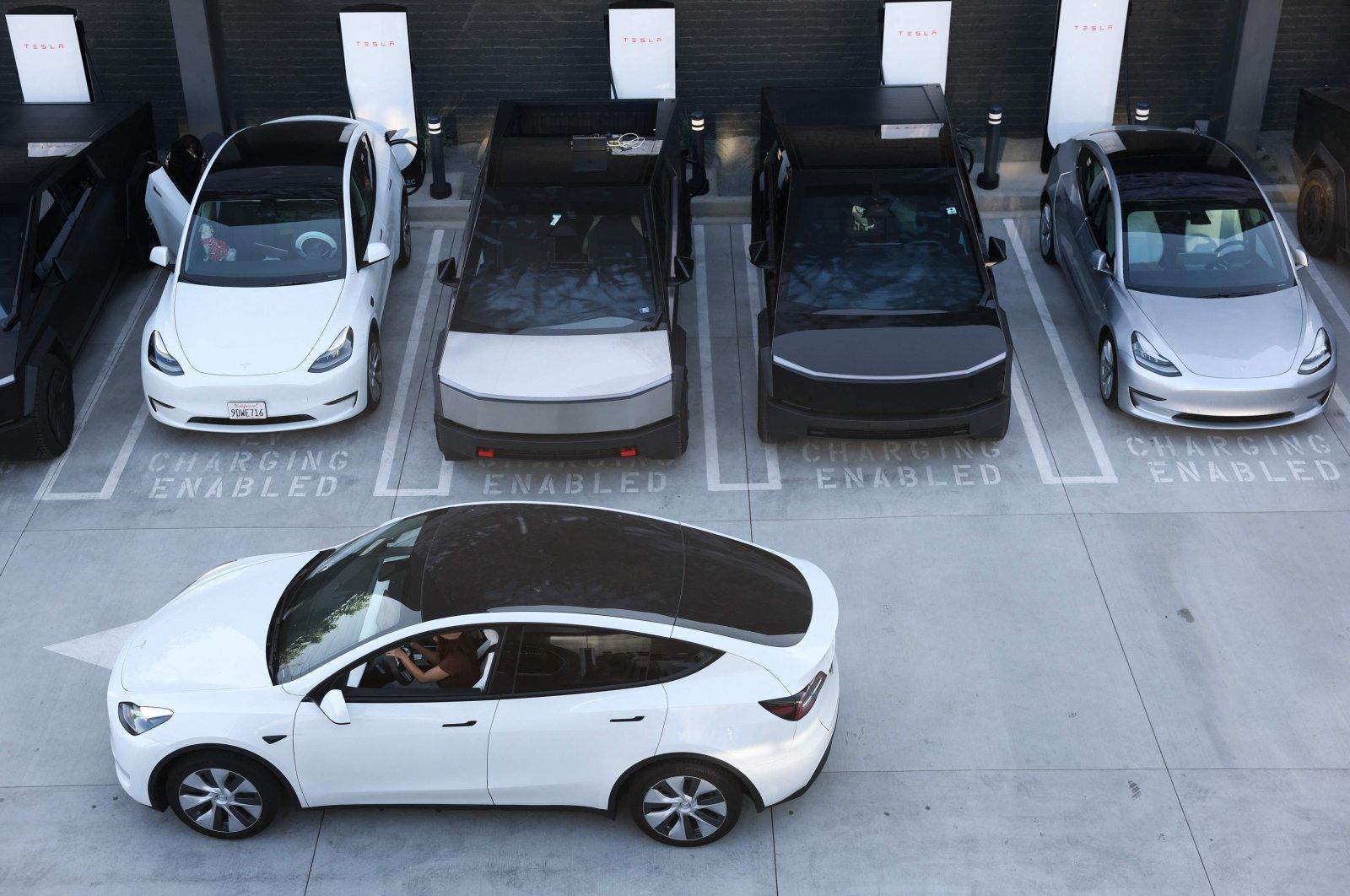
TechStock² frames the same moment by saying Tesla stock moved higher after hours on “unexpected $1.44 billion free cash flow haul,” while revenue “came up short of Wall Street’s consensus.” TechStock² also provides filing-level figures, saying Tesla “shelled out $2.49 billion on capex” and “finished the quarter holding $44.74 billion in cash, cash equivalents, and short-term investments.”
Robotaxi Expansion and Optimus
Tesla’s capex narrative is inseparable from its autonomy and humanoid robot ambitions, with the company describing Robotaxi expansion and ongoing Optimus production plans. The Las Vegas Sun says Tesla reiterated plans for its “nascent ride-hailing business it calls Robotaxi,” saying the business is “on track to expand to Phoenix, Miami, Orlando, Tampa and Las Vegas in the first half of this year.” It adds that Robotaxi “began in Austin last year and has slowly expanded since then,” and that “This month it also launched in Houston and Dallas.”
The Las Vegas Sun also notes that Tesla has not provided fleet-size details, saying the company “hasn’t provided details about fleet sizes, or disclosed how many vehicles operate without a safety monitor on board,” and it says Musk expects it “will likely not see material revenue until at least 2027.” In the Aktiencheck report, Tesla’s Robotaxi expansion is described alongside other autonomy and robot efforts, including that “Tesla expanded its unsupervised robotaxi service to Dallas and Houston,” and that “The number of FSD subscribers now stands at 1.28 million.”
TechStock² provides additional context on the regulatory framing, saying “Full Self-Driving, or FSD, is still classified as a supervised driver-assistance feature” and that “drivers must stay attentive and ready to take over—the system does not render the car autonomous.” On Optimus, the Las Vegas Sun says the investments include “production of its Optimus humanoid robot,” while the Aktiencheck article says Tesla plans to “begin manufacturing at its Fremont facility in July or August, targeting a capacity of one million units per year.”
Investors Question the Bet
While Tesla’s results included a free-cash-flow upside in the quarter, multiple reports show investors and analysts focusing on whether the spending can be justified without near-term cash engines. The New York Post quotes Morningstar analyst Seth Goldstein saying, “If you think that Elon Musk’s view that Optimus will be ultimately their most worthy, most value-creating platform, and you think you’re skeptical, then the capex doesn’t make sense, and it’s probably not a good investment,” and it contrasts that with the view that Musk can “make seemingly impossible things a reality.” The New York Post also says Tesla shares “closed down more than 3% on Thursday” after executives lifted the 2026 capital expenditure plan to “more than $25 billion,” nearly triple last year’s “$8.53 billion.”
TechStock² adds that investors were trying to “square Tesla’s sluggish core car business with CEO Elon Musk’s bold bets on self-driving taxis and humanoid robots,” and it notes Tesla’s revenue “came in at $22.39 billion” for the March 31 quarter, “falling short of the $22.6 billion consensus.” The Las Vegas Sun reports that Tesla shares were “little changed in late trading,” erasing an earlier gain after executives announced the higher spending estimate, and it says through Wednesday’s close the stock “declined about 21% since touching a record high in mid-December.”

Aktiencheck frames the market reaction as a shift from the earnings beat to the capex implications, saying investors fixated on “what’s coming next” and that the spending “guarantees the company will burn cash for the remainder of 2026.” In parallel, the Las Vegas Sun quotes Ivan Feinseth of Tigress Financial Partners saying the spending “increases near‑term cash burn and execution risk but can be a long‑term positive for the stock,” and it adds that “Investors may increasingly view it as an AI compute and robotics infrastructure platform rather than just an automaker.”
What Comes Next for Tesla
Looking ahead, the sources describe both the operational roadmap and the financial risk that comes with it, including negative free cash flow expectations and specific product timelines. The Las Vegas Sun says Tesla “still expects energy deployments this year to be up from 2025,” and it reports that the energy and storage division “reported revenue of $2.4 billion in the first quarter, a 12% drop from a year earlier,” while CFO Vaibhav Taneja said “the energy storage business is inherently lumpy.” TechStock² adds that energy storage deployment “dropped 15% year-over-year, landing at 8.8 gigawatt-hours,” and it says Tesla flagged that “deliveries and deployments hinge not just on demand, but also on supply-chain stability and decisions about whether to prioritize customer orders or its own fleet.”
On cash flow, the New York Post says Tesla “expects negative free cash flow for the rest of the year after posting a surprise $1.44 billion surplus in the first quarter,” and Aktiencheck similarly says the company will “post negative free cash flow for the rest of the year.” The Las Vegas Sun also says Tesla reiterated it is “on track to start making key products including Cybercab, Semi and an updated version of its Megapack battery storage system,” while TechStock² says “The company confirmed that Cybercab, Tesla Semi, and Megapack 3 remain on track to hit volume production in 2026.”
For Optimus, Aktiencheck says Tesla plans to begin manufacturing at its Fremont facility in “July or August,” and it says a second line in Texas targets “10 million units annually,” while TechStock² says “Plans call for work on a major Optimus robot factory to get underway in the second quarter.” Finally, the Aktiencheck report includes a caution about timelines, saying the long-promised Roadster has been postponed “for at least the eighth time,” with Musk pushing a reveal to “maybe in a month or so,” meaning “late May or June 2026 at the earliest.”