
Tether Positions Itself as a Gold Central Bank, Buying 1 to 2 Tons Weekly
Key Takeaways
- Tether aims to become the world's central bank of gold.
- Largest private holder of gold, expanding into a major gold player.
- Paolo Ardoino frames the initiative as a central-bank gold strategy.
Tether’s gold push
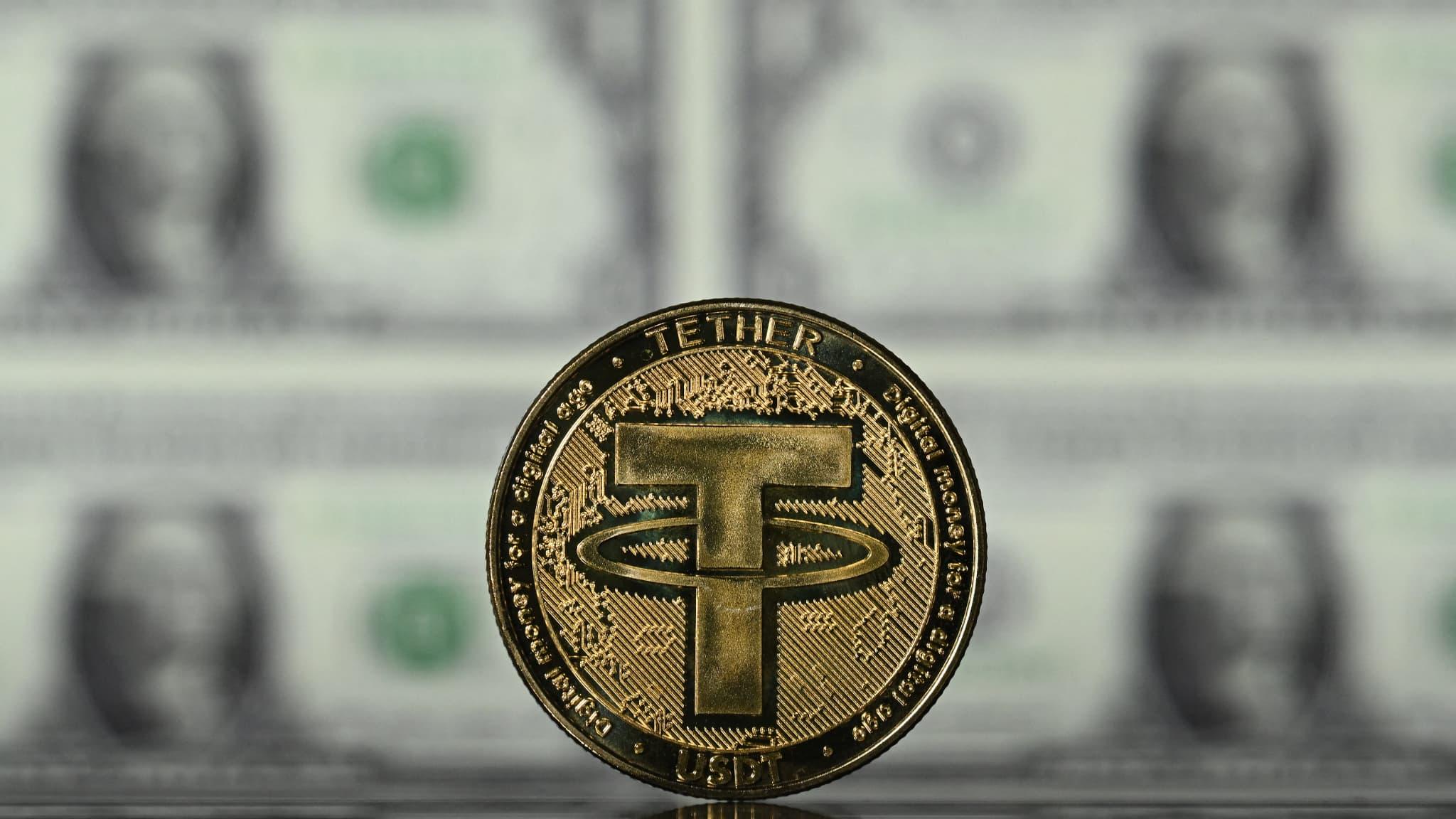
Tether, the stablecoin issuer behind USDT, is using profits to buy gold and is positioning itself as a “gold central bank,” according to reporting that ties the company’s strategy to its reserve holdings and trading plans.
“Global interest rates, Robinhood, Galaxy earnings: Crypto Week Ahead Your look at what's coming in the week starting April 27”
BFM says Tether’s 41-year-old boss Paolo Ardoino told Bloomberg, “You could mistake it for a James Bond movie,” and added, “One of the world's largest gold centers.”

BFM reports that Tether holds 140 tonnes of gold worth $24 billion, with its gold bars stored in a former Swiss nuclear bunker.
BFM also says that since 2024, Tether has started a “race to accumulate gold bars,” buying between 1 and 2 tonnes of gold per week.
Cryptoast similarly describes Tether as aiming to become the “central bank of gold,” stating that the company would buy one to two tons of gold per week and that the purchases amount to a $170 million weekly investment at current prices.
Cryptoast adds that Tether intends to hold 140 tons of gold in a bunker in Switzerland, “This amounts to $23 billion at current prices,” and frames the company’s plan as a rapid accumulation effort that it says is accelerating.
How it’s funded
The gold accumulation is presented as being financed by Tether’s stablecoin business, with multiple outlets linking the company’s buying power to USDT revenue and to investments that include gold.
BFM says Tether “has started a race to accumulate gold bars,” and it attributes the ability to hold a large reserve to “the profits earned from selling its stablecoin to individuals and businesses, USDT, valued at $186 billion.”
BFM further explains that “Tether then mainly invests this money in U.S. Treasuries and today in gold, allowing it to earn billions of dollars in interest on its investments.”
Cryptoast provides additional figures, stating that “USDT, which weighs in at $186.1 billion,” is the revenue source enabling the gold purchases.
Cryptoast also says that in 2025, Tether “reported revenues of $5.2 billion,” and that “These funds are heavily invested in gold.”
In the same reporting, Cryptoast frames the company’s gold strategy as part of a broader two-pronged approach that includes tokenized gold via XAUT.
Trading and tokenized gold
Beyond simply holding bullion, Tether’s strategy described in the reporting includes active trading approaches and the use of tokenized gold products.
“Global interest rates, Robinhood, Galaxy earnings: Crypto Week Ahead Your look at what's coming in the week starting April 27”
BFM says Tether “aims to stand out in the gold market,” and it reports that the company recruited “two HSBC gold traders.”
BFM quotes Ardoino explaining that “Tether is studying different ways to actively trade the gold it holds, notably by seizing arbitrage opportunities when the cost of futures contracts diverges sharply from the price of the physical metal.”
Cryptoast adds that Tether’s strategy is “twofold,” with one part being a bet on its tokenized gold asset XAUT.
Cryptoast states that “At this stage, the cryptocurrency has a market capitalization of $2.7 billion,” and it contrasts that figure with USDT’s much larger scale by saying it is “a drop in the ocean when compared to the market cap of USDT.”
Cryptoast then projects a continuation of the accumulation, saying that “If it continues at its current pace, the company could amass up to 100 tons by the end of 2026,” and it adds that Ardoino says purchases will continue “month after month for the coming months.”
Gold versus central banks
The reporting frames Tether’s gold holdings as approaching, and in some comparisons exceeding, the reserves of certain countries, while also noting that central banks remain the larger category overall.
BFM says Tether’s reserve “already exceeds that of many central banks,” naming Sweden at “125 tonnes” and Greece at “115 tonnes,” and it says it would take “time (or a lot of money)” to compete with the biggest buyers.
BFM provides a broader comparison using World Gold Council data, stating that “the United States is the largest country to hold gold (8,133 tonnes), followed by Germany (3,350 tonnes) and Italy (2,451).”
Cryptoast similarly compares Tether’s reserve to national holdings, stating that “The company currently holds more gold than Brazil, Sweden, or Qatar.”
It also adds a benchmark for France, saying “the Bank of France holds 2,437 tons of gold.”
Cryptoast emphasizes that Tether is “As of now, Tether is the world’s largest holder of gold outside central banks and private banks,” and it repeats the bunker storage detail by saying the gold is stored in Switzerland.
Crypto markets and catalysts
While the gold story centers on Tether, the broader crypto week ahead coverage highlights how macroeconomic events and corporate earnings are expected to influence digital asset markets during the same period.
“Global interest rates, Robinhood, Galaxy earnings: Crypto Week Ahead Your look at what's coming in the week starting April 27”
CoinDesk’s “Crypto Week Ahead” lays out a calendar beginning “in the week starting April 27,” and it says “Four major central banks, the Bank of Japan, U.S. Federal Reserve, European Central Bank, and Bank of England, all set interest-rate policy this week.”
It also lists U.S. data including “first-quarter GDP and March PCE inflation,” and it ties those macro items to earnings from “Visa, Mastercard, Robinhood and some of the biggest tech companies.”
CoinDesk quotes Markus Levin, Co-founder of XYO, saying that “bitcoin Tech giants’ earnings, Levin added, could also be a crucial indicator “in reinforcing or challenging the current trajectory given their outsized influence on equity markets, while developments around the U.S.–Iran talks will steer sentiment through oil and dollar movements.”
The same CoinDesk piece includes a “What to Watch” section with specific dates and estimates, including “May 1: Full shutdown of Magic Eden’s wallet services.”
Finally, CoinDesk’s market snapshot says “BTC fails at $80,000 and drops 2% as rising oil prices weigh on sentiment,” with “Brent crude hit $107 following developments tied to U.S.-Iran tensions.”
More on Crypto

France Charges 88 Suspects in 12 Crypto Wrench Attacks, Prosecutors Say
11 sources compared

Attackers Exploit Litecoin MWEB Zero-Day, Trigger 13-Block Reorganization and DoS on Mining Pools
12 sources compared

Giancarlo Lelli Breaks 15-Bit Elliptic-Curve Key With Quantum Computer, Wins Project Eleven 1 Bitcoin
12 sources compared

Metaplanet Issues $50 Million Zero-Interest Bonds to Buy More Bitcoin
12 sources compared