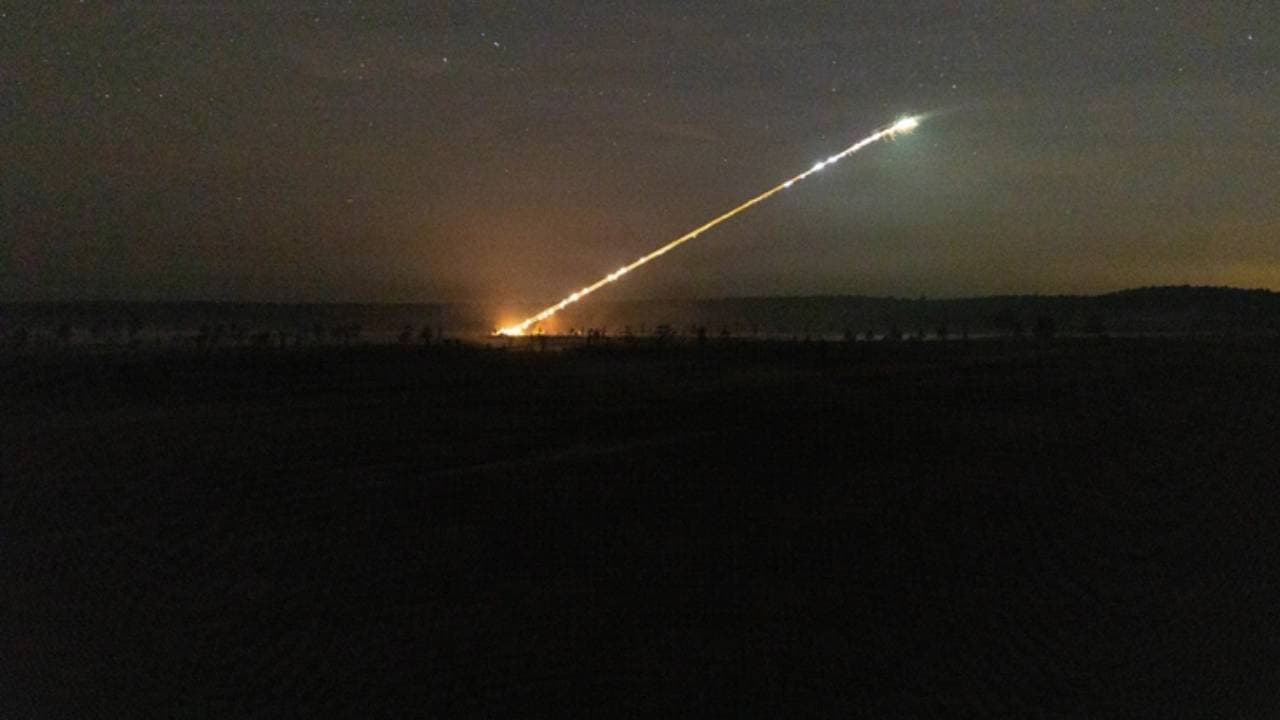
The list is quite long: In which countries has the U.S. previously intervened militarily?
Key Takeaways
- The U.S. has militarily intervened directly in more than 40 countries since the mid-19th century.
- Interventions included covert operations, air strikes, naval blockades, or special forces activities.
- Venezuela is cited as an example in discussions of U.S. past interventions.
Scope of interventions and Venezuela
The article states that the United States has directly intervened militarily in more than 40 countries since the mid-19th century or used military force indirectly, with interventions ranging from regime change to covert operations, air strikes, naval blockades, or special forces activities.
“According to international news agencies and academic research, the United States has directly intervened militarily in more than 40 countries since the mid-19th century or used military force indirectly”
It notes that Venezuela stands out among the countries where Washington has combined military pressure with economic tools over the past two decades, including sanctions, diplomatic isolation, and overt support for the opposition, and that a new phase began with today’s announcement by U.S. President Donald Trump that wide-scale air strikes had been carried out against Venezuela and that President Nicolas Maduro and his wife had been expelled from the country.
The development is described as one of the most critical and shocking international events of the early part of 2026.
Countries and timelines
The list of countries where the United States has previously intervened militarily is as follows: Afghanistan (2001-2021) After the September 11, 2001 attacks, the United States intervened in Afghanistan to target al-Qaeda and topple the Taliban regime.
While the regime fell quickly, the operation lasted about 20 years with the aim of rebuilding the country and ensuring security.
Thousands of civilians and soldiers were killed during the intervention, and Afghanistan experienced a serious humanitarian crisis and infrastructure destruction.
After the U.S. and allied forces withdrew in 2021, the Taliban regained power.
Iraq (2003-2011) In March 2003, the United States launched a large-scale military intervention in Iraq on the grounds that weapons of mass destruction were found and that Saddam Hussein's regime posed a threat to international security.
The fall of Baghdad soon followed, Saddam Hussein's regime was toppled, and a regime change occurred in Iraq.
However, after the invasion, the disintegration of state institutions, security vacuum, and deepening ethnic-sectarian fault lines led the country to long-term instability.
Shiite-Sunni clashes, the growth of al-Qaeda-linked groups, and the later emergence of ISIS turned Iraq into a crisis at the center of regional security.
Panama (1989-1990) In December 1989, the United States intervened militarily in Panama under the name Operation Just Cause.
The main objective of the operation was to overthrow and arrest General Manuel Noriega, who was the de facto leader of the country.
The Washington administration accused Noriega of drug trafficking, money laundering, and posing a threat to the United States.
About 27,000 U.S. troops participated in the operation, and heavy fighting occurred in many areas, including Panama City.
As a result of the intervention, Noriega was captured and taken to the United States for trial; Guillermo Endara, a figure close to the United States, began serving as president.
Panama was also the last U.S. military operation in South American countries.
The United States is currently again facing Panama against China.
Grenada (1983) During the Cold War, a U.S.-led military operation toppled the existing government in Grenada and removed Castro-aligned forces.
The operation was brief but demonstrated U.S. intervention capability on the Western Hemisphere.
Cuba (1961 Bay of Pigs and other interventions) Following the 1959 Cuban Revolution, the United States carried out the CIA-backed Bay of Pigs invasion in 1961 to overthrow Fidel Castro's regime.
The operation, which envisaged landing a force of Cuban exiles on the island, ended in failure and became a major diplomatic and military humiliation for Washington.
After this, the United States aimed to weaken Castro's regime not through direct military intervention but through covert actions conducted via the CIA, including sabotage activities and assassination plans.
The comprehensive economic embargo implemented during the same period became one of the main instruments of pressure on Cuba.
Vietnam (1955-1975) During the Cold War, as part of a policy to contain communism, the United States conducted long-running large-scale military operations in Vietnam.
In the 1960s, the war intensified; the United States supported the South Vietnamese government while clashing with North Vietnam and the Viet Cong.
Air bombardments, the use of chemical weapons, and ground operations caused widespread destruction across the country.
The conflict resulted in the deaths of millions of civilians and soldiers.
After the United States withdrew its troops in 1973, the war continued for a few more years, and North Vietnam's victory in 1975 led to the reunification of the country.
The Vietnam War remains one of the most controversial military interventions in U.S. foreign policy history.
Iran (1953-present) With a CIA-backed operation, Prime Minister Mohammad Mosaddegh was removed from office; the Shah regime was supported.
This intervention deeply affected Tehran-Washington relations in the long term.
In the past month, tensions between the two countries rose again; U.S. bombing aircraft (B-2) and Israeli F-35s bombed many targets, including Iran's nuclear production facilities.
Guatemala (1954) A U.S.-backed coup toppled democratically elected Jacobo Árbenz, leading to deep instability in the country's domestic politics.
Libya (2011) In a NATO framework, with U.S. involvement, Muammar Gaddafi's regime was toppled.
However, after this intervention the country descended into civil war and militia warfare, and later the Arab Spring that affected the entire Middle East began.
Serbia / Yugoslavia (1999) NATO-led air operations applied pressure on the regime in Serbia; Slobodan Milosevic's leadership weakened later.
Syria (2014–present) The United States has conducted air strikes and special forces operations in Syria since 2014 under the pretext of fighting ISIS.
The operations were concentrated particularly in the country’s northern and eastern regions, while the United States provided long-term support to forces led by the SDF.
The Washington administration did not formally announce regime change as a goal, but pursued economic sanctions and limited military pressure against the Assad regime.
The United States still has a military presence in Syria.
Somalia (1992-1995 / 2007-present) The United States first sent troops to Somalia in the 1990s on humanitarian grounds.
In later years, it conducted airstrikes against al-Shabaab, drone operations, and special forces activities.
The operations were largely conducted within the framework of counter-terrorism.
Yemen (2002-present) The United States has carried out air strikes and drone operations targeting al-Qaeda’s branch in the Arabian Peninsula.
Yemen has been one of the countries where the U.S. has most intensively used targeted killings and covert military operations.
The operations were frequently criticized due to civilian casualties.
In the context of Israel's attacks on Gaza, the U.S. side conducted numerous air operations in the Red Sea.
During this process, Houthi targets were struck repeatedly.
Nigeria (2025) U.S. forces announced last week that they had conducted air strikes against militants linked to ISIS.
Ongoing operations and regional impact
The United States has carried out air strikes and drone operations targeting al-Qaeda's branch in the Arabian Peninsula.
“According to international news agencies and academic research, the United States has directly intervened militarily in more than 40 countries since the mid-19th century or used military force indirectly”
Yemen has been one of the countries where the U.S. has most intensively used targeted killings and covert military operations.
The operations were frequently criticized due to civilian casualties.
In the context of Israel's attacks on Gaza, the U.S. side conducted numerous air operations in the Red Sea.
During this process, Houthi targets were struck repeatedly.
Nigeria (2025) U.S. forces announced last week that they had conducted air strikes against militants linked to ISIS.
Ambiguities in article
The article contains an unclear line stating 'The United States is currently again facing Panama against China' without context, among a longer list of countries and interventions.
This ambiguity is noted as a potential inconsistency in the article.
More on USA

Trump threatens to deploy ICE agents to US airports amid DHS funding standoff
46 sources compared

ICE Detainee Royer Perez-Jimenez Dies in Florida Detention Center; Officials Suspect Suicide
10 sources compared
Elon Musk Offers to Pay TSA Salaries During Partial Government Shutdown
50 sources compared

California lawmakers rename Cesar Chavez Day to Farmworkers Day amid sexual abuse allegations.
17 sources compared