Crypto30 April, 20265 min read
Thom Tillis Pushes Senate Banking Markup of CLARITY Act on May 11
This article is an automated aggregation of coverage from news outlets. Our editorials offer in-depth analysis curated by the NewsCord team.
Tillis will push Senate Banking Committee to schedule a markup for CLARITY Act. Stalled bill due to disputes over banning stablecoin yields and Coinbase opposition.

Tillis presses May markup
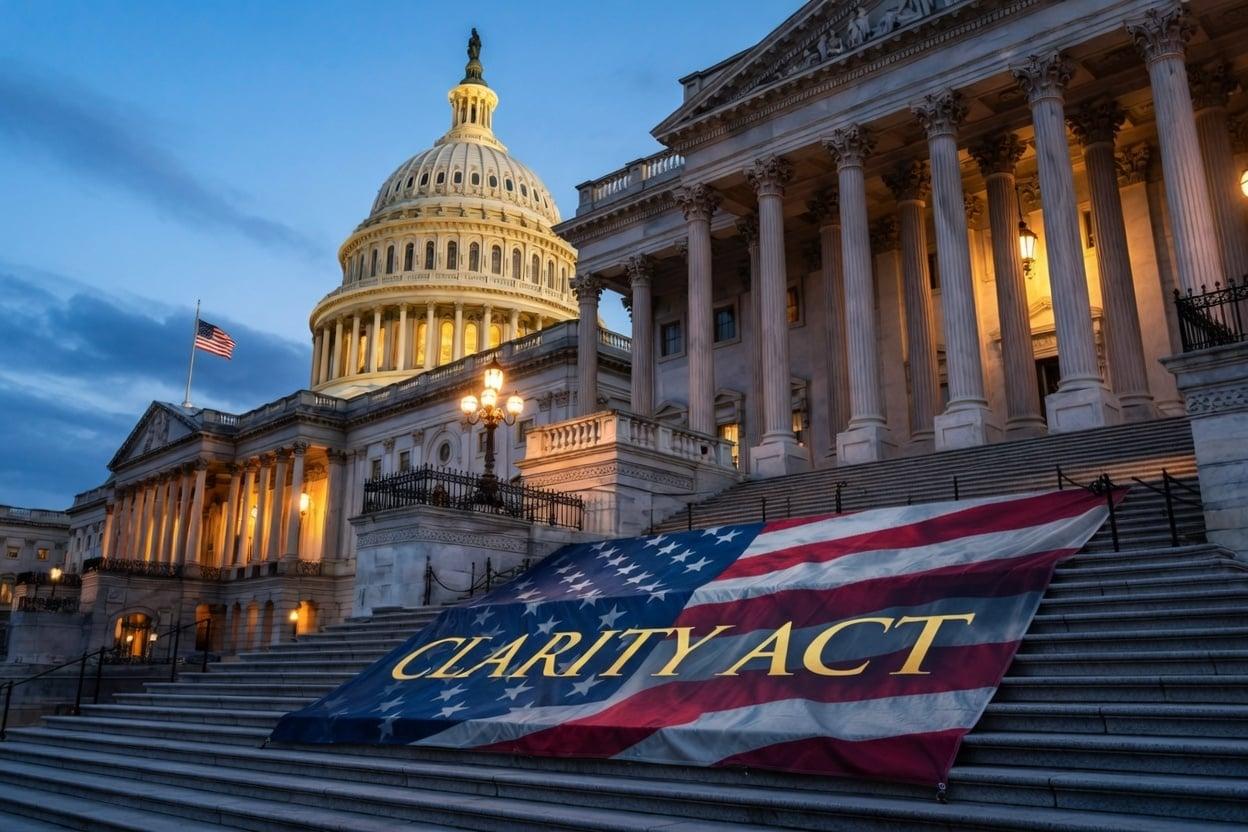
U.S. Senator Thom Tillis is pushing the Senate Banking Committee to schedule a markup on the stalled crypto market structure bill known as the CLARITY Act when lawmakers return on May 11, according to multiple reports.
In remarks to reporters, Tillis said he would ask Senate Banking Committee Chairman Tim Scott “to move forward with scheduling a markup” when the Senate is back in session on May 11, and he framed the timing as a response to the bill’s prolonged delays.
Tillis told reporters he believes “we’ve made a lot of progress,” and he argued that without a markup “everybody that really doesn't want it done is going to have one more thing that they want to talk about.”
The legislation would define how the U.S.’ two flagship market regulators, the Securities and Exchange Commission and the Commodity Futures Trading Commission, oversee crypto markets, with the House having already passed its version in July 2025.
The Senate version has faced repeated delays as lawmakers and lobbyists sought to refine provisions, including stablecoin yield rules and other contested sections.
Tillis also said he intends to publicly release the legislative text at least four days before the markup to give crypto and banking participants a preview and time to prepare comments and compliance adjustments.
Stablecoin yield standoff
A central reason the Senate Banking Committee delayed the CLARITY Act markup in January was a fight over stablecoin yields, after Coinbase pulled its support over a provision that would ban crypto exchanges from paying stablecoin yields to customers. Multiple reports describe the January postponement as following Coinbase’s withdrawal of backing, and they connect the dispute to banking lobbyists pressing to keep the stablecoin yield restriction in the bill. Tillis said he believes bank concerns over stablecoin yield have “largely been addressed,” and he suggested that any remaining issues could be handled through negotiation rather than further delay.
In one account, Tillis said, “I believe we’ve heard the concerns [and] addressed a lot of the concerns of the bank,” adding, “There may be a few more that we can get there if they want to come and work in good faith; otherwise, I'm going to encourage the chair to move forward with the markup.” The stablecoin yield dispute is also described as tied to the GENIUS Act, which already restricts stablecoin issuers from paying yield, with banking lobbyists arguing that banning third parties from paying yield closes a loophole. The procedural push for a May markup is therefore framed as a way to move past the stablecoin-yield impasse that previously stalled committee action.

Ethics and developer protections
Beyond stablecoin yields, Tillis and other lawmakers are also treating ethics language and software developer protections as key unresolved issues in the CLARITY Act. On Monday, Tillis backed a demand popular among Senate Banking Democrats, saying he wouldn’t support the bill unless it included ethics provisions limiting how government officials can use and promote crypto, and he repeated that position in later remarks. One report quotes Tillis saying, “There has to be ethics language in the bill before it leaves the Senate, or I’ll go from one of the people working on negotiating it to voting against it.”
“On ethics, Tillis said Monday he would vote against the bill if it does not include language limiting how government officials can profit from or promote crypto.”
Another report says Tillis indicated he would vote against the bill if it does not include language limiting how government officials can profit from or promote crypto. Separately, the bill includes legal protections for software developers building decentralized finance tools, and that provision is described as a potential source of additional delay because Senator Chuck Grassley, who chairs the Judiciary Committee, has said those provisions should go through his committee first. One account says Tillis is “generally in support” of progress Senator Cynthia Lummis has made on the developer-protection provision.
Industry and legal pushback
The reporting also shows that the CLARITY Act debate is not only procedural but also contested among industry legal voices and policy advocates.
One Western Alternative report describes a fresh problem after Tillis flagged concerns from law enforcement groups about a specific provision in the legislation, and it attributes a response to Senator Cynthia Lummis.

In that account, Lummis is quoted saying, “This isn’t a big new hurdle, and is something I’m working on now. I am committed to keeping protections for non-money transmitting developers safe without tying law enforcement’s hands to hold bad actors accountable.”
The same report says Coinbase chief legal officer Paul Grewal “published a detailed thread pushing back on the entire premise that the Clarity Act weakens law enforcement,” and it includes a direct quote from Grewal: “The alternative, an offshore crypto industry, gives law enforcement far fewer tools than what this framework delivers.”
That report also quotes a legal commentator, MetaLawMan, who is described as laying out a scenario if the bill dies, and it includes a blunt assessment: “My guess is no, it won’t pass. It should pass. It’s an embarrassment how dysfunctional our government has become. Kazakhstan has passed a legal framework for crypto, for goodness sakes.”
Separately, CoinDesk quotes Cody Carbone, CEO of the Digital Chamber, saying, “There is more momentum than ever for a markup in May,” and it frames the industry’s reaction as hopeful that the bill can advance.
Calendar pressure and next steps
The push for a May markup is presented as time-sensitive because the Senate calendar is described as narrow, with the bill needing to clear the Senate before election season and then return to the House. One report says the bill has “around 11 weeks left in the Senate calendar before election season takes over,” and it adds that if it clears the Senate it would go back to the House, which passed its own version in 2025. CoinDesk similarly warns that the remaining Senate schedule has “little room for flexibility,” and it describes a sequence of hurdles before the bill could reach President Donald Trump’s desk to be signed into law.
In that account, the first hurdle is a markup hearing that gives lawmakers a chance to pursue amendments to the language, and Tillis is described as intending to give stakeholders a chance to see the compromise text on stablecoin yield days before the hearing. The reporting also frames the ethics issue as a condition for Tillis’s support, with Tillis saying he would vote against the bill if ethics language is not included before it leaves the Senate. Finally, the reports connect the developer-protection issue to committee jurisdiction, noting that Senator Chuck Grassley has said those provisions should go through his committee first, which could add further delays even if a May Banking markup occurs.