
Three Iranian women's footballers withdraw asylum bids, return to Iran
Key Takeaways
- Three Iranian women’s footballers withdrew asylum bids and returned to Iran.
- They returned to Iran with the rest of the Iranian team.
- Reports appeared in Al Jazeera, MARCA, The Sun, and WANA.
Asylum Withdrawal Confirmed
Three Iranian women's footballers have withdrawn their asylum applications in Australia and decided to return to Iran, reversing their earlier decision to seek refuge over fears of persecution.
“Two more Iranian female footballers and a member of their support staff have reportedly withdrawn requests for asylum in Australia, which were granted over fears they might be punished upon their return home after the team refused to sing Iran’s national anthem at the Asian Cup tournament”
The players, identified as Zahra Soltan Meshkehkar, Mona Hamoudi, and Zahra Sarbali, were part of the Iranian women's national team that participated in the Asian Cup tournament in Australia when the US-Israel war on Iran began on February 28.

Australian Home Affairs Minister Tony Burke confirmed their decision, stating they had 'made the decision to join the rest of the team on their journey back to Iran' after being given 'repeated chances to talk about their options.'
The trio had originally been granted humanitarian visas due to concerns about their safety upon return to Iran.
Protest and Backlash
The initial fears that led to the asylum requests stemmed from the team's protest during their opening match against South Korea on March 2, when they remained silent during Iran's national anthem.
This act of defiance led to them being branded 'traitors' and 'war traitors' by Iranian state media, including IRIB broadcaster Tasnim News Agency.
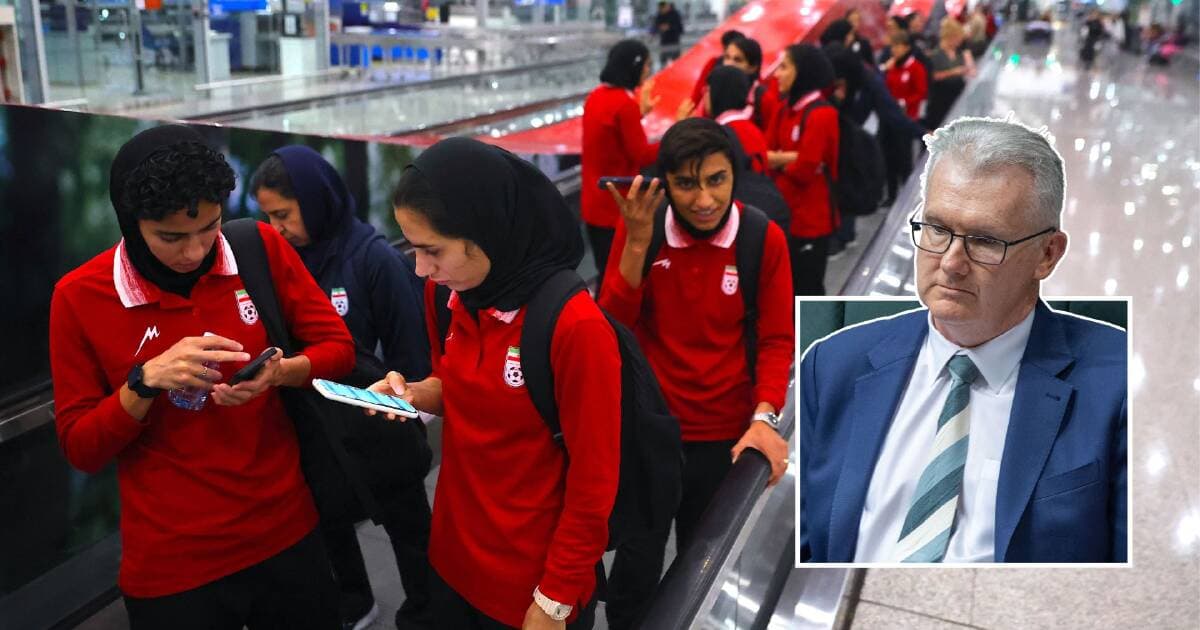
According to reports, the players faced significant backlash and threats, with one player reportedly receiving a chilling voice note from her mother warning 'Don't come [back to Iran]… they'll kill you.'
Another message smuggled by a player's family read 'You need to stay,' indicating the genuine fear of persecution they believed they would face upon returning home.
International Response
The international response to the players' situation included warnings from prominent figures and media coverage that framed it as a broader human rights issue.
Former US President Donald Trump issued a stark warning that the team 'will most likely be killed' if they were allowed to return to Iran, amplifying the concerns about their safety.
Western media outlets extensively covered the story, highlighting the players' fears and the geopolitical tensions surrounding their situation.
The coverage emphasized the broader context of Iran's wartime conditions and the psychological warfare being waged against the country.
Some analysts suggested the incident was part of coordinated efforts to exert media pressure on Iran during its conflict with the United States and Israel.
Iranian Government Response
Iranian authorities welcomed the players' return as a victory against foreign influence and portrayed their decision as a patriotic choice.
Iran's Sports Ministry issued a statement declaring that 'the national spirit and patriotism of the Iranian women's national football team defeated the enemy's plans against this team.'

State-linked media outlets reported that the players were en route to Kuala Lumpur, Malaysia, where they would join up with the rest of the squad before returning home.
Tasnim News Agency, which has ties to the Islamic Revolutionary Guard Corps, framed the return as successful resistance against 'psychological warfare, extensive propaganda and seductive offers,' suggesting the players had overcome foreign manipulation.
The Iranian narrative presents the incident as a media campaign that failed to deliver its intended impact, especially as more team members chose to return to Iran rather than seek asylum abroad.
Geopolitical Context
The incident reflects the broader geopolitical tensions between Iran and Western powers, particularly the United States and Israel, who are currently engaged in direct conflict with Iran.
“WANA (Mar 14) –Three more members of Iran’s women’s national football delegation, whose asylum requests during the team’s trip to Australia had become the subject of intense media attention abroad, have reportedly withdrawn their applications and are now on their way back to the country”
The timing of the protest coincided with the outbreak of war on February 28, which resulted in significant casualties including an estimated 1,444 Iranians killed, with more than 170 of them being schoolgirls in a Minab primary school bombing.
The football team's situation became entangled in this larger conflict, with different narratives emerging from competing perspectives.
While Western media and some analysts viewed the players' asylum requests as genuine safety concerns, Iranian media framed the incident as foreign manipulation designed to embarrass Iran.
The withdrawal of three of the seven players who initially sought asylum means that only four remain in Australia, reducing the potential impact of the incident as a propaganda tool for either side in the ongoing geopolitical conflict.
More on Sports

Mykhailo Mudryk Appeals Four-Year Doping Ban to Court of Arbitration for Sport
27 sources compared

Crystal Palace Beat Shakhtar Donetsk 3-1 in UEFA Conference League Semi-Final First Leg
14 sources compared

Burnley Targets Craig Bellamy After Scott Parker Leaves by Mutual Consent
10 sources compared

Jack Draper Withdraws From French Open With Knee Tendon Injury
11 sources compared