
Crypto · 22 May, 2026 · 2 min read
Tim Walz Signs HF 3709 Allowing Minnesota Banks And Credit Unions Crypto Custody From Aug. 1
Walz signed HF 3709 authorizing state-chartered banks and credit unions to custody crypto. Law creates a formal regulatory pathway for traditional banks to store digital assets.
Whether the custody law is framed primarily as consumer protection or competition.
2 of 3 outlets skipped it: patch highlights multiple other Walz-signed laws besides crypto..
12outlets compared
Same story, two versions
tap a side to read it in full
Cryptonews.net
“...safer way to manage crypto, strengthening protections against fraud, hacks, and loss...”Read the original ↗
CU Today
“supporters said will allow state-chartered financial institutions to compete”Read the original ↗
Shifts audience focus between risk reduction and market positioning.
Minnesota custody law
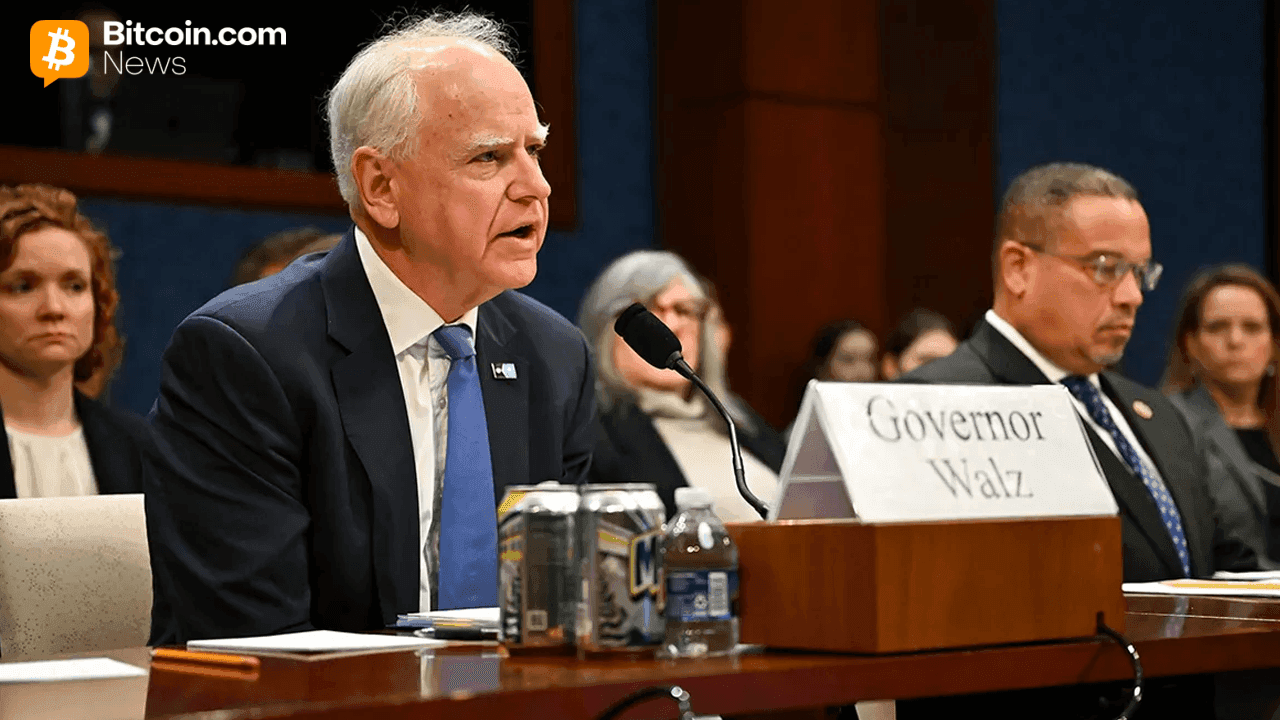
Minnesota Gov. Tim Walz signed HF 3709 into law, authorizing state-chartered banks and credit unions to offer certain cryptocurrency custody services beginning Aug. 1.
The law takes effect on Aug. 1, 2026, and requires institutions to submit a comprehensive 60-day advance written notice to the Minnesota Commissioner of Commerce detailing internal risk management and cybersecurity frameworks before offering services.
Under the explicit terms of the crypto custody law, state-chartered banks are authorized to provide virtual asset custody services in a fiduciary or nonfiduciary capacity, while credit unions may operate in a custodial nonfiduciary capacity.
The legislation also defines custody services as the safekeeping, controlling or managing of digital assets or their cryptographic private keys, and it requires that all customer digital asset holdings be separated from the financial institutions’ own assets and cannot be treated as bank property.
Support, demand, and limits
State Representative Steve Elkins, one of the three authors of bill HF 3709, said, “The community banks and credit unions wanted to be able to offer this service for their customers and members as part of a comprehensive array of financial services,” and he described people who “have essentially lost their crypto currency accounts because they misplaced their account ID or password.” Elkins added, “That wouldn’t happen if their bank or credit union was acting as a custodian for their account information,” framing the custody option as a way to keep account information from being lost.
The law authorizes institutions to work with third-party service providers or subcustodians, provided customer assets are legally and operationally segregated from the institution’s own assets and not treated as its property. It also requires institutions to maintain written policies covering risk management, internal controls, cybersecurity, business continuity, and regulatory compliance, while the Department of Commerce can prohibit or restrict the activity if it determines the service is unsafe or unsound.

ATMs banned alongside custody
Minnesota’s custody authorization arrives alongside a separate statewide crackdown on crypto kiosks and ATMs, with Walz signing SF 3868 to implement a statewide ban effective Aug. 1.
Representative Erin Koegel, who authored the House version of the ban, said the kiosk had become a "tool for scammers to target some of our most vulnerable neighbors, especially seniors living on fixed incomes."
The sources also describe the scale of Minnesota’s traditional financial footprint, including 240 commercial insured banks with roughly $128 billion in assets as of May 2025 and 82 credit unions affiliated with the Minnesota Credit Union Network.
In parallel, the sources say one of the U.S.’s largest bitcoin ATM providers, Bitcoin Depot, filed for bankruptcy Monday, as Minnesota lawmakers advance separate measures affecting how residents access crypto services.