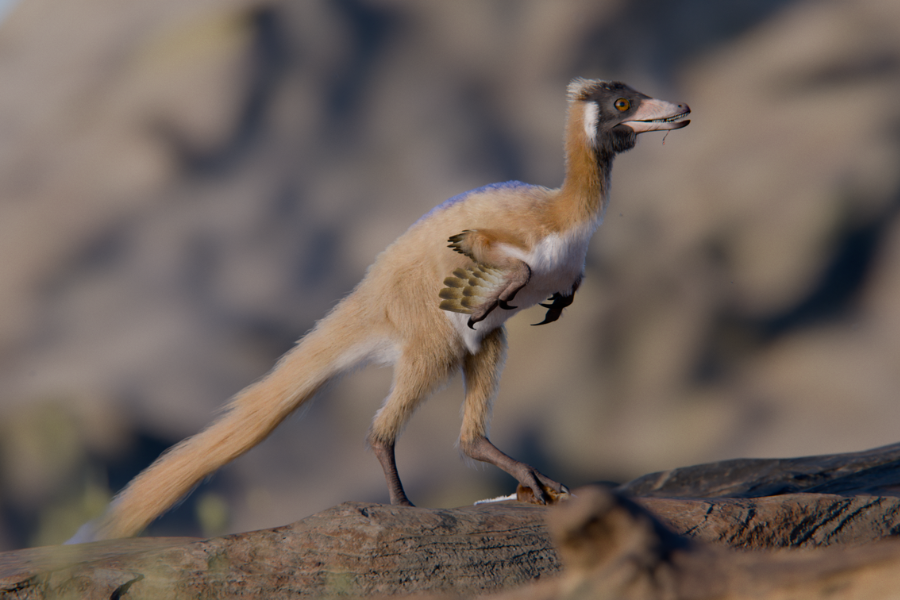
Tiny, long-armed dinosaur leads to rethink of dinosaur miniaturization
Alvarezsaurid diet and size
Alvarezsaurids were mostly small-bodied theropods.
“Alvarezsaurids were mostly small-bodied theropods that paleontologists originally misinterpreted as early flightless birds, only to later recognize them as an ant-eating lineage of non-avian dinosaurs”
Paleontologists originally misinterpreted them as early flightless birds and later recognized them as an ant-eating lineage of non-avian dinosaurs.
For years researchers suspected that Alvarezsaurids underwent evolutionary miniaturization tied to a diet of social insects like ants and termites.
This tidy hypothesis explained their small size as an adaptation for efficient ant hunting.
Alnashetri fossil discovery
A newly discovered fossil of one of the smallest alvarezsaurids, named Alnashetri cerropoliciensis, challenges that neat, linear view of miniaturization.
The specimen was unearthed from the Candeleros Formation at the Cerro Policía locality in Argentina's Río Negro Province and is estimated to have lived roughly 90 million years ago.
The team reports that this skeleton currently stands as the most complete and smallest Alvarezsaurid found in South America.
Peter Makovicky, a paleontologist at the University of Minnesota, said, "It was a pursuit predator actively hunting insects and small mammals," suggesting it probably did not feed on ants at all.
Alnashetri fossil summary
Alvarezsaurids typically had short forelimbs tipped with a single oversized thumb claw, minute teeth, and sensory adaptations akin to modern nocturnal birds—features that supported the termite/ant-eating explanation.
“Alvarezsaurids were mostly small-bodied theropods that paleontologists originally misinterpreted as early flightless birds, only to later recognize them as an ant-eating lineage of non-avian dinosaurs”
The Alnashetri fossil, while missing its skull roof, parts of its right arm, its lower right leg, and much of its tail, preserves enough crucial anatomy for analysis.
Bone tissue indicates the individual was a subadult likely approaching sexual maturity, as shown by what appears to be medullary bone, a temporary tissue associated with egg-laying in modern birds.
Despite being nearly fully grown, it is estimated to have weighed a mere 700 grams.
Key Takeaways
- Alvarezsaurids were small-bodied theropods originally misidentified as early flightless birds
- Alvarezsaurids were later recognized as an ant-eating lineage of non-avian dinosaurs
- New tiny, long-armed specimen challenges miniaturization linked to social-insect diet
More on Technology and Science

Anthropic Sues Pentagon Over Blacklist Designating AI Firm a National-Security Supply-Chain Risk
14 sources compared

Anthropic Sues Department of Defense Over Supply-Chain Risk Blacklist
12 sources compared

Anthropic Sues Pentagon Over 'Supply Chain Risk' Label After Refusing Military Use of Claude
12 sources compared

Anthropic Sues Department of Defense After Pentagon Labels Its AI a ‘Supply‑Chain Risk’
24 sources compared