
Trump Administration Accuses China of Deliberate Industrial-Scale AI Theft Campaigns
Key Takeaways
- White House alleges China conducting industrial-scale campaigns to steal U.S. AI models.
- Distillation is the cited method used to extract AI models' IP.
- OSTP memo says evidence supports the claim; linked to Trump-Xi summit timing.
White House memo escalates AI theft claims
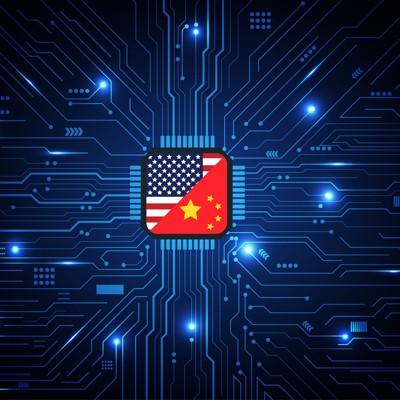
The Trump administration’s Office of Science and Technology Policy accused China of running “deliberate, industrial-scale campaigns to distill U.S. frontier AI systems,” framing the activity as an attempt to steal American AI capabilities.
“The US is preparing to crack down on China’s allegedly “industrial-scale theft of American artificial intelligence labs’ intellectual property,” the Financial Times reported Thursday”
In a memo sent to federal agencies, OSTP warned that distillation campaigns involve “a deluge of requests” sent to an AI model to train a knockoff version, and that “Models developed from surreptitious, unauthorized distillation campaigns like this do not replicate the full performance of the original.”
The memo’s language, as described by multiple outlets, centers on the scale and coordination of the alleged operations, including the use of proxy accounts and “jailbreaking techniques.”
Ars Technica reported that in a memo reviewed by the Financial Times, OSTP director Michael Kratsios warned that “the US government has information indicating that foreign entities, principally based in China, are engaged in deliberate, industrial-scale campaigns to distill US frontier AI systems.”
Semafor described the White House memo as “serious escalation on the issue,” noting that the charge itself was not new because Anthropic and OpenAI had already accused rivals of distillation.
Nextgov/FCW added that OSTP told agencies the administration would enhance engagement with the private sector to counter foreign-led distillation campaigns designed to undermine U.S. AI advances.
Distillation, proxies, and jailbreaking
Across the reporting, the alleged mechanism is distillation: using outputs from a “teacher” model to train a “student” model, which the White House and industry accounts describe as a way to extract capabilities without direct access.
Semafor explained that the administration’s concern involves “adversarial distillation attempts, in which a ‘teacher’ AI model trains a ‘student’ model,” and it described the administration’s plan to work with U.S. AI firms to counter such campaigns.

Nextgov/FCW provided a more operational description, saying the memo warned that distillation campaigns send “a deluge of requests” to an AI model in order to train a knockoff version, while also noting that “bad actors” can steal proprietary information from U.S. companies.
Ars Technica said Kratsios’s memo warned that Chinese campaigns were “leveraging tens of thousands of proxy accounts to evade detection and using jailbreaking techniques to expose proprietary information.”
The Hill similarly quoted Kratsios’s memo as saying the U.S. government learned Chinese entities were leveraging “thousands of proxy accounts and jailbreaking tactics to access proprietary information.”
Fox Business added that the memo accused China of using “tens of thousands of proxies” and said the resulting models could be used to “deliberately strip security protocols from the resulting models.”
Axios described Kratsios’s argument that these campaigns enable foreign actors to release models that appear to match U.S. AI capabilities “at a fraction of the cost,” while also stripping away guardrails meant to keep outputs “ideologically neutral and truth-seeking.”
Industry accusations and prior allegations
The White House memo arrives after a sequence of industry claims about distillation and extraction, with multiple outlets tracing how Anthropic and OpenAI described similar activity earlier in the year.
“Accessibility helpSkip to navigationSkip to main contentSkip to footer > White House accuses China of ‘industrial-scale’ theft of AI technology Subscribe to unlock this article Try unlimited access Only £1 for 4 weeks Then £59 per month”
Ars Technica reported that “Since the launch of DeepSeek—a Chinese model that OpenAI claimed was trained using outputs from its models—other AI firms have accused global rivals of using a method called distillation to steal their IP.”
It also cited Google’s January claim that “commercially motivated” actors not limited to China attempted to clone its Gemini AI chatbot by promoting the model “more than 100,000 times” in bids to train cheaper copycats.
Ars Technica further said that in the next month, Anthropic accused Chinese firms DeepSeek, Moonshot, and MiniMax of generating “over 16 million exchanges with Claude through approximately 24,000 fraudulent accounts.”
Nextgov/FCW echoed the Anthropic figure, stating that Anthropic accused three Chinese-based AI companies—DeepSeek, Moonshot AI and MiniMax—of overwhelming its Claude model with “16 million exchanges from roughly 24,000 fraudulent accounts.”
It also referenced OpenAI’s letter to members of the House China Select Committee, describing it as saying OpenAI had evidence “indicative of ongoing attempts by DeepSeek to distill frontier models of OpenAI and other US frontier labs, including through new, obfuscated methods.”
Milenio added that at the end of February, Anthropic accused Chinese companies DeepSeek, Moonshot AI, and MiniMax of creating “more than 24,000 fraudulent accounts” to generate “more than 16 million interactions” with Claude.
Reactions from U.S. and China
The memo’s escalation drew direct pushback from China while U.S. officials and industry figures emphasized the national security and economic stakes.
The Hill reported that a spokesperson for the Chinese Embassy in the U.S. said it “oppose[s] the unjustified suppression of Chinese companies by the U.S.” and added that “China has always been committed to promoting scientific and technological progress through cooperation and healthy competition,” while also saying “China attaches great importance to the protection of intellectual property rights.”
The American Conservative described the Chinese government denial through embassy spokesman Liu Pengyu, calling the accusations “pure slander.”
In contrast, Kratsios’s memo and public statements emphasized the alleged security implications and the limits of the copied models.
The Hill quoted Kratsios writing that the models produced through distillation do not meet the full performance capabilities of the original but allow foreign actors to release products that appear comparable for a cheaper price, and it said these products “often present national security risks as actors strip the security protocols usually embedded in U.S. versions.”
Fox Business quoted Kratsios’s X post saying, “The U.S. has evidence that foreign entities, primarily in China, are running industrial-scale distillation campaigns to steal American AI. We will be taking action to protect American innovation,” and it quoted the memo’s claim that the campaigns can “deliberately strip security protocols.”
Nextgov/FCW said OSTP director Michael Kratsios posted on X that “these foreign entities are using tens of thousands of proxies and jailbreaking techniques in coordinated campaigns to systematically extract American breakthroughs.”
Policy steps, Congress, and next moves
OSTP’s memo and the surrounding reporting point to a set of government and legislative actions aimed at countering distillation campaigns, expanding information sharing, and potentially changing how the U.S. treats model extraction.
“The White House on Thursday accused China-based actors of targeting U”
Nextgov/FCW said OSTP told agencies the Trump administration would take steps including sharing more information with the private sector about attempts to conduct large-scale distillation attacks, enabling companies “to better coordinate against such attacks,” partnering with firms to develop “a set of best practices to counter these campaigns,” and looking at developing new steps to hold foreign actors accountable.
It also said these actions are consistent with the White House’s AI Action Plan, released in July 2025, emphasizing “preventing our adversaries from free-riding on our innovation and investment.”
Ars Technica reported that Kratsios confirmed in his memo that the U.S. is exploring measures “to hold foreign actors accountable for industrial-scale distillation campaigns,” and it said Congress may update laws soon.
Ars Technica also cited an April report from the House’s Select Committee on China advising that Congress “should direct the Commerce Department’s Bureau of Industry and Security (BIS) and the Department of Justice (DOJ)” to “treat model extraction as industrial espionage” and “impose penalties severe enough to deter Beijing’s theft of American innovation.”
Semafor said the issue is unfolding “weeks before US President Donald Trump is slated to travel to Beijing,” while Fox Business said the accusation precedes the “historic Trump-Xi summit by just three weeks” and noted that talks were postponed to May 14.
Nextgov/FCW added that retired Gen. Paul Nakasone said the administration may consider “export controls, diplomatic protests and tailored technology restrictions,” and Fox Business quoted Anthropic’s earlier warning that foreign labs that distill American models can feed “unprotected capabilities into military, intelligence and surveillance systems.”
More on Technology and Science

GitHub Copilot Switches To Token-Based Billing, Driving Microsoft Price Hikes For Developers
10 sources compared
OpenAI Rolls Out ChatGPT Lockdown Mode To Protect Against Prompt Injection Attacks
15 sources compared
Scientists Make Sourdough Bread With Yeast From Ötzi the Iceman’s Mummified Body
12 sources compared

Trump Administration Imposes Medicaid Work Reporting Rules, Forcing Oregon To Rework IT Systems
10 sources compared