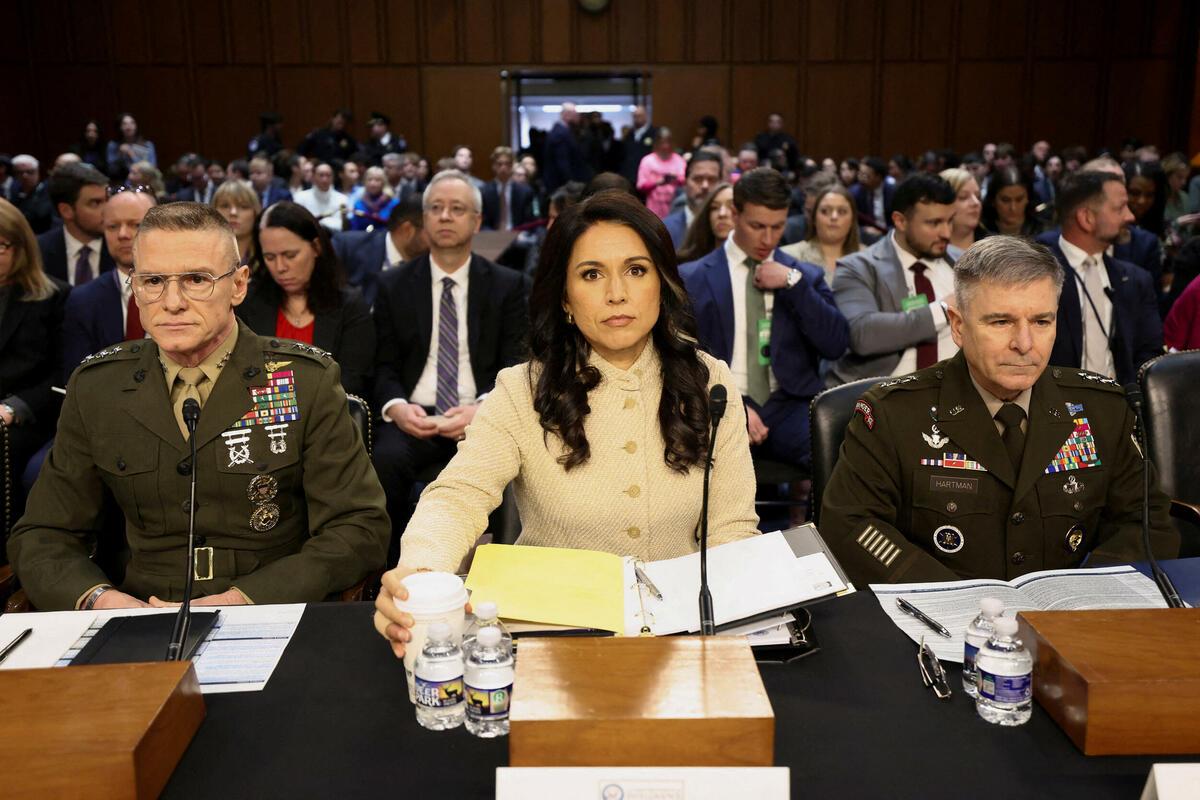
Trump administration airstrikes have vastly degraded Iran's military capabilities, says DNI Tulsi Gabbard
Key Takeaways
- Airstrikes have vastly degraded Iran's military capabilities.
- Iran has not restarted its nuclear enrichment program since 2025 strikes.
- Iran remains capable of striking U.S. and allied interests in the region.
Military Status Assessment
Director of National Intelligence Tulsi Gabbard provided a nuanced assessment to Congress regarding the impact of U.S. military strikes on Iran.
“"Not going to try and do those calculations”
She stated that the Iranian regime remains 'intact but largely degraded by Operation Epic Fury.'
Despite weeks of American-Israeli attacks that have killed Iran's Supreme Leader Ayatollah Ali Khamenei and numerous top national security officials, Gabbard testified that the Iranian state apparatus continues to function.
The intelligence community's assessment indicates that while Iran's military capabilities have been significantly weakened, the country's political structure has not collapsed.
'The regime in Iran appears to be intact but largely degraded due to attacks on its leadership and military capabilities,' Gabbard told the Senate Intelligence Committee.
She emphasized that Iran and its proxies maintain the ability to attack U.S. and allied interests in the Middle East.
Contradiction with Trump Claims
Gabbard's testimony directly contradicted President Trump's more optimistic assessments of the war's effectiveness.
While Trump declared that the Iranian regime had 'been literally obliterated' and claimed that 'The Air Force is gone, the Navy is gone, many, many ships have been sunk,' the intelligence community's painted a more measured picture.

The Director of National Intelligence specifically noted that despite the severe damage inflicted, Iran's basic governmental structure remains operational.
This discrepancy highlights the growing tension between the administration's public statements and the intelligence community's private assessments.
It suggests that the White House may be overstating the success of the military campaign for political purposes.
Administration Turmoil
Gabbard's testimony occurred amid significant turmoil within the Trump administration's national security apparatus.
Her deputy Joseph Kent publicly resigned in protest over the Iran war.
Kent, who served as Director of the National Counterterrorism Center and was described as a 'close aide' to Gabbard, stated in his resignation letter that 'Iran does not pose an imminent threat to our country, and it is clear that we started this war due to pressures from Israel and its powerful lobby.'
The hearing marked Gabbard's first significant public appearance in months and took place under intense scrutiny from lawmakers from both parties.
They demanded greater transparency about the administration's conduct of the conflict.
The Senate Intelligence Committee hearing focused largely on the Iran war, now in its third week, as lawmakers expressed concern about the lack of clarity surrounding the administration's war strategy and objectives.
Intelligence vs Presidential Authority
During questioning by Democratic Senator Jon Ossoff, Gabbard clarified the intelligence community's position on determining threats.
She stated that 'the only person who can determine what is and is not an imminent threat is the president.'

This assertion created a clear distinction between the intelligence community's role and the president's authority.
When pressed about whether intelligence officials had determined that Iran posed an imminent nuclear threat, Gabbard responded that 'It is not the intelligence community's responsibility to determine what is and is not an imminent threat.'
She also confirmed that while Iran's nuclear enrichment program had been 'obliterated' in last summer's strikes, the intelligence community assessed that Iran 'maintained the intention to rebuild and to continue to grow their nuclear enrichment.'
This testimony revealed a deliberate separation between factual intelligence assessments and political determinations of threat levels.
Regional Warnings
The intelligence community had reportedly warned the Trump administration about potential Iranian retaliation before the strikes were launched.
“Asked why she did not talk about these details during her hearing before the committee, the head of the intelligence services responded by claiming that the limited time did not allow it, adding, however, that she does not question the evaluation mentioned in that document”
Trump later claimed Tehran's reaction came as a surprise.

According to sources familiar with U.S. intelligence reports, Trump was briefed that attacking Iran could trigger retaliation against U.S. Gulf allies.
They also reported that Tehran would likely seek to close the Strait of Hormuz, a critical maritime pathway through which 20% of the world's oil flows.
Gabbard declined to comment on whether she had specifically briefed Trump about these potential consequences.
She affirmed that the intelligence community provides the president with 'the best available objective intelligence for decision-making.'
The administration's claims about Iran's missile capabilities and nuclear timeline were not supported by intelligence reporting.
Future Rebuilding Assessment
Looking forward, Gabbard warned that if the current Iranian regime survives the ongoing conflict, it will likely initiate a 'years-long effort to rebuild its military, missiles and UAV forces.'
This long-term assessment suggests that while the current military campaign may have achieved temporary degradation of Iranian capabilities, the underlying threat could persist or reemerge in the future.
The Director of National Intelligence emphasized that the intelligence community's focus extends beyond immediate tactical outcomes to strategic implications.
She acknowledged that hostile regimes typically seek to restore their military strength over time.
This perspective contrasts with more optimistic administration predictions of decisive victory.
Instead, it presents a more realistic assessment of the likely trajectory of Iran's military development should the current government remain in power following what has become an increasingly protracted conflict.
More on USA

Joe Kent resigns from Trump-era counterterrorism post over Iran war, reignites antisemitism fears
15 sources compared

UFW, Chávez Foundation Disassociate Over Chávez-Related Events Amid Sexual Abuse Allegations
37 sources compared

Unidentified drones fly over Fort McNair housing Rubio, Hegseth
40 sources compared
Fresno State Removes César Chávez Statue Amid Sexual Abuse Allegations by Dolores Huerta
13 sources compared