
Trump Administration Sends Americans Exposed to Ebola to Kenya Quarantine Facility
Key Takeaways
- The administration plans to quarantine Americans exposed to Ebola in Kenya.
- Kenya facility will be a dedicated quarantine and treatment center for exposed travelers.
- Some Ebola-exposed Americans were previously flown to Europe for care instead of Kenya.
Kenya quarantine plan
The Trump administration plans to send Americans exposed to Ebola to a quarantine and treatment facility in Kenya that the U.S. military has been directed to stand up within a week, to be housed in biocontainment units and supported by prefabricated medical facilities transported by truck and airplane.
The facility is intended to provide access to high-quality care for Americans who would need to quickly get out of DRC and quarantine without the risks of a lengthy transport back to the U.S., and the initial plan is to have a 50-bed unit within a week with potential to expand to 250 beds later.
During a White House Cabinet meeting Wednesday, Secretary of State Marco Rubio reiterated that “We cannot and will not allow any cases of Ebola to enter the United States,” framing the effort around containing the crisis in the Democratic Republic of the Congo.
The plan is being set up through a coordinated effort with the departments of State, Health and Human Services and Defense, and the Kenyan government has approved the plan to construct a facility on their air base while the U.S. was still awaiting permission to bring patients as of Wednesday.
CBS News reported that multiple CDC officials confirmed the U.S. is in the process of setting up the Kenya quarantine facility for Americans who were exposed to or infected with Ebola, and that a Trump administration official said it is designed to provide access to high-quality care while avoiding a lengthy trip back to the U.S.
Critics call it unprecedented
The plan drew immediate pushback from public health and humanitarian voices, with Lawrence Gostin, director of the World Health Organization Collaborating Center on National and Global Health Law, saying the decision to quarantine Americans in Kenya is “unprecedented.”
Gostin warned in an email that “It is likely to cost American lives,” arguing that it is impossible to give high quality care in Kenya compared with state-of-the-art facilities in the U.S.

Jeremy Konyndyk, president of Refugees International, said the administration was sending exposed Americans “just literally anywhere else,” and he criticized the posture as offensive because it suggested the U.S. would not have “your back; you’re not welcome in your own country.”
Dr. Krutika Kuppalli, an infectious disease expert and former medical director of the Sierra Leone Ebola Treatment Center, called the plan “insane” and said it would have “awful consequences,” while Lawrence Gostin also described the approach as “reckless, unethical & possibly unlawful.”
The Kenyan Ministry of Health said it was engaged in “ongoing discussions with US government and other global partners regarding international collaboration on strengthening preparedness and response mechanisms for Ebola Virus Disease (EVD),” adding that any arrangements would be guided by Kenya’s laws and biosafety standards.
What happens next
The administration’s approach includes training Public Health Service officers to staff the Kenya facility, with The Washington Post reporting that members of the U.S. Public Health Service had begun training at Joint Base Andrews in Maryland and that one person expressed concern that the training period was only three days.
The plan also intersects with broader travel and entry screening measures, with the U.S. directing U.S. citizens and U.S. nationals who have been in the DRC, Uganda or South Sudan in the previous 21 days to land in Atlanta, Houston and Dulles airport, and adding John F. Kennedy International Airport in New York to the list.
A U.S. Department of Homeland Security spokesperson said, “CDC will conduct enhanced public health entry screening for these,” describing how screening would work for passengers allowed to enter.
The stakes are also tied to the outbreak’s scale and the lack of approved countermeasures for the strain driving the outbreak, with The Hill reporting that there are currently no approved vaccines or treatments for the rare strain of the virus causing the outbreak.
In parallel, the World Health Organization has declared the outbreak a public health emergency of international concern, and The Hill reported that the rare strain has caused nearly 1,000 suspected cases and more than 220 suspected deaths, while the plan is meant to get Americans access to care faster and avoid “12-plus hours of medevac flight time.”
More on Technology and Science
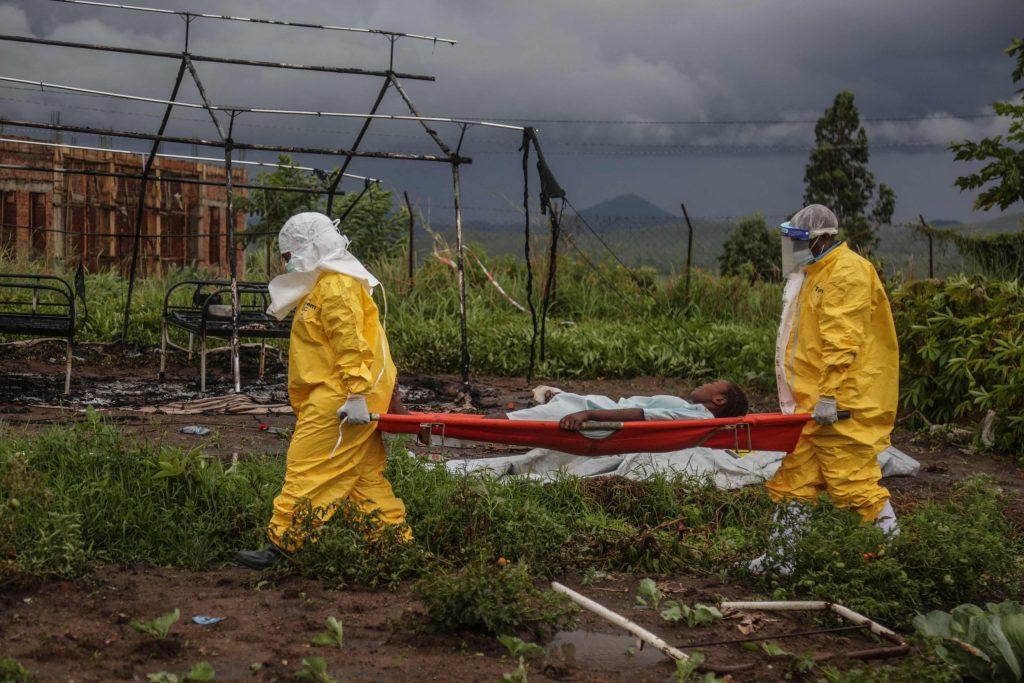
WHO Warns Eastern Democratic Republic of Congo Ebola Outbreak Collides With Armed Conflict
12 sources compared
Elon Musk Accuses Pentagon of Violating Starlink Contract Over Iran War Pricing
12 sources compared
JD Vance Praises Pope Leo XIV’s AI Encyclical Warning Against Unrestrained Technology
14 sources compared

Heat Dome Traps Warm Air Over Western Europe, UK Records Hottest May Day
13 sources compared