
Trump Authorizes US Strikes Against Iran After Iran Shoots Down Apache Helicopter Over Strait of Hormuz
Key Takeaways
- Trump authorized new U.S. strikes on Iran after Apache helicopter downing.
- Incident occurred near the Strait of Hormuz, prompting retaliatory U.S. strikes.
- U.S. describes strikes as self-defense, proportional to Iran's downing of the helicopter.
Apache crash triggers strikes
President Donald Trump authorized a fresh round of attacks against Iran after he accused the country of shooting down a United States military helicopter over the Strait of Hormuz.
“President Donald Trump has authorised a fresh round of attacks against Iran, after he accused the country of shooting down a United States military helicopter over the Strait of Hormuz”
Trump wrote on Tuesday that “last night the Iranians shot down one of our highly sophisticated Apache Helicopters while patrolling over the Strait of Hormuz,” and he said “Nevertheless, the United States must, of necessity, respond to this attack.”

Within hours, US Central Command (CENTCOM) announced it had resumed attacks on Iran, calling them “self-defence strikes,” and it said the mission was “a proportional response to unjustified Iranian aggression.”
CENTCOM said the US military confirmed it had launched an attack around 5pm US Eastern time (21:00 GMT), and explosions were reported in the southern Iranian port city of Sirik as well as other sites around the Strait of Hormuz.
Iran has not confirmed or denied downing the helicopter, but Foreign Minister Abbas Araghchi called on US forces to withdraw from the region, saying “Foreign forces in proximity to our territory are at constant risk on account of their own human errors.”
Competing claims and warnings
CENTCOM said the helicopter incident was under investigation, while Trump said the two pilots were safe and uninjured and that “There were two pilots involved, both are safe and uninjured.”
NBC News reported that a U.S. official said current indications were that the Apache was brought down by an Iranian drone, and CENTCOM said the two crew members were rescued by an unmanned boat after the aircraft went down off the coast of Oman.

Iran’s Foreign Minister Abbas Araghchi warned after the US attacks resumed that Iran was planning retaliation, writing on social media that “Our Powerful Armed Forces will leave no attack or threat unanswered.”
Araghchi also urged foreign forces to leave, saying “To reduce risk, best solution is for them to leave,” and he argued the Strait of Hormuz was “NOT international waters but shared between Iran and Oman.”
Sina Azodi, director of the Middle East studies programme at Georgetown University, said Iran is trying to pressure Trump to finalise an agreement that would “comprehensively end the conflict,” as Trump faced international scrutiny on multiple fronts.
Ceasefire strain and next risks
The latest escalation came as the attack risks rupturing an April 8 truce that paused the US-Israel war against Iran, with the agreement already “pushed to the brink by repeated skirmishes across the region.”
“A military response from the US could threaten the ceasefire that has been in place since 8 April, as Tehran warned "foreign forces" to leave the Strait of Hormuz”
Euronews said the US response could threaten the ceasefire that has been in place since 8 April, and it noted Tehran warned “foreign forces” to leave the Strait of Hormuz.
Trump had previously said he was in the “final throes” of a deal and told reporters, “We have a good chance” of signing a deal in “two or three days,” but the helicopter downing and the US retaliation pledge added pressure to negotiations.
The incident also marked the first publicly known use of a drone boat by the US military to recover personnel, and CENTCOM said the soldiers were safely rescued within approximately two hours and were in stable condition.
For marine war-risk insurers, the sequence of attack, survival, and retaliation pledge was described as a “depth charge,” with the Lloyd’s Market Association’s Joint War Committee redesignating the entire Arabian Gulf as a conflict zone and Howden Re estimating the conflict could generate “$2 billion to $3 billion” in market-wide claims.
More on USA

Social Security Board Of Trustees Projects OASI Trust Fund Depleted In 2032, Congress Must Act
11 sources compared

US Launches Proportional Strikes Against Iran After Trump Says Tehran Shot Down Apache Helicopter
16 sources compared
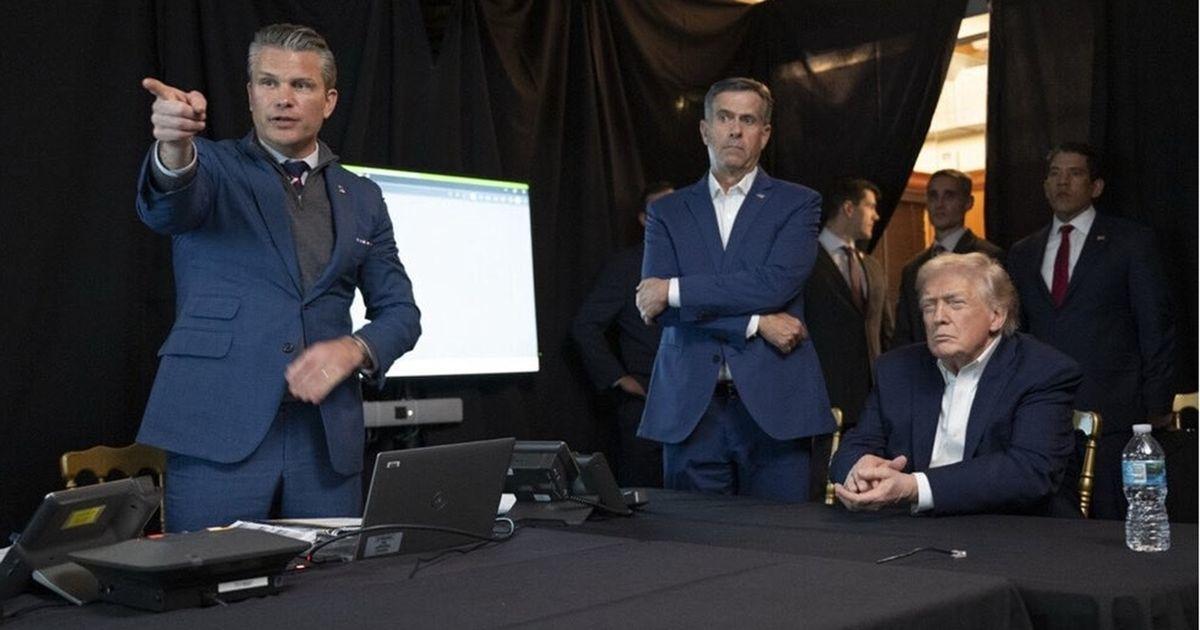
Trump Orders US Strikes on Iran After Iran Shoots Down Apache Helicopter Near Strait of Hormuz
29 sources compared
U.S. House Passes $70 Billion Secure America Act Funding ICE And Border Patrol Through Trump Term
28 sources compared