Trump Cheers Mueller's Death, Says 'I'm Glad He's Dead'
Key Takeaways
- Mueller died at 81; he was former FBI director and special counsel.
- Trump posted "I'm glad he's dead" in response to Mueller's death.
- Media emphasized his leadership of the Trump-Russia investigation as defining his career.
Trump's Controversial Reaction
President Donald Trump ignited widespread controversy by publicly celebrating the death of former FBI Director and special counsel Robert Mueller.
“Former FBI Director Robert Mueller, who investigated Russia-Trump campaign ties, dies Former FBI Director Robert Mueller, who investigated Russia-Trump campaign ties, dies WASHINGTON (AP) — Robert S”
Trump posted on his Truth Social platform: 'Robert Mueller just died. Good, I'm glad he's dead. He can no longer hurt innocent people!'
The remark drew immediate condemnation from across the political spectrum, with numerous Democrats and Republicans expressing disgust at the president's lack of decorum.
Former Republican National Committee Chairman Michael Steele called Trump 'a vile disgusting man' for the statement.
Democratic Rep. Seth Moulton wrote that 'whether you support the President or not, you know this comment is disgusting.'
The death of Mueller, who had been battling Parkinson's disease, prompted numerous solemn tributes from public figures before Trump's inflammatory response transformed the moment into another political flashpoint.
Mueller's Distinguished Career
Robert Mueller had a distinguished career spanning decades of public service across multiple presidential administrations, establishing himself as a respected figure in Washington before becoming the center of political controversy.
Serving as FBI director from September 2001 to September 2013, Mueller led the bureau through the aftermath of the 9/11 attacks and built up its counterterrorism mission.
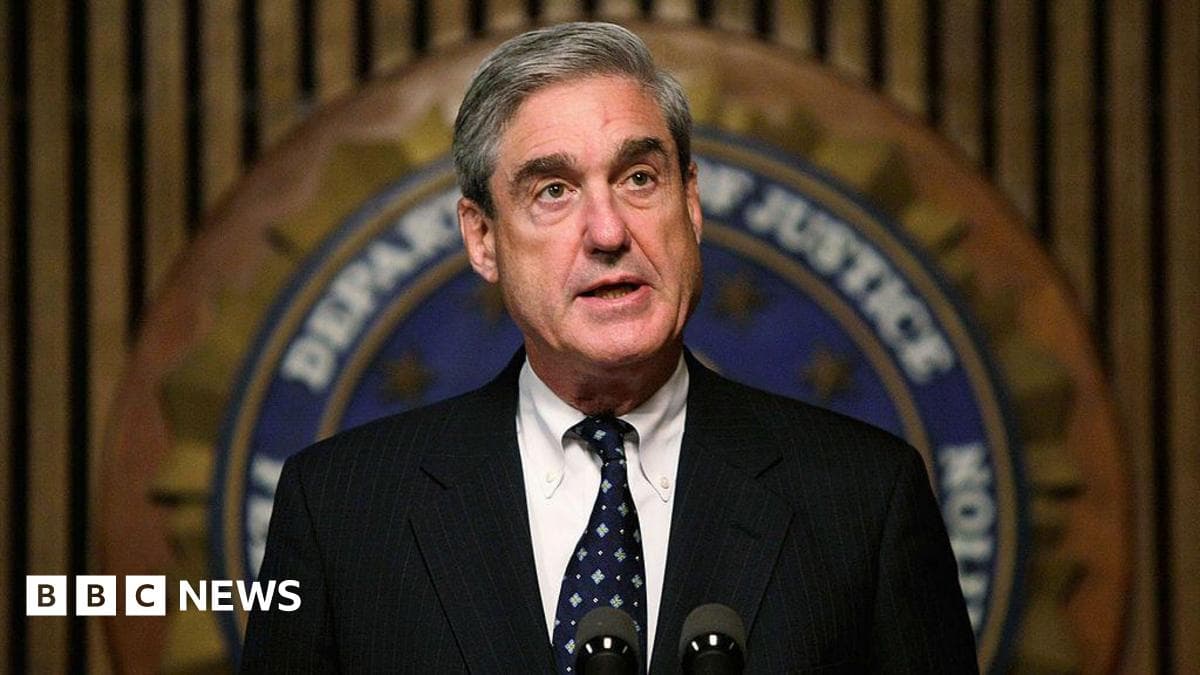
He became the second-longest serving FBI director in history behind J. Edgar Hoover.
A decorated U.S. Marine wounded in Vietnam, Mueller brought bipartisan respect to his roles, investigating high-profile cases including mobster John Gotti and Panamanian dictator Manuel Noriega during his tenure as a federal prosecutor.
His reputation for integrity and professionalism led to his 2017 appointment as special counsel to investigate Russian interference in the 2016 election.
This role ultimately placed him in direct conflict with President Trump despite Mueller's history of serving Republican presidents.
The Russia Investigation
The Russia investigation that Mueller led from 2017 to 2019 became a defining chapter of his career and a source of intense political conflict with President Trump.
“Robert Mueller, former special counsel who investigated Russian interference in the 2016 presidential election, died Friday”
Appointed as special counsel by the Justice Department following the firing of FBI Director James Comey, Mueller investigated whether Trump's presidential campaign conspired with Russia during the 2016 election.
After 22 months of investigation, Mueller's team produced more than 400 pages of findings that determined Russia did seek to help Trump win the election but did not find conclusive evidence of a criminal conspiracy between Moscow and the Trump campaign.
The report notably did not exonerate Trump regarding obstruction of justice, stating 'we are unable to reach that judgment' on whether the president clearly did not commit obstruction.
The investigation resulted in criminal charges against 34 individuals and three Russian entities, including several Trump associates.
Mueller largely avoided the media spotlight during the probe, communicating only through court documents and delegating hearings to his subordinates.
Political Conflict and Animosity
Trump's relationship with Mueller deteriorated significantly during and after the Russia investigation, marked by the president's persistent attacks and the special counsel's methodical, restrained approach.
Throughout the investigation, Trump repeatedly denounced the probe as a 'witch hunt' and an attempt to 'topple' him, while also accusing Mueller of conflict of interest and his subordinates of being 'gangsters' with Democratic political aims.
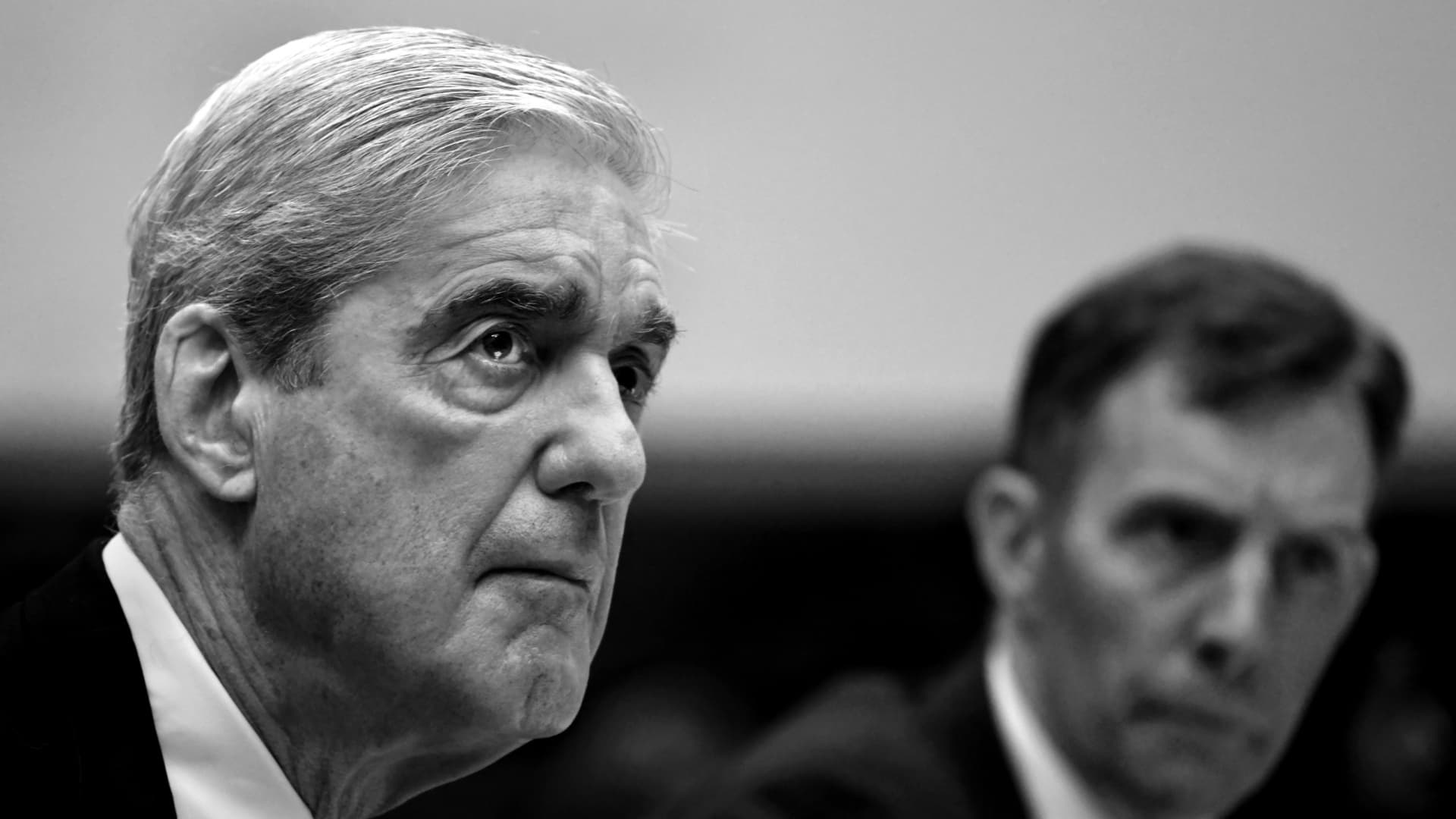
Despite his harsh rhetoric, Trump notably avoided direct personal attacks on Mueller himself, perhaps acknowledging the former FBI director's reputation for integrity.
Mueller maintained a calculated silence during the investigation, speaking only through official channels and refusing to engage with the media directly.
This approach contrasted sharply with Trump's bombastic style, creating a stark dichotomy between the two men that persisted long after the investigation concluded.
The tension culminated in Trump's celebratory reaction to Mueller's death, revealing the depth of the animosity that had developed between them over the course of the high-stakes political conflict.
Mueller's Death and Aftermath
Mueller died at the age of 81 on Friday, March 20, 2026, after a battle with Parkinson's disease that had been diagnosed in 2021.
“Robert Mueller, the former FBI director who led a polarizing two-year investigation into President Donald Trump’s ties to Russia, has died”
His family announced his passing with a brief statement that read: 'With deep sadness, we are sharing the news that Bob passed away last night. His family asks that their privacy be respected.'

The cause of death was not disclosed by the family, though The New York Times had previously reported on his health struggles.
Mueller's death came amid renewed congressional interest in his work, as the House Oversight and Government Reform Committee had sought to subpoena him in 2025 regarding the FBI's investigation into Jeffrey Epstein before dropping the request due to his declining health.
The timing of Mueller's passing and Trump's immediate, celebratory response created another moment of political division, with Senate Minority Leader Chuck Schumer noting that 'the cruelty is the point' and suggesting Trump was trying to distract from other issues.
The stark contrast between the somber tributes to Mueller's service and Trump's gleeful reaction highlighted the deep political polarization that had characterized their relationship.
More on USA

Trump threatens ICE deployment to airports amid DHS funding fight
23 sources compared

Trump Threatens to Obliterate Iran's Power Plants If Strait of Hormuz Opens Within 48 Hours
20 sources compared
Trump threatens to deploy ICE agents to US airports amid DHS funding standoff
46 sources compared

ICE Detainee Royer Perez-Jimenez Dies in Florida Detention Center; Officials Suspect Suicide
10 sources compared