
Trump Meets Xi in Beijing as Iran War, Strait of Hormuz, and U.S. Sanctions Top Agenda
Key Takeaways
- Iran war, nuclear issues, and trade dominate Trump-Xi talks.
- Beijing summit could shape U.S.-China relations for years to come.
- Trump invites top executives to join Beijing trip for Xi talks.
Summit, Iran, and Strait
President Donald Trump is set to leave on Tuesday for Beijing to meet with President Xi Jinping after weeks of trying to persuade China to use its leverage to prod Iran to agree to U.S. terms to end the 2-month-old war or, at the very least, reopen the Strait of Hormuz.
Ahead of the trip, the White House has set low expectations that Trump will be able to persuade Xi to change China’s posture, and U.S. Trade Representative Jamieson Greer said, “We don’t want this to be something that derails the broader relationship or the agreements that might come out of our meeting in Beijing.”

China has publicly insisted it wants to see the war end and has been working diplomatically behind the scenes, while Secretary of State Marco Rubio and Treasury Secretary Scott Bessent have stepped up calls for China to help reopen the strait, through which about 20% of the world’s crude flowed before the war began.
The AP also reports that the State Department announced on Friday it was sanctioning four entities, including three China-based firms, for providing sensitive satellite imagery that enables Iranian military strikes against U.S. forces in the Middle East.
In Beijing, Chinese Foreign Minister Wang Yi hosted his Iranian counterpart, Abbas Araghchi, and the Chinese foreign minister used the moment to defend Iran’s right to develop civilian nuclear energy, as Xi said safeguarding international rule of law “must not be selectively applied or disregarded.”
Taiwan, technology, and pressure
The BBC reports that the Trump-Xi summit is set to be one of the most consequential encounters for years, with the future of global trade, rising tensions in Taiwan, and competition in advanced technologies all at stake.
The BBC also frames China as trying to quietly step in as a peacemaker, saying Beijing joined Pakistan as a mediator and that officials in Beijing and Islamabad in March presented a five-point plan with the aim of bringing about a ceasefire and re-opening the Strait of Hormuz.
On Taiwan, the BBC says Trump downplayed U.S. willingness to defend the island, quoting him as saying, “He considers it to be a part of China,” and that “Taiwan does not adequately reimburse the US for its security guarantees,” adding that it “doesn't give us anything”.
The BBC further reports that US Secretary of State Marco Rubio said, “I hope the Chinese tell him what he needs to be told,” and that “what you are doing in the Strait is causing you to be globally isolated. You're the bad guy in this.”
In parallel, the BBC notes that the U.S. recently sanctioned a China-based refinery for transporting Iranian oil, while Trump last week downplayed any Chinese support for Iran during the conflict by saying, “It is what it is, right?” and “We do things, too, against them.”
Deals, delegation, and what’s at risk
As the summit approaches, CNBC reports that Trump invited executives from major U.S. companies to join his trip, including Tesla CEO Elon Musk, Apple CEO Tim Cook, BlackRock’s CEO Larry Fink, and Boeing CEO Kelly Ortberg, with the list described by a White House official as not yet announced.
CNBC also says the summit agenda is expected to cover trade, artificial intelligence, export controls, Taiwan and the Iran war, and it notes that Citigroup’s Jane Fraser told CNBC’s Leslie Picker, “I think it's very important to see engagement.”
Fox Business adds that Trump’s meeting with Xi in Beijing on May 14–15 comes as the relationship is disrupted by trade disputes and emerging technology, with restrictions on the sale of advanced AI chips described as a potential sticking point.
Fox Business quotes Derek Scissors saying the “president wants to announce a bunch of purchases” of U.S. goods following the talks, and it describes a scenario in which Xi can publicly commit to purchases even if “it doesn't mean they actually do it – they didn't do it in the phase one deal.”
The stakes are also tied to energy and supply chains, with the AP reporting that China imports about half of its crude oil and almost one-third of its liquefied natural gas from Middle Eastern countries affected by the closure of the strait, and that Beijing wants to guard against further deterioration of the U.S.-China relationship.
More on China
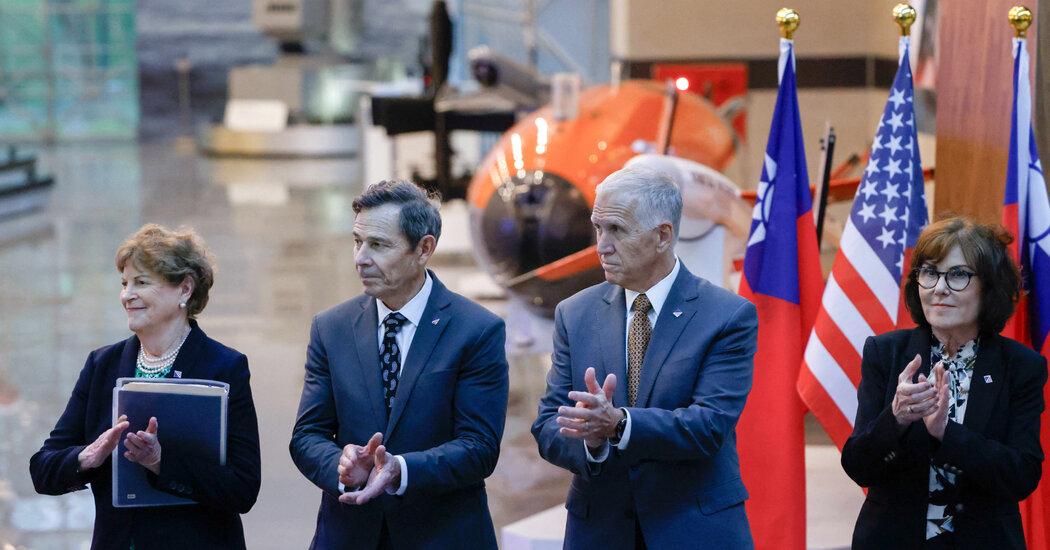
Cheng Li-wun Pushes Dialogue Over Weapons Ahead of Trump-Xi Summit in Beijing
14 sources compared

Trump Brings Elon Musk, Tim Cook and CEOs to Beijing Meeting With Xi Jinping
37 sources compared

China Sentences Wei Fenghe And Li Shangfu To Death With Two-Year Reprieve For Graft
14 sources compared
Trump Meets Xi Jinping in Beijing to Discuss Iran War, Officials Say
29 sources compared