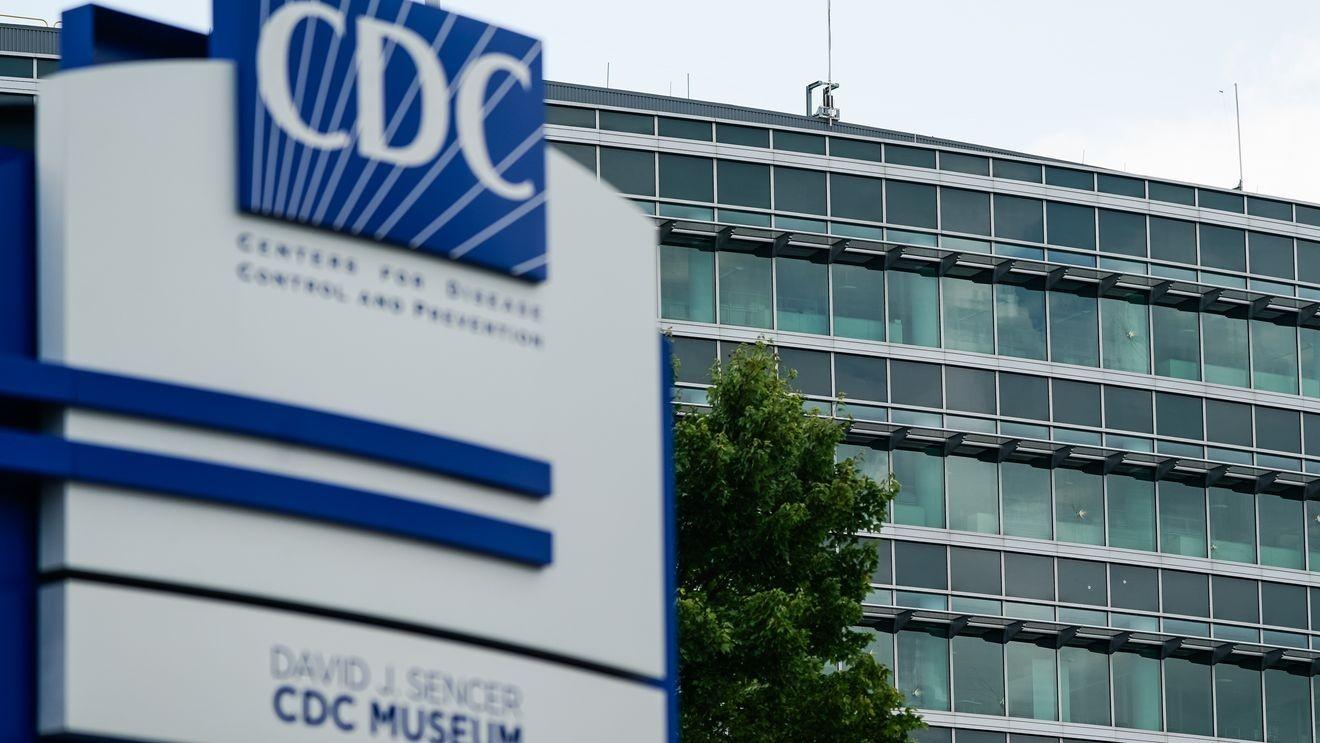
Trump Nominates Dr. Erica Schwartz To Lead CDC, Replacing Acting Director Jay Bhattacharya
Key Takeaways
- Trump nominated Erica Schwartz, former deputy surgeon general, to lead the CDC.
- She is a Coast Guard rear admiral with Brown medical degree and Maryland law degree.
- Senate confirmation is required to assume the role.
Trump’s CDC leadership shakeup
President Donald Trump on Thursday nominated Dr. Erica Schwartz to serve as director of the Centers for Disease Control and Prevention, ending a months-long effort to choose a permanent leader for the “embattled health agency.”
CNBC reported that Schwartz “would take over the role as Health and Human Services Secretary Robert F. Kennedy Jr. oversees a string of controversial health policy changes at the agency,” including “an overhaul of childhood vaccine recommendations.”

NBC News similarly said Trump announced Thursday that he was nominating Schwartz to lead the CDC, and it quoted Trump’s Truth Social post praising her as “a STAR!”
NPR described the CDC as “embattled” and said the agency has been without a confirmed leader for “all but a month of Trump’s second term.”
The nomination requires Senate confirmation, and both CNBC and ABC News emphasized that Schwartz would need to be confirmed before taking over.
ABC News added that Schwartz would replace Dr. Jay Bhattacharya, who is director of the National Institutes of Health and has been serving as acting CDC director since February.
In the same Truth Social post, Trump also announced other top health appointments, including Sean Slovenski as the CDC’s chief operating officer and Dr. Jennifer Shuford as chief medical director, with Dr. Sara Brenner named as senior counselor for public health to the health secretary.
Why the CDC is in turmoil
The nomination lands after a leadership sequence shaped by federal limits on acting officials and by clashes over vaccine policy.
CNBC said Dr. Jay Bhattacharya had been acting director “a title that expired last month under federal law,” pointing to the Vacancies Act, which “limits the amount of time an acting officer can serve in place of a Senate-confirmed official to 210 days.”

CNBC added that “Late last month marked 210 days since the most recent CDC director, Dr. Susan Monarez, was fired,” and it described Monarez as “the only person to serve as a confirmed CDC director during Trump's second term, holding the role for under a month last summer.”
ABC News similarly said Monarez was confirmed in July 2025 but “held the post for less than a month,” and it reported she was fired by Kennedy for “reportedly not rubber-stamping the health secretary's vaccine agenda.”
In congressional testimony in September, CNBC said Monarez told lawmakers she was fired after refusing Kennedy’s demands to approve vaccine recommendations she believed lacked scientific support, while ABC News quoted Monarez saying she was fired for “holding the line on scientific integrity.”
After Monarez’s dismissal, CNBC reported that “Jim O’Neill then served as the agency’s acting director for several months,” and it said O’Neill “signed off on a major overhaul of the childhood vaccination schedule in January that has since been blocked by a federal judge.”
NBC News and ABC News both described the judge’s intervention, with NBC News saying “a Massachusetts federal judge… halted many of the vaccine policy changes made under Kennedy’s handpicked CDC vaccine advisory panel” and ABC News saying these decisions were “later temporarily blocked by a federal judge.”
CNBC also said the agency is “reeling from the leadership upheaval, plummeting morale, significant staff turnover and controversial changes to U.S. vaccine policy,” and it tied the turmoil to a security incident at the CDC’s Atlanta headquarters on Aug. 8.
Support, skepticism, and competing narratives
Reactions to Schwartz’s nomination split along lines that track the broader dispute over vaccine policy and the CDC’s relationship to Health and Human Services Secretary Robert F. Kennedy Jr.
Trump framed the choice as a corrective for the agency’s scientific direction, writing on Truth Social that “These Highly Respected Doctors of Medicine have the knowledge, experience, and TOP degrees to restore the GOLD STANDARD OF SCIENCE at the CDC,” and ABC News added that he called the previous approach “an absolute disaster focused on “mandates” under Sleepy Joe.”
NBC News quoted Dr. Demetre Daskalakis, former head of the CDC’s National Center for Immunization and Respiratory Diseases, saying, “This is a team with great potential if political interference and the self interest of the secretary of health doesn’t hamper their ability to deliver for the health of the country.”
NPR included praise from Admiral Brett Giroir, who said, “Rear Admiral Schwartz is really an outstanding person in all regards,” and it quoted Admiral Paul Zukunft praising her as “brilliance as a doctor and a lawyer, her commitment to science, and her clear and diplomatic communication skills.”
NPR also quoted Dr. Georges Benjamin of the American Public Health Association saying, “I think the administration has identified someone who is highly qualified, and has a demonstrated track record of competence in being both a good physician and a decent manager,” and it added Benjamin’s view that “Things she's said have clearly been based on good science.”
But skepticism surfaced in the same reporting stream: USA Today said public health experts “praised Schwartz's credentials but questioned whether she would have the autonomy to lead the agency,” and it quoted Jennifer Nuzzo saying, “The bigger question is whether she'll be allowed to do the job.”
USA Today also quoted Dr. Amesh Adalja warning that if Schwartz must answer to Kennedy, “what's going to prevent him from trying to force his ideology on her the way he tried to do with Dr. Monarez?”
Sun Sentinel reported that Aaron Siri criticized Schwartz’s selection, writing that she “lacks the basic ethics and morals to lead the CDC,” and it said Siri is “a lawyer and ally of Kennedy in attacking vaccines and pharmaceutical companies.”
Even within the nomination’s supporters, the debate centered on whether Schwartz can operate independently while the agency remains under Kennedy’s oversight.
How outlets frame the same nomination
Different outlets emphasize different aspects of the same nomination, from Schwartz’s credentials to the political and legal constraints around vaccine policy.
CNBC foregrounded the leadership mechanics and the Vacancies Act, saying Schwartz “would take over the role as Health and Human Services Secretary Robert F. Kennedy Jr. oversees” vaccine changes and noting that Bhattacharya’s acting title expired after the 210-day limit.

NBC News and NPR leaned more heavily on Schwartz’s background, with NBC News listing her education and service and NPR describing her as “a retired Rear Admiral and a board-certified preventive medicine physician.”
ABC News and USA Today both stressed the nomination’s timing and the CDC’s instability, with ABC News saying Schwartz is “the fourth person named as head of the CDC since last summer” and USA Today noting the CDC “has not had a permanent director since August.”
The Guardian and Newsweek framed the nomination through the lens of vaccine politics and institutional independence, with The Guardian quoting Kayla Hancock of Protect Our Care saying, “For the sake of our public health, the next CDC director must be free and independent to encourage as many Americans as possible to protect themselves from preventable diseases without first getting permission from the anti-vaxxer-in-chief.”
Newsweek, by contrast, included a legal-timeline angle, quoting University of Richmond Williams Chair in Law Carl Tobias saying, “I hope this is going to work,” and adding, “It looks like the president is on board having nominated her and said very nice thing, so I'm cautiously optimistic she will go through.”
Sun Sentinel and ABC News both described the judge’s role in pausing vaccine changes, with Sun Sentinel saying “Some of those efforts were put on hold recently by a federal judge” and ABC News detailing that O’Neill signed off on changes to reduce the number of vaccines recommended for children and remove the universal recommendation for the hepatitis B vaccine at birth, which were “later temporarily blocked by a federal judge.”
Even the tone of Trump’s messaging is highlighted differently: ABC News quoted Trump’s Truth Social post calling the team to “restore the GOLD STANDARD OF SCIENCE,” while CNBC focused on the agency’s “plummeting morale” and “significant staff turnover.”
Together, the reporting shows that the nomination is treated both as a personnel decision and as a pivot point in a continuing legal and political fight over immunization guidance.
What happens next for CDC policy
The nomination sets up a Senate confirmation process while the CDC’s vaccine policy remains entangled with court rulings and new administrative steps.
CNBC said Schwartz “will have to be confirmed by the Senate,” and it described how the agency is already dealing with legal setbacks, including a judge blocking “a critical vaccine panel's efforts to overhaul U.S. immunization policy” and an effort “to reduce the number of recommended childhood shots from 17 to 11.”

NBC News similarly said the judge halted many changes made under the CDC’s vaccine advisory panel, known as ACIP, and it added that “This month, Kennedy signed off on a new charter for ACIP — a move that was seen by health policy experts as a way to sidestep the judge’s ruling.”
ABC News reported that O’Neill signed off on changes to reduce vaccines recommended for children and remove the universal recommendation for hepatitis B at birth, and it said those decisions were “later temporarily blocked by a federal judge.”
USA Today said the nomination comes as the CDC faces questions about autonomy, and it quoted Jennifer Nuzzo saying, “The bigger question is whether she'll be allowed to do the job,” while also noting that in 2025 Kennedy “fired all 17 original members of the CDC's Advisory Committee on Immunization Practices.”
The stakes are also tied to public trust and staffing, with CNBC saying trust in federal health agencies has “plummeted” during Kennedy’s tenure, citing “a February poll from health policy research group KFF,” and USA Today adding that “Fewer than half of poll respondents said they trust the agency a 'fair amount'” to give reliable vaccine information.
NPR described the CDC’s internal situation as demoralized by “major cuts to staffing, budget and programs last year,” and it said current staff expressed “cautious optimism” over Schwartz’s nomination.
Looking ahead, The Guardian reported that Protect Our Care urged Schwartz to promise independence, and it quoted Kayla Hancock’s demand that the next CDC director be “free and independent” to encourage vaccination “without first getting permission from the anti-vaxxer-in-chief.”
Newsweek added a confirmation pathway, saying Schwartz “will first appear before the Senate committee on Health, Education, Labor, and Pensions,” and it quoted Carl Tobias on timing, saying he hoped the process would work and that she might be confirmed “as soon as mid- to late-May.”
Across outlets, the next steps are therefore both procedural—Senate confirmation—and substantive—whether the CDC can implement or resist vaccine policy changes while court orders and ACIP governance remain in play.
More on USA
Hennepin County Prosecutors Charge ICE Officer Gregory Donnell Morgan Jr. With Felony Assault
24 sources compared
Analilia Mejia Defeats Joe Hathaway in New Jersey 11th District Special Election
16 sources compared

Homeland Security Secretary Markwayne Mullin Announces Acting ICE Director Todd Lyons Resignation May 31
13 sources compared

U.S. Commission of Fine Arts Advances Trump’s Triumphal Arch Design in Washington, D.C.
14 sources compared