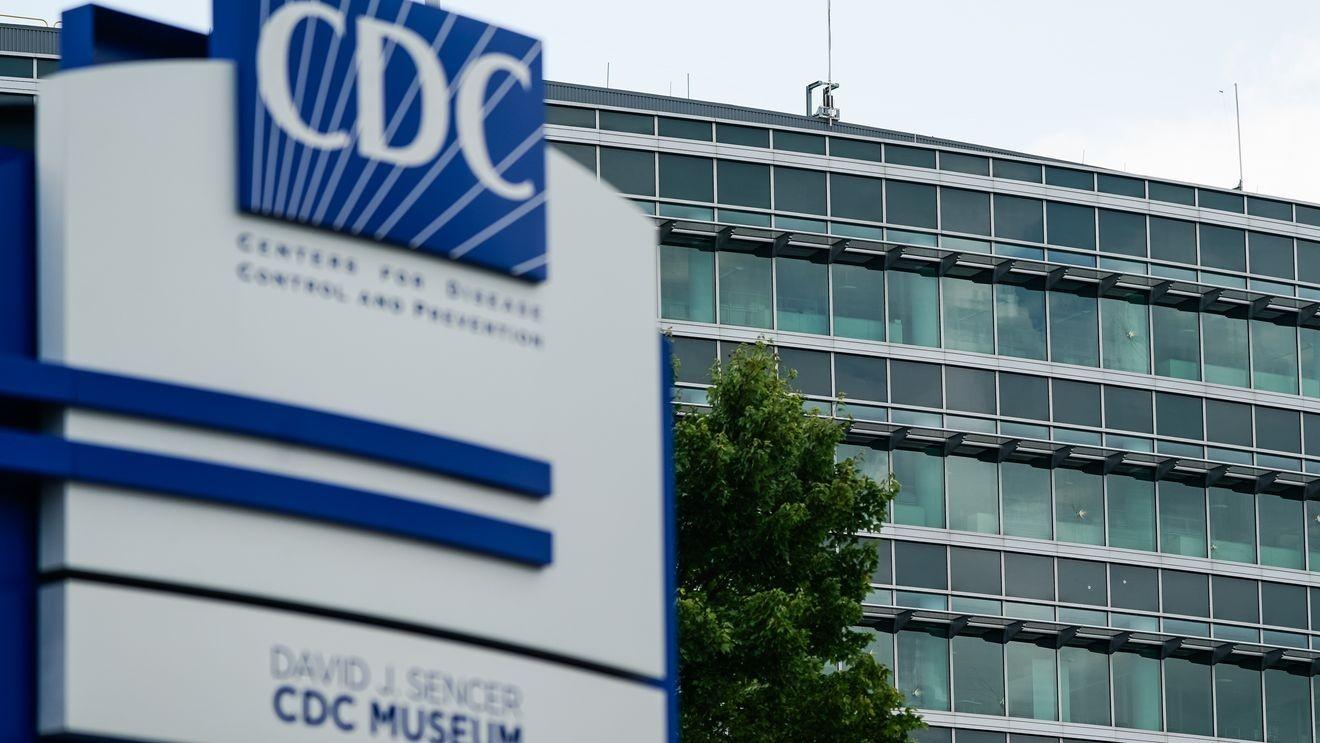
Trump Nominates Erica Schwartz To Lead Atlanta-Based Centers for Disease Control and Prevention
Key Takeaways
- Trump nominates Erica Schwartz, former deputy surgeon general, to lead the CDC.
- Nomination follows controversy over CDC leadership and vaccine policy.
- Schwartz has Coast Guard medical background and extensive public health experience.
Trump’s CDC leadership shakeup
President Donald Trump nominated Erica Schwartz on Thursday to be director of the Centers for Disease Control and Prevention, a role that has been filled mostly on a part-time or interim basis during the second Trump administration, according to STAT and WABE.
Schwartz, described by Trump as “incredibly talented” and “She is a STAR!”, previously served as deputy surgeon general during the first Trump administration, and STAT says she spent much of her career in health roles in the U.S. military.

STAT reports she is a board certified doctor of preventive medicine and that she received her medical degree from Brown University in 1998 and completed a Masters of Public Health degree from the Uniformed Services University of the Health Sciences in 2000.
WABE adds that Trump nominated Schwartz to lead the “Atlanta-based Centers for Disease Control and Prevention,” and that the CDC is overseen by Health Secretary Robert F. Kennedy Jr.
Both STAT and WABE describe the CDC’s leadership turmoil since Trump returned to office, with “a succession of mostly temporary leaders” and National Institutes of Health Director Jay Bhattacharya overseeing the CDC for the past several weeks.
In the same Thursday announcement, Trump named Sean Slovenski as CDC deputy director and chief operating officer, Dr. Jennifer Shuford as CDC deputy director and chief medical officer, and Dr. Sara Brenner as senior counselor for public health to Kennedy, as reported by STAT and WABE.
STAT also notes that Schwartz’s nomination comes as the Senate confirmation process remains uncertain, with the nomination arriving at “a delicate time for nominees for Health and Human Services Department leadership positions.”
Credentials, military service, and Senate questions
STAT portrays Schwartz as a physician with a long federal health background, saying she is “a board certified doctor of preventive medicine” and that she “spent the bulk of her career in the U.S. Navy and Coast Guard,” including serving as “the Coast Guard’s preventive medicine chief.”
STAT also says she was involved in the Trump administration’s response to the Covid-19 pandemic, and it frames her nomination as potentially easier to confirm because she has “no discernible public record opposing vaccinations.”

WABE similarly emphasizes her academic credentials, stating that Schwartz holds “multiple academic credentials, including both medical and law degrees,” and it describes her career “largely been spent in military uniform.”
WABE adds a specific operational detail, saying she oversaw the organization’s system of “41 clinics and 150 sick bays” in a leadership position at the U.S. Coast Guard, and that she later served as deputy surgeon general.
STAT includes a quote from David Mansdoerfer, a former senior HHS official in the first Trump administration, who told STAT that Schwartz will “definitely understand the culture of CDC, of the employees that are [also] commissioned corps officers,” and Mansdoerfer praised her as “She’s a great pick.”
At the same time, STAT reports that other experts were “reserving judgment,” and it quotes Debra Houry, who was the CDC’s chief medical officer until she resigned last August following the firing of previous director Susan Monarez.
Houry told STAT that Schwartz would still be answering to Health Secretary Robert F. Kennedy Jr., saying, “We saw what happened with Susan. She couldn’t make staffing or policy decisions. What has changed?” and “Kennedy hasn’t changed.”
RFK Jr., Monarez firing, and resignations
The nomination arrives against the backdrop of the firing of CDC director Susan Monarez, which multiple outlets describe as part of a broader rupture between Health Secretary Robert F. Kennedy Jr. and the CDC.
France 24 says Monarez was fired by the White House on Wednesday, August 27, and that she “lasted only a month,” while Le Parisien describes the dismissal as coming after Monarez refused to endorse “non-scientific and dangerous directives” sought by Kennedy.
Telemundo Sacramento reports that Jim O’Neill, a senior deputy assistant to Kennedy, would serve as interim director of the CDC, according to a government official, and it says the administration wants O’Neill to replace Susan Monarez, whom the White House is trying to dismiss “just a month after taking office.”
Telemundo Sacramento also says the upheaval left the agency “in shock,” and it reports that “three senior officials were escorted out of headquarters on Thursday,” while the chaos triggered “an unusual bipartisan alarm.”
France 24 adds that there was “still some ambiguity on Thursday about whether Susan Monarez was obliged to bow out,” and it says she argued through her lawyers that “only the president could fire a civil servant whose appointment had been confirmed by Congress.”
Le HuffPost describes the dispute as centered on vaccine authorization withdrawals, reporting that Monarez was under intense pressure to approve withdrawals of vaccine authorizations, “notably those for Covid-19 vaccines,” and that she refused to approve “unscientific and reckless directives.”
The resignations following Monarez’s firing are described in Le HuffPost as including Debra Houry, Dan Jernigan, and Demetre Daskalakis, with Daskalakis posting on X that the Department of Health “was using the CDC to justify policies that have nothing to do with scientific reality.”
Conflicting narratives and political framing
Coverage of the CDC leadership changes diverges sharply in tone and emphasis across outlets, with some focusing on Schwartz’s credentials and others emphasizing the political conflict around vaccine policy.
STAT frames Schwartz’s nomination as a potentially popular choice among lawmakers because she is a physician with federal service experience, while also noting that “Kennedy’s opposition to vaccines” and efforts “to limit the number of vaccines recommended for all children” have driven conflict with many senators.

WABE, using Associated Press reporting, highlights Trump’s praise of Schwartz—“She is a STAR!”—and quotes Kennedy telling lawmakers the new team will “revolutionize CDC and get it "back on track."”
In contrast, STAT includes criticism from Aaron Siri, a vaccine injury lawyer and once Kennedy’s personal attorney, who wrote on X that the choice was a “disaster” and said, “This agency does not need another cheerleader for industry; it needs a regulator over industry.”
Le Parisien portrays Jim O’Neill’s appointment as stirring tensions because he has “no training in medicine or infectious disease science,” and it says he supported “unproven treatments” during the COVID-19 pandemic and posted “a number of conspiracy theories on social media.”
France 24 similarly emphasizes the crisis between Kennedy and the CDC, describing the firing as underscoring “the deep crisis roiling this agency,” and it says Monarez refused to leave and argued through her lawyers about presidential authority.
Le HuffPost uses a more accusatory framing, saying Kennedy is “instrumentalizing public health for political ends” and describing the resignations as triggered by pressure to approve vaccine authorization withdrawals.
What happens next at CDC
The sources portray the next phase of CDC leadership as hinging on both Senate confirmation and ongoing internal turmoil tied to vaccine policy.
STAT says it “remains to be seen whether Schwartz can muster sufficient support in the Senate to be confirmed,” and it notes that if she clears the Senate she would be the agency’s “second full-time director this term, following Monarez, who was fired last August after pushing back on vaccine-related demands from Kennedy.”

WABE adds that Schwartz “could not be reached for comment,” and it describes the leadership transition as continuing with Bhattacharya overseeing the CDC while the nomination proceeds.
STAT also ties the nomination to the broader political environment, saying some Senate Republicans seem unlikely to confirm Casey Means as surgeon general after she “waffled on recommending vaccines,” and it reports that Means is “also not a practicing physician.”
Telemundo Sacramento reports that Kennedy warned there could be “more turnover,” quoting Kennedy as saying, “There are many issues at the CDC and it will be necessary to dismiss some people in the long term so we can change the institutional culture.”
Le HuffPost also says a new vaccine advisory committee, “entirely reshaped by RFK Jr.,” plans to modify official recommendations on other vaccines starting in September, including hepatitis B, and it quotes Debra Houry describing the committee’s plans.
Across the sources, the stakes are framed as institutional culture and scientific decision-making, with STAT quoting Debra Houry’s warning that “Kennedy hasn’t changed,” and with Le HuffPost describing the CDC as being used “to justify policies that have nothing to do with scientific reality.”
More on USA

Hennepin County Prosecutors Charge ICE Officer Gregory Donnell Morgan Jr. With Felony Assault
24 sources compared
Analilia Mejia Defeats Joe Hathaway in New Jersey 11th District Special Election
16 sources compared
U.S. Senate Blocks Bernie Sanders Resolutions Halting Weapons Sales to Israel
13 sources compared

U.S. Commission of Fine Arts Advances Trump’s Triumphal Arch Design in Washington, D.C.
11 sources compared