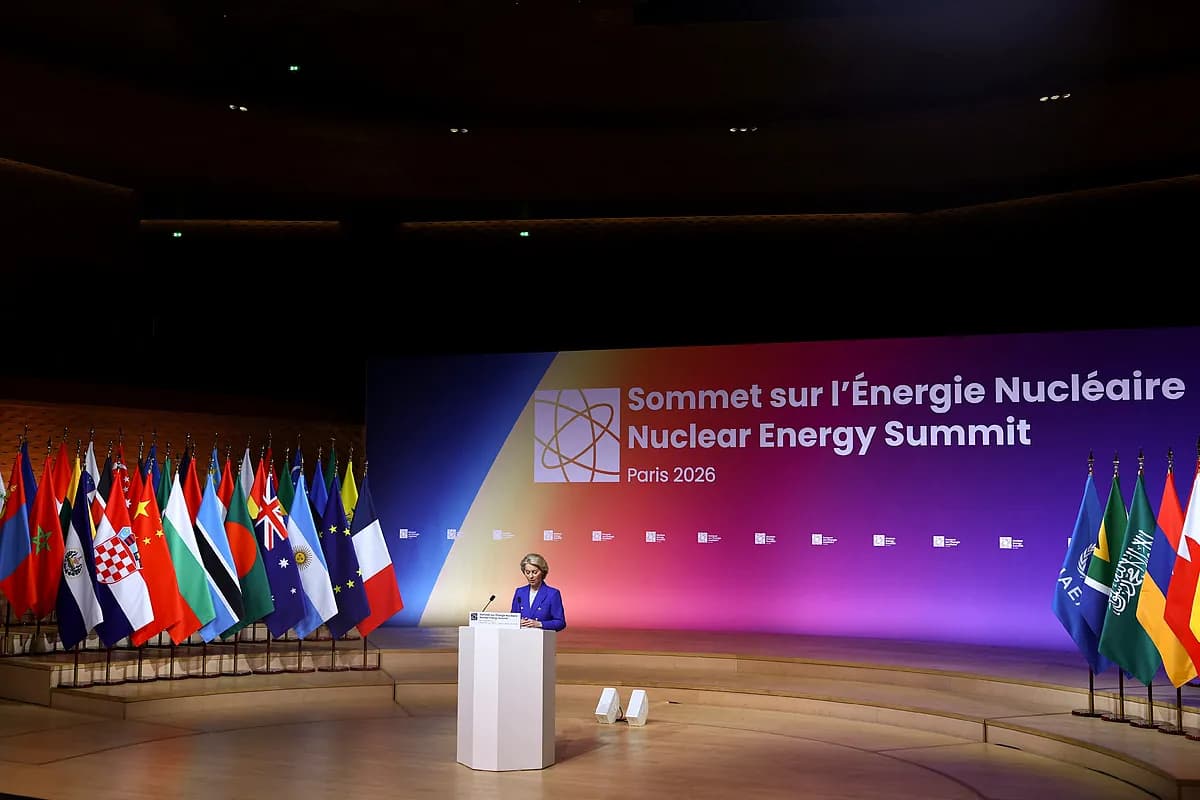
Trump Orders NATO, China to Secure Strait of Hormuz as Iran War Enters Third Week.
Key Takeaways
- Trump asks NATO allies and China to help secure the Strait of Hormuz.
- Strait security aims to reopen shipping and move maritime cargo.
- Europe faces energy insecurity and instability due to Gulf crisis and Hormuz.
Strategic Urgency
As the conflict with Iran enters its third week, the strategic importance of the Strait of Hormuz has become a critical global concern.
“As the war in Iran enters its third week, the most pressing challenge facing the United States is opening the Strait of Hormuz”
President Donald Trump has urgently called on NATO allies and China to assist in securing the vital waterway.

The strait serves as one of the main valves of international trade.
It handles not only crude oil and liquefied natural gas but also fertilizers, chemical products, and essential industrial components.
These materials are crucial for the functioning of the world economy.
Despite Trump's diplomatic outreach, the initial response from international partners has been notably negative.
This indicates significant challenges in forming a united front to address this escalating security crisis.
The crisis threatens global energy supplies and trade routes on a massive scale.
Geopolitical Shift
The escalating situation represents a fundamental rupture in the international order that has sustained globalization for decades.
According to European analysis, the current conflicts reveal the breakdown of relative stability.
The breakdown also affects functional interdependence and affordable energy that underpinned global prosperity.
The United States, which previously extended its security umbrella to cover global public goods, is now redefining its strategic priorities.
This shift has created a new reality where Europe must assert itself.
Europe now faces a hard, rabidly competitive, and uncertain world environment.
This fundamentally alters the geopolitical landscape that has dominated international relations since the end of the Cold War.
Energy Vulnerability
Energy security has emerged as the central battleground in this new geopolitical reality.
“As the war in Iran enters its third week, the most pressing challenge facing the United States is opening the Strait of Hormuz”
The conflict over the Strait of Hormuz demonstrates Europe's structural vulnerability.
This vulnerability is in an increasingly hostile environment.
The region's escalation has brought Middle East clashes to a new dangerous phase.
This keeps the global energy fabric on edge, compounding existing crisis through the strategic waterway.
Energy is no longer viewed as a technical or sectoral issue but as fundamentally strategic.
Security is directly tied to geopolitical calculations.
This realization forces European powers to confront limitations of their current normative architecture.
Energy policies were built on assumptions of stable supply chains and affordable energy.
These assumptions are proving increasingly untenable in the current conflict environment.
Energy Weaponization
The conflict context shows how energy has evolved from a commercial commodity to a potent geopolitical weapon.
This transformation began dramatically with Putin's blood-and-fire invasion of Ukraine in February 2022.
It has now reached new heights with the Iranian conflict.
The Green Deal, launched in 2019 with focus on decarbonization and sustainability, appears increasingly disconnected from current geopolitical realities.
European leaders now face painful realization about energy transition policies.
These policies were built on false assumption of supply security.
The assumption covered both availability and affordability.
The current crisis suggests the need for transition has not changed.
However, the approach must be fundamentally reconceived.
New approach must account for security realities prioritizing energy sovereignty and resilience.
More on Europe

Russian intelligence-linked hackers target Signal users, accessing thousands of accounts
10 sources compared

Barcelona Police Say University of Alabama Student's Death in Spain Was Likely an Accident
36 sources compared
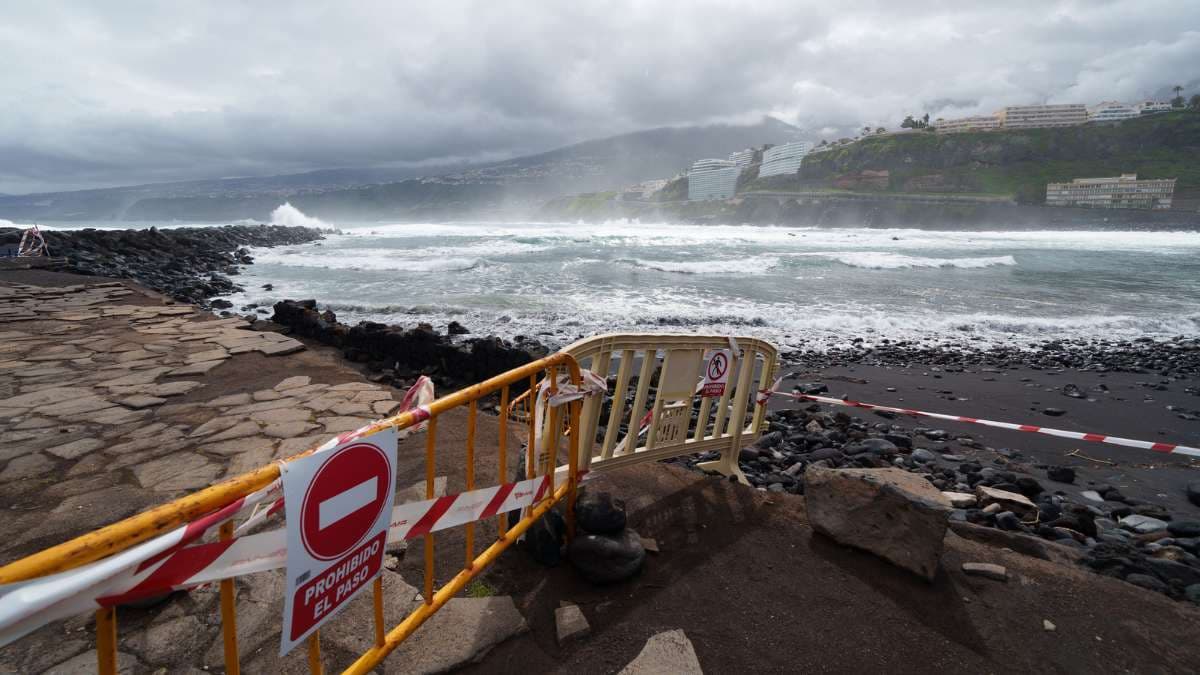
Storm Therese cancels flights in Tenerife as Easter holidays loom
14 sources compared

Nottingham Forest beat Midtjylland on penalties to reach Europa League quarter-finals
10 sources compared