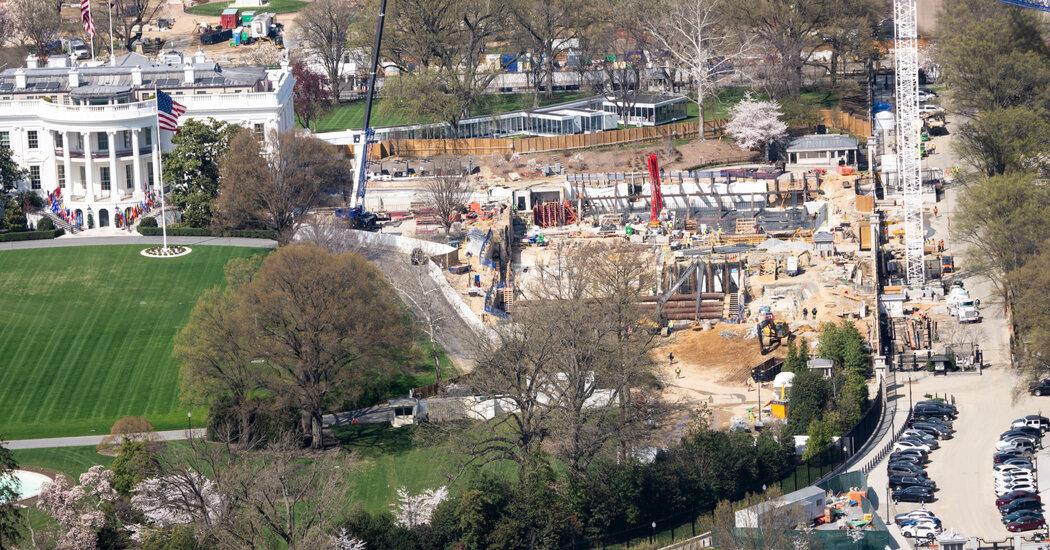
Trump Pushes White House Ballroom After Washington Hilton Shooting, Cole Tomas Allen Charged
Key Takeaways
- Gunman opened fire at White House Correspondents' Dinner; Trump evacuated.
- DOJ urged dropping the $400M White House ballroom lawsuit; preservationists press ahead.
- Senate Republicans push $400M ballroom funding; Trump reframes incident as security need.
Attack Spurs Ballroom Push
A shooting disrupted the White House Correspondents’ Dinner at the Washington Hilton in Washington DC on Saturday night, prompting President Donald Trump to argue that the incident showed the need for a White House ballroom.
“National Trust says it won’t drop suit against Trump’s $400M White House ballroom after DOJ request National Trust says it won’t drop suit against Trump’s $400M White House ballroom after DOJ request WASHINGTON (AP) — Preservationists are pressing ahead with their lawsuit against President Donald Trump’s planned $400 million White House ballroom, declining a request by the Department of Justice to withdraw the complaint following the shooting at the White House Correspondents’ Dinner on Saturday”
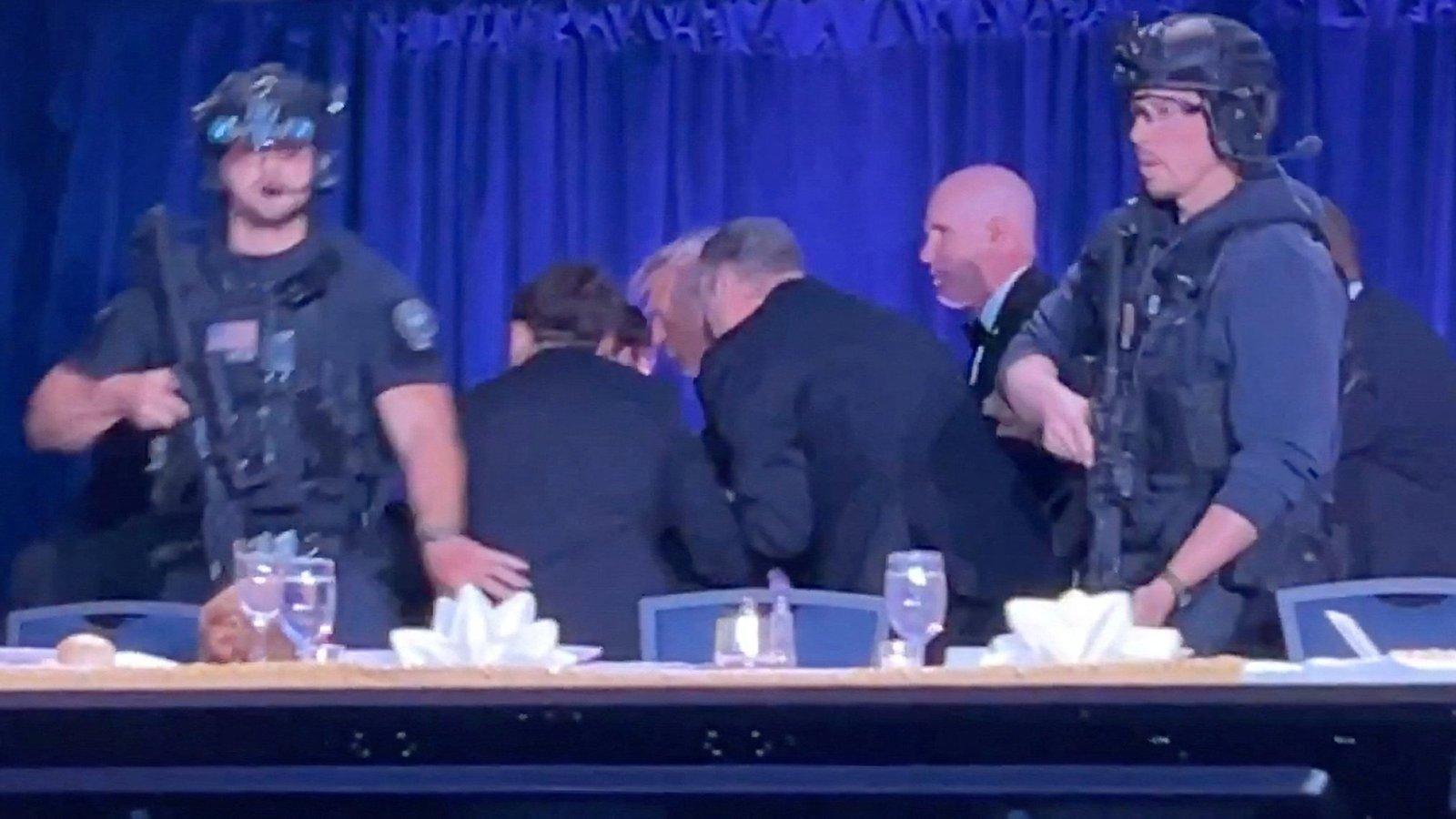
BBC reported that Trump was evacuated from the gala dinner after a gunman opened fire near a security checkpoint, and that the suspect, identified as 31-year-old Cole Tomas Allen, was charged in court on Monday with attempting to assassinate the president of the United States.
The BBC also said Allen was tackled by agents just short of a staircase which leads down to a ballroom where the annual White House correspondents’ dinner attended by hundreds of journalists and public figures was getting under way.
NBC News described Trump being hustled out of a hotel ballroom Saturday night when a gunman dashed through a security checkpoint, and said Trump seized on the incident to renew his White House ballroom push.
Within hours, Trump told reporters, “We need the ballroom,” and he reiterated the argument on Truth Social saying, “Nothing should be allowed to interfere with with [sic] its construction, which is on budget and substantially ahead of schedule!!!”.
The Atlantic reported that Trump’s allies quickly echoed the pitch, and it quoted Acting Attorney General Todd Blanche firing off a letter to the attorney for the plaintiff in a federal lawsuit challenging the construction.
In the same immediate aftermath, the Justice Department used the weekend shooting to pressure a preservation group to drop its lawsuit, with The Guardian reporting that Todd Blanche posted on social media a letter calling the trust’s lawsuit “frivolous.”
Legal Fight and Funding
The ballroom project Trump promoted after the shooting has been entangled in legal disputes over presidential authority and congressional authorization.
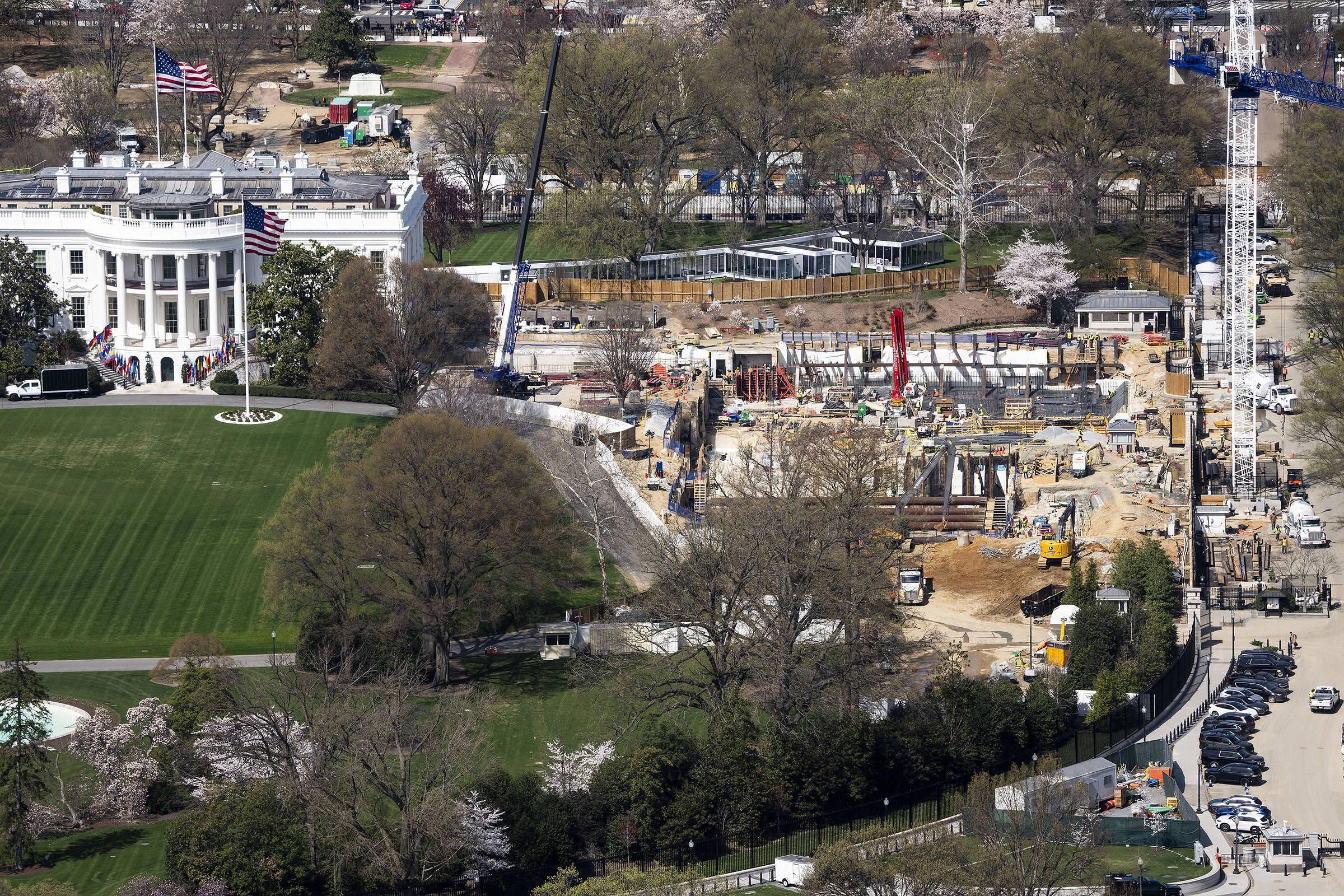
The Guardian said Trump’s pursuit of a new ballroom on the site of the former East Wing has followed a “rocky legal path,” describing how in March district court judge Richard Leon granted a preliminary injunction requested by the non-profit trust alleging Trump exceeded his authority by razing the East Wing and beginning construction without required congressional approval.

The Guardian added that a three-judge panel of the US court of appeals for Washington DC granted a stay of Leon’s order earlier this month, allowing construction to continue while the lawsuit proceeds, and it said the panel’s order “should not be construed in any way as a ruling on the merits of that motion.”
It also reported that the next hearing is tentatively scheduled for 5 June.
Folha de S.Paulo said Trump’s plans call for a structure of about 8,400 square meters on the site of the former East Wing and that Trump said the project would be funded by USD 400 million in private donations.
Folha de S.Paulo also described a federal judge escalating the legal deadlock by ordering a stay on above-ground work, with Judge Richard J. Leon stating that “National security is not a blank check to proceed with an activity that would otherwise be illegal.”
On the funding front, CNBC reported that congressional Republicans announced legislation authorizing $400 million in federal funding to build the White House ballroom, with Sens. Lindsey Graham, Katie Britt, and Eric Schmitt saying it is vital to national security.
Pressure to Drop the Suit
The Justice Department’s pressure campaign after the shooting targeted the National Trust for Historic Preservation’s lawsuit, with officials arguing the case should be withdrawn to avoid risk.
“A trio of Senate Republicans on Monday announced they will introduce legislation authorizing $400 million in federal funding to build President Donald Trump's White House ballroom in the wake of a shooting incident that disrupted the White House Correspondents' Dinner over the weekend”
The Guardian reported that Todd Blanche posted a letter on Sunday night to lawyers representing the National Trust for Historic Preservation calling the trust’s lawsuit “frivolous,” and it quoted the letter signed by Brett Shumate, assistant attorney general of the justice department’s civil division.
The Guardian included Shumate’s warning that “Put simply, your lawsuit puts the lives of the President, his family, and staff at grave risk,” and it added that Shumate said the White House ballroom was “essential for the safety of the president, his family, his cabinet, and his staff.”
NBC News said the Justice Department sent a letter to the plaintiffs calling on the group to drop its suit, and it quoted the letter’s language that “The White House ballroom will ensure the safety and security of the president for decades to come and prevent future assassination attempts on the president at the Washington Hilton.”
PBS and AP reported that preservationists refused to withdraw, with PBS saying Meg Kinnard, Associated Press, described preservationists pressing ahead with their lawsuit after DOJ request.
PBS quoted trust attorney Gregory Craig declining the request, writing that “What Saturday's awful event does not change is that the Constitution and multiple federal statutes require Congress to authorize construction of a ballroom on White House grounds, and that Congress has not done so,” and it said Craig wrote that the legal issues are unchanged.
AP similarly reported that the National Trust said it won’t drop suit after DOJ request, and it said top Justice officials would ask a court to dismiss the lawsuit “in light of last night’s extraordinary events” if the Trust did not voluntarily drop it.
Lawmakers Mobilize for Approval
After the shooting, congressional Republicans moved quickly to frame the ballroom as a national security necessity and to seek legislative authorization.
CNBC reported that on Monday a trio of Senate Republicans—Sens. Lindsey Graham, Katie Britt, and Eric Schmitt—announced they will introduce legislation authorizing $400 million in federal funding to build President Donald Trump’s White House ballroom.

CNBC quoted Graham saying, “Many people I think originally saw it as a vanity project… I don't see it that way,” and it added that Graham said he was “convinced if there had been a presidential ballroom adjacent to the White House, the guy would have never gotten in.”
CNBC also said Sen. Rand Paul announced he would introduce bring legislation to the floor on Tuesday that moves “the project forward” and would not require “new taxpayer costs.”
The same CNBC report described how even in the Republican-controlled House and Senate, using $400 million in taxpayer money is likely to be a tough sell, while it also said House Republicans including Reps. Randy Fine of Florida and Lauren Boebert of Colorado signaled they would introduce ballroom bills.
The New York Times described Republicans escalating efforts to authorize the building of Trump’s planned ballroom after the attack, with Senator Lindsey Graham saying he wanted Congress to move legislation quickly to provide $400 million for construction of a secure White House ballroom.
The Atlantic described how allies leaped to agree, quoting Meghan McCain on X saying, “I don’t want to hear one more fucking criticism of Trump’s new ballroom at the White House,” and quoting Sen. John Fetterman saying, “After witnessing last night, drop the TDS and build the White House ballroom for events exactly like these.”
What Comes Next
The next steps in the ballroom fight hinge on court proceedings and on whether Congress will authorize the project, with multiple sources pointing to a June hearing and ongoing construction disputes.
“Just a few hours after an armed man stormed the White House Correspondents' Association dinner, caused attendees to be escorted out and the event to be shut down, Donald Trump and his allies already showed they had a solution for presidential security”
The Guardian said the next hearing is tentatively scheduled for 5 June, and it described how the appeals panel’s stay allowed construction to continue while the lawsuit proceeds, even as it said the order should not be construed as a ruling on the merits.
PBS and AP both reported that preservationists are pressing ahead, with PBS saying the Trust declined DOJ’s request to withdraw and with AP saying the National Trust says it won’t drop suit after DOJ request.
PBS also reported that the Trust sued in December, a week after the White House finished demolishing the East Wing to make way for a ballroom that Trump said would fit 999 people, and it said a federal appeals court allowed Trump to continue the project while a lower court judge continued to block above-ground construction and scheduled a June 5 hearing.
NBC News added that a federal judge has issued repeated orders blocking construction of the ballroom and that on April 17 a federal appeals court allowed construction to continue while a suit contending the work is unlawful winds through the courts.
In the immediate security aftermath, BBC said the suspect was charged with attempting to assassinate the president, as well as transporting a firearm between states to commit a felony and discharging a firearm in a crime of violence, and it said prosecutors allege that Allen ran through a magnetometer holding a long gun.
Those details feed the political argument that the ballroom is needed for safety, but the legal argument remains centered on congressional authorization, as reflected in Gregory Craig’s statement that “Congress has not done so.”
More on USA

Cole Tomas Allen Opens Fire Outside White House Correspondents’ Dinner, Secret Service Officer Struck
51 sources compared
Cole Tomas Allen Charged With Attempting To Assassinate President Donald Trump At Washington Hilton
25 sources compared

Cole Tomas Allen Charged With Attempting To Assassinate Donald Trump At White House Correspondents’ Dinner
14 sources compared

Alphanso Talley Kills Chicago Police Officer John Bartholomew in Swedish Hospital Shooting
19 sources compared