
Trump says U.S. in talks with Iran to end the war; Iran denies.
Key Takeaways
- Trump claims the U.S. is negotiating with Iran to end the war.
- Iran denies talks and dismisses Trump's claims.
- Trump delayed attacks on Iran's power plants for five days.
Trump's Claims
President Donald Trump dramatically shifted course Monday by announcing that the United States and Iran were engaged in 'very, very strong talks' to end the month-long war.
“DUBAI, United Arab Emirates (AP) — U”
The unexpected announcement sent global financial markets soaring as oil prices plummeted more than 10%, with Brent crude falling sharply after Trump's social media post claiming the U.S. would postpone strikes based on 'productive conversations.'

Trump told reporters that Iran wants 'to make a deal' and that his envoys Steve Witkoff and Jared Kushner had been holding talks with a 'respected' Iranian leader, though he declined to identify the specific official.
The president characterized the talks as 'ahead or on plan' and suggested Iran's military capabilities were deteriorating, though his claims directly contradicted Iran's public position and created confusion about the actual state of diplomatic engagement.
Iran's Denials
Iran vehemently denied Trump's claims of direct negotiations, dismissing them as 'fake news' and an attempt to manipulate financial markets amid the ongoing conflict.
Iranian officials, including parliamentary speaker Mohammad-Bagher Ghalibaf, took to social media to explicitly reject the notion of dialogue with the Trump administration, characterizing the American leader's statements as psychological warfare.

The Iranian Foreign Ministry issued a statement calling Trump's remarks 'part of efforts to reduce energy prices and buy time to implement his military plans,' suggesting the U.S. president had 'backed down following Iran's firm warning.'
Iran's semiofficial media portrayed Trump's reversal as evidence of American weakness, with Fars news agency and Tasnim reporting that Iran's clear response has been that it will 'continue its defense until the required level of deterrence is achieved.'
The stark contradiction between the two nations' public statements created significant uncertainty about whether any substantive diplomatic channel actually existed between Washington and Tehran.
Mediation Efforts
Despite the public denials, behind-the-scenes mediation efforts by third countries suggested some level of indirect communication between Washington and Tehran aimed at de-escalating the conflict.
“Trump delays promised attacks on Iran, claiming negotiations to end war”
Multiple sources confirmed that Turkey, Egypt, Pakistan, and Qatar have been acting as intermediaries, passing messages between the U.S. and Iranian officials over the past two days.
Egyptian Foreign Minister Badr Abdelatty coordinated separate talks with Witkoff and Iranian Foreign Minister Abbas Araghchi, along with counterparts from Pakistan, Turkey and Qatar, stressing the importance of 'containing the broader effects of the conflict and preventing it from expanding.'
Turkish Foreign Minister Hakan Fidan also spoke directly with Araghchi, while Egypt's President Abdel-Fattah el-Sissi confirmed his country had delivered 'clear messages' to Iran focusing on de-escalation.
These mediation efforts appeared to represent the most substantive diplomatic activity in the conflict, though they remained preliminary discussions rather than direct negotiations between the two principal adversaries.
Economic Impact
The dramatic shift in Trump's stance and subsequent market reaction highlighted the profound economic stakes of the conflict, with the global economy facing what the International Energy Agency chief called a 'major, major threat' from disrupted oil and gas flows.
Fatih Birol, head of the IEA, warned that 'no country will be immune to the effects of this crisis if it continues to go in this direction,' noting that the current oil disruption of 11 million barrels per day was already worse than the combined oil crises of 1973 and 1979.
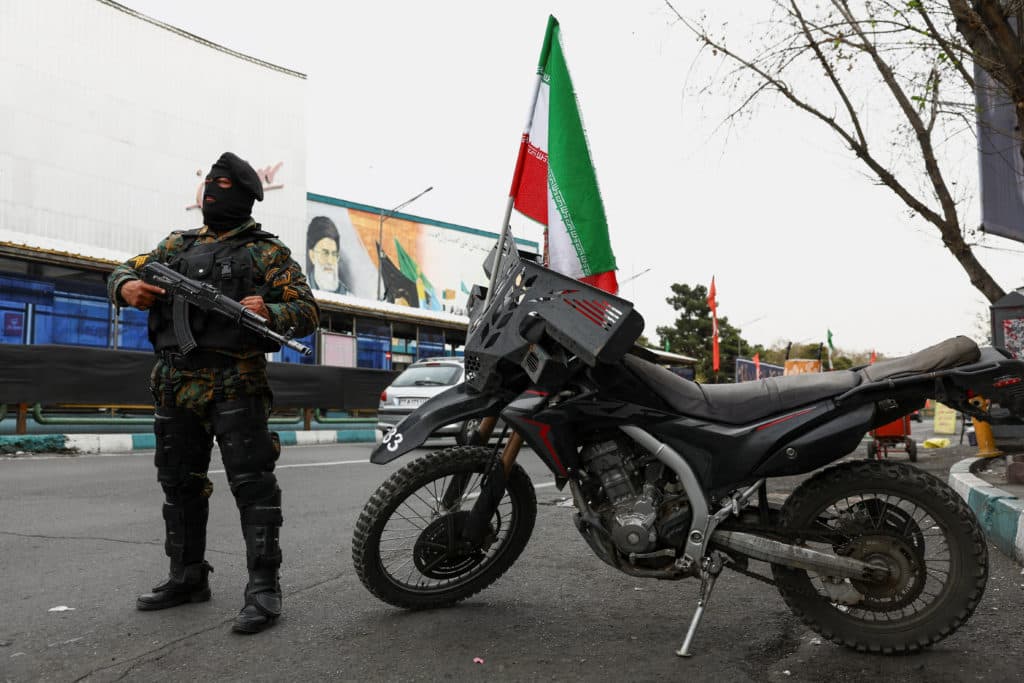
The conflict has severely damaged at least 40 energy facilities across nine countries, while Iranian control of the Strait of Hormuz has crippled international shipping through the crucial waterway.
Though oil prices plunged after Trump's announcement, they remained elevated with the average U.S. gas price at $3.948 per gallon, and analysts warned that further relief at the pump would be delayed as gasoline prices reflect oil prices from three to five days earlier.
The United Nations echoed these concerns, with senior official Jorge Moreira da Silva warning of 'exponential price hikes in oil, fuel and gas' that have had far-reaching impacts primarily on developing countries in Asia and Africa.
Conflict Context
The broader context of the month-long conflict revealed the high stakes and potential catastrophic consequences that both sides appeared eager to avoid through the diplomatic maneuvering.
“Jon Gambrell, Associated PressJon Gambrell, Associated Press David Rising, Associated PressDavid Rising, Associated Press Samy Magdy, Associated PressSamy Magdy, Associated Press Leave your feedback DUBAI, United Arab Emirates (AP) — President Donald Trump extended his deadline for Iran to reopen the crucial Strait of Hormuz to international shipping, saying Monday that the U”
The war, now in its fourth week, has already killed more than 2,000 people and seen multiple dramatic turning points including the killing of Iran's supreme leader, bombing of key Iranian gas fields, and strikes targeting civilian infrastructure in Gulf Arab nations.
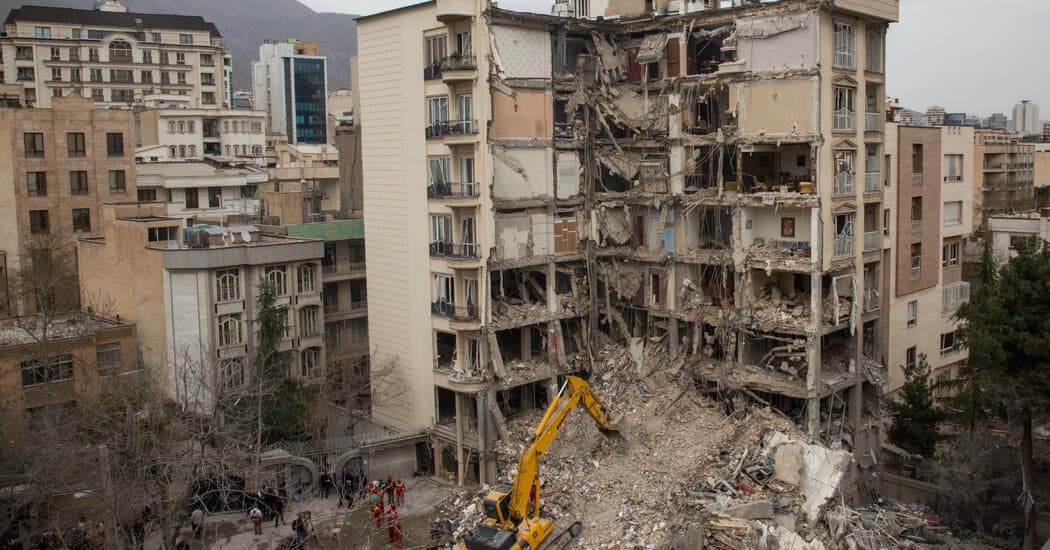
Trump had initially warned that the U.S. would 'obliterate' Iran's power plants unless the country reopened the Strait of Hormuz within 48 hours, threats that Iranian officials characterized as potentially constituting war crimes.
The International Committee of the Red Cross had previously warned that 'deliberate attacks on essential services and civilian infrastructure can amount to war crimes.'
In response to Trump's initial threats, Iran's Revolutionary Guard promised retaliation against power plants supplying electricity to American bases and economic infrastructure with American interests, while Iran's parliament speaker declared that vital infrastructure across the region would be considered legitimate targets.
The conflicting statements and rapid shifts in both nations' positions underscored the fragile nature of the situation and the potential for further escalation despite the diplomatic overtures.
More on USA

Trump Delays Strikes on Iranian Energy Infrastructure Amid Talks With Iran.
43 sources compared

Senate confirms Markwayne Mullin as Homeland Security secretary
13 sources compared

Supreme Court appears poised to limit late-arriving mail-in ballots.
23 sources compared
US Senate confirms Mullin as Secretary of the Department of Homeland Security
24 sources compared