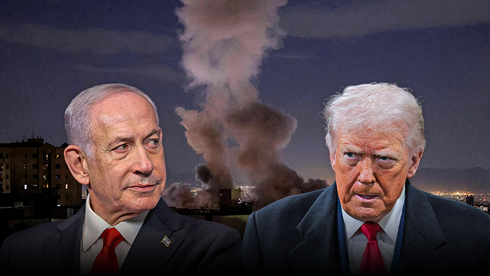
Trump Says U.S.-Iran Talks Ongoing as Iran Denies Negotiations.
Key Takeaways
- Trump claimed talks with Iran were ongoing; Tehran denied any negotiations.
- Several outlets reported conflicting signals, including claims of progress and Iran denial.
- Iranian officials publicly denied negotiations, contradicting Trump's portrayal of direct talks.
Contradictory Claims
President Trump claimed on Monday that the United States and Iran were engaged in 'very strong talks' with 'major points of agreement,' potentially signaling a de-escalation of the Middle East conflict that began on February 28.
“Trump said Monday that U”
Trump asserted that negotiations had produced 'many, like 15 points' of agreement and that Iran had committed to never pursuing a nuclear weapon.

He postponed his threat to attack Iranian power plants while talks continued, though he provided no evidence of direct negotiations.
Iranian officials immediately rejected these assertions, with Parliament speaker Mohammad Qalibaf posting on social media that 'no talks with the U.S. have taken place' and calling the claims 'fake news aimed at influencing financial and oil markets.'
Iran's Foreign Ministry spokesperson Esmail Baghaei confirmed that no talks had occurred since the bombing campaign began 24 days ago, though he acknowledged that messages from the US had been received through friendly countries and answered according to Iran's principles.
Mediation Efforts
Behind the public denial, diplomatic channels appear to be operating through third-party mediators trying to establish communication between Washington and Tehran.
Sources indicate that Egypt, Pakistan, and Turkey have been passing messages between the U.S. and Iranian leadership, with Turkish Foreign Minister Hakan Fidan leading mediation efforts over the past 48 hours.
Pakistan has explicitly offered to host potential talks in Islamabad, with foreign office spokesperson Tahir Hussain Andrabi stating that 'Pakistan is always ready to host talks' if both sides agree.
Axios reported that U.S. envoys Steve Witkoff and Jared Kushner had been in contact with Iranian Parliament speaker Mohammad Bagher Ghalibaf, though Ghalibaf denied this and claimed the U.S. was attempting to manipulate markets.
A source with knowledge of the discussions revealed that while there was readiness from both sides to start talking on Sunday, no direct talks had occurred, and the intermediaries were attempting to set up a call between Ghalibaf and Trump's team for Monday.
Military Escalation
Despite diplomatic overtures, the conflict continued to escalate militarily across multiple fronts.
“US Central Command, in a post on X, dismissed claims that an American F-15 was shot down over Kuwait, calling them false”
The U.S. and Israeli militaries conducted fresh waves of strikes against Iranian targets on Monday, with the Israel Defense Forces claiming to have struck the main security headquarters of Iran's Islamic Revolutionary Guard Corps in Tehran.
Israel also continued its offensive against Hezbollah in Lebanon, striking Beirut's southern suburbs after ordering residents to evacuate the densely populated area.
Iran responded with missile attacks on Israeli cities, with two ballistic missiles striking Dimona (believed to house Israel's nuclear arsenal) and Arad over the weekend, causing significant destruction and leaving at least 180 casualties according to the Israeli Ministry of Health.
The Iranian government has maintained de facto control over the Strait of Hormuz, attempting to block shipping traffic through the strategic waterway, while claiming attacks on Israel and Persian Gulf countries.
Trump has refused to rule out the possibility of a ground invasion of parts of Iran to regain control of the strait.
Regional Reactions
Regional powers and international actors are responding to the escalating crisis with hardened positions and increased diplomatic activity.
The UAE and Saudi Arabia have taken firm stances against Iran, with UAE Foreign Minister Abdullah bin Zayed declaring the country 'will never be blackmailed by terrorists,' while Saudi Arabia expelled the Iranian military attaché and four embassy staff.

Anwar Gargash, a senior diplomatic advisor to the UAE government, called for goals beyond a ceasefire toward 'a full dismantling of Iranian military capacities, including curbing the nuclear threat, missiles, drones, and the bullying of the straits.'
In contrast, the senior Iranian official interviewed by Drop Site News dismissed these positions, stating that 'Unfortunately, this is the heartfelt wish of the rulers of some of these countries. However, they are fully aware of our patience and perseverance, as well as the resilience of the Iranian side, and they know that this is an unattainable aspiration.'
India's External Affairs Minister S. Jaishankar held talks with US Secretary of State Marco Rubio focusing on the conflict's economic implications and energy security concerns, while the UK deployed HMS Dragon to the eastern Mediterranean following an Iranian drone attack on British base RAF Akrotiri in Cyprus.
More on Gaza Genocide

Israeli settlers attack West Bank villages, wounding several Palestinians and torching homes and vehicles.
10 sources compared

Trump Administration Sues Harvard University Over Civil Rights Violations Against Jewish and Israeli Students
50 sources compared
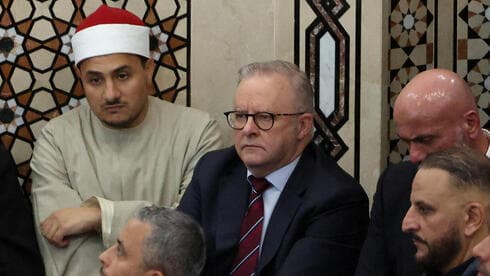
Protesters heckle Australian PM Albanese at Sydney mosque over Israel stance
18 sources compared

Iran Fires Missiles at Israel, Killing Three Palestinian Women and a Foreign Worker
23 sources compared