
Trump Says US May Wind Down Middle East War
Key Takeaways
- Trump says the United States is considering winding down its Middle East operation.
- More Marines and troops are being deployed to the Middle East despite winding-down talk.
- Three weeks into the war, Israel launched strikes in and around Tehran.
Trump's War Objectives
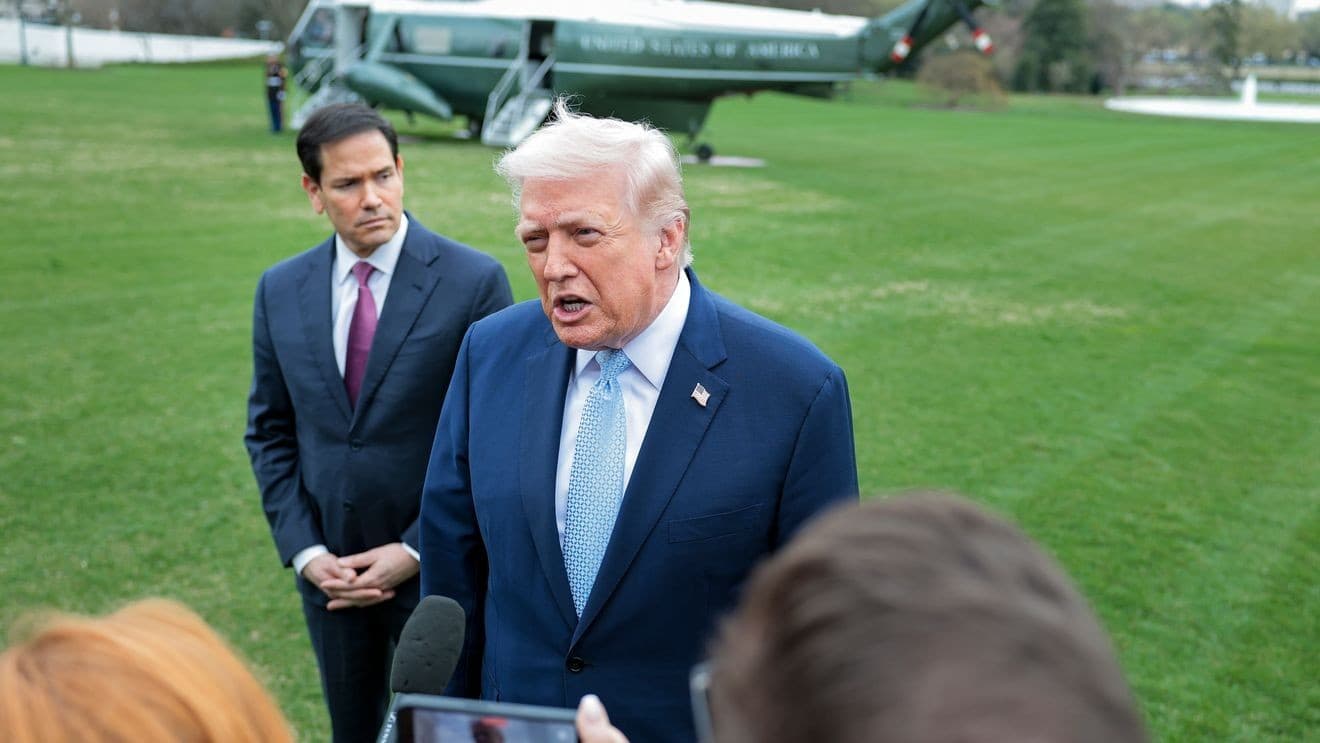
President Donald Trump has announced that the United States is 'very close' to achieving its objectives in the war against Iran and is considering 'winding down' military operations in the Middle East.
“Live updates: Trump says he is considering ‘winding down’ Middle East military operation Iran threatened to target recreational and tourist sites worldwide and insisted it was still building missiles”
In a Friday post on Truth Social, Trump outlined what he described as major military gains against Iran, declaring 'We are getting very close to meeting our objectives as we consider winding down our great military efforts in the Middle East with respect to the Terrorist Regime of Iran.'

The president specifically listed achieving five key objectives: completely degrading Iranian missile capability, destroying Iran's defense industrial base, eliminating their Navy and Air Force, preventing Iran from developing nuclear weapons, and protecting Middle Eastern allies.
Trump emphasized that Washington had secured its regional partners through this military campaign, suggesting the conflict could be nearing conclusion despite ongoing hostilities.
Contradictory Signals
The president's announcement of potential military drawdown appears to contradict his administration's simultaneous actions of escalating military presence in the region.
While Trump signaled winding down operations, his administration has moved to send more troops and warships to the Middle East and requested an additional $200 billion from Congress to fund the ongoing war.

This apparent contradiction creates confusion about actual US intentions in the region.
The timing of Trump's social media post came after another climb in oil prices sent the U.S. stock market sharply lower, suggesting economic factors may be influencing the strategic calculus.
US officials have confirmed that ships are deploying to the region, with two other officials confirming deployments without specifying destinations, while the US has also redirected amphibious assault ships carrying another 2,500 Marines from the Pacific to the Middle East to join more than 50,000 U.S. troops already in the region.
Global Impact
The Iran war has triggered significant economic disruption and humanitarian consequences globally.
“Updated:March 20, 2026 at 6:40PM EDT Published:March 20, 2026 at 6:39AM EDT The Shopping Trends team is independent of the journalists at CTV News”
International oil prices have soared to around $112 per barrel of Brent crude, up from roughly $70 per barrel before the conflict began, causing major stock market declines.
The S&P 500 fell 1.5% to close its fourth straight losing week, its longest such streak in a year, while the Dow Jones Industrial Average dropped 443 points and the Nasdaq composite tumbled 2%.
Higher oil prices are creating economic shock waves with food, fuel and fertilizer markets disrupted, threatening global food security.
International Rescue Committee President David Miliband warned that the war is creating a surge in humanitarian needs, pointing to over one million people displaced in Lebanon in weeks and noting that up to 30% of fertilizer trade is at risk, which could threaten more than 300 million people now facing acute food insecurity.
The conflict is also diverting attention and funding away from other crises in Gaza, Sudan and elsewhere, where over 60 other conflicts are ongoing.
Regional Escalation
The conflict has intensified across the region with significant military escalation and diplomatic fallout.
Israel has reported striking over 2,000 'terrorist' targets in Lebanon since the start of its operation against Hezbollah, including about 120 command posts, more than 100 weapons depots, and over 130 missile launchers.
Israeli forces claim to have eliminated more than 570 Hezbollah militants, including about 220 Radwan Force fighters and around 150 surface-to-surface missile operators.
Meanwhile, Iran has stepped up attacks on energy infrastructure in Gulf Arab states after Israel bombed Iran's massive South Pars offshore natural gas field earlier in the week.
Two waves of Iranian drones attacked a Kuwaiti oil refinery early Friday, sparking a fire, while Bahrain reported a fire after shrapnel from an intercepted projectile landed on a warehouse, and Saudi Arabia reported shooting down multiple drones targeting its oil-rich Eastern Province.
NATO has also responded by temporarily withdrawing its mission from Iraq, relocating several hundred personnel to Europe after Iranian attacks on troops at British, French and Italian bases in the country.
Strategic Shifts
In response to the conflict, Iran has issued direct threats against American and Israeli officials, while the US is shifting responsibility for securing the Strait of Hormuz to other nations.
“Trump considers 'winding down' Iran war, says others must guard Strait of Hormuz Trump said the US is close to meeting its Iran war objectives, signalled a possible drawdown of military efforts, and urged other nations to take responsibility for securing the Strait of Hormuz”
Iran's armed forces warned Friday they would track American and Israeli officials even on their holiday breaks, with spokesperson Abolfazl Shekarchi telling state television, 'We are monitoring your cowardly officials and officers, your diabolical pilots and soldiers. From now on, according to the information we have about you, seaside resorts, tourist sites and entertainment venues worldwide will no longer be safe places for you.'

Meanwhile, Trump has stated that the Strait of Hormuz will have to be guarded by other nations who use it, declaring 'The United States does not! If asked, we will help these Countries in their Hormuz efforts, but it shouldn't be necessary once Iran's threat is eradicated.'
British ministers have agreed to allow the U.S. military to use the U.K.'s bases in operations to prevent Iran from attacking more ships in the strait, coming after Trump labeled NATO partners as 'cowards' for not directly joining operations to secure the waterway.
The human cost continues to mount, with over 1,300 people killed in Iran, more than 1,000 killed in Lebanon, 15 people killed in Israel, and at least 13 U.S. military members killed during the conflict.
More on USA

Trump threatens to deploy ICE agents to US airports amid DHS funding standoff
46 sources compared

ICE Detainee Royer Perez-Jimenez Dies in Florida Detention Center; Officials Suspect Suicide
10 sources compared
Elon Musk Offers to Pay TSA Salaries During Partial Government Shutdown
50 sources compared

California lawmakers rename Cesar Chavez Day to Farmworkers Day amid sexual abuse allegations.
17 sources compared