Trump Says U.S. Navy Clears Iranian Mines From Strait of Hormuz
Key Takeaways
- Trump says U.S. Navy clearing Iranian mines from the Strait of Hormuz.
- U.S. efforts to prevent Iranian mine-laying in the Strait of Hormuz underway.
- Mine-clearing could take months despite a tenuous ceasefire.
Mine-Clearing Ordered
President Donald Trump says the U.S. Navy is clearing Iranian mines from the Strait of Hormuz, describing it as “a vital sea route for oil shipments whose disruption is increasingly threatening the global economy.”
The AP reports that sweeping for underwater explosives could take months despite a “tenuous ceasefire between the United States and Iran” in the weekslong war.

The reporting frames the effort as part of a broader push to reopen traffic through the strait as “rising energy prices and wider economic effects pose a political risk.”
Emma Salisbury, a scholar at the Foreign Policy Research Institute’s National Security Program, said, “You don’t even have to have lain mines — you just have to make people believe that you’ve laid mines.”
Salisbury added that even after U.S. sweeping, “all the Iranians have to do is say, ‘Well, actually, you haven’t found them all yet,’” and warned that “There’s only so much the U.S. can do to give that confidence back to commercial shipping.”
The AP also reports that Trump said he had ordered the Navy to attack any boat laying mines in the strait, and that “our mine ‘sweepers’ are clearing the Strait right now,” with Trump adding, “I am hereby ordering that activity to continue, but at a tripled up level!”
Timeline and Ceasefire
The AP reports that Pentagon officials told lawmakers the mine-clearing could take six months, citing a person familiar with the situation who spoke on condition of anonymity.
The AP says the information was delivered during a classified briefing at the House Armed Services Committee on Tuesday, and that when asked about the estimate, Defense Secretary Pete Hegseth told reporters Friday that the military would not speculate on a timeline while also not denying it.
In the AP’s account, Hegseth said, “Allegedly that was something that was said,” and added, “But we feel confident in our ability, in the correct period of time, to clear any mines that we identify.”
The War Zone adds that a day after Trump ordered U.S. forces to destroy Iranian ships laying mines in the Strait of Hormuz, the Chairman of the Joint Chiefs of Staff said efforts to prevent mining were already underway.
Air Force Gen. Dan Caine told reporters, “We have forces up there deterring and preventing them from continuing to [lay mines], and will continue to do so pursuant to the orders of the Secretary and the President.”
The War Zone also reports that Hegseth said “reckless mining like that is a violation of the cease fire,” while declining to say how long it will take to clear the Strait of mines.
How Mines Are Cleared
The AP says there is “no indication that the U.S. military is using warships, its most visible mine-clearing assets, in the strait now,” but it describes other capabilities in the region.
“US says it’s hunting for explosive mines in latest push to open the Strait of Hormuz US says it’s hunting for explosive mines in latest push to open the Strait of Hormuz WASHINGTON (AP) — President Donald Trump says the U”
The AP reports that the Navy has “divers and small teams of explosive ordnance disposal technicians in the region that are capable of clearing mines,” and notes that “some mine-clearing equipment could be moved off ships and deployed from land.”
The AP also states that the U.S. Navy now has “two littoral combat ships in the Middle East that are capable of sweeping for mines,” citing a defense official who spoke on condition of anonymity.
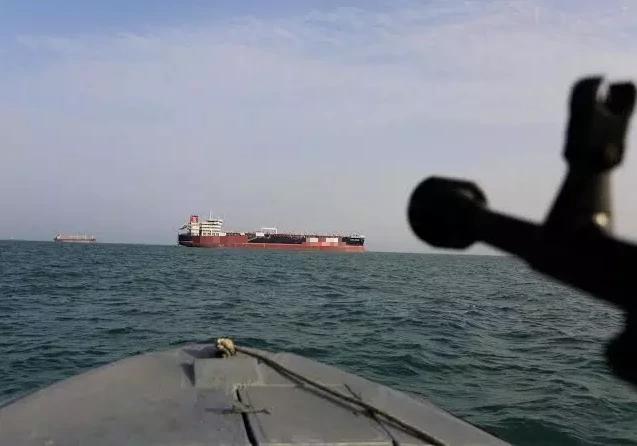
The War Zone provides additional detail on the mine-prevention posture, saying the Islamic Revolutionary Guard Corp (IRGC) “has a variety of smaller Boston Whaler-size boats,” and that U.S. forces are deterring and preventing continued mining.
It also states that the Pentagon and CENTCOM declined to comment, while a U.S. official told The War Zone, “Iran likely placed some mines in or near the Strait at some point during the conflict,” and that “We’re not talking about a high volume.”
The War Zone further says the official claimed, “more than 95% of Iran’s naval mines were destroyed during Operation Epic Fury,” while also describing U.S. efforts as “actively addressing the matter using a combination of manned and unmanned capabilities to ensure passage through the Strait is safe.”
Claims, Counterclaims, and Friction
The War Zone reports that U.S. efforts to prevent mining were paired with interdiction actions earlier in the week, and it describes new details about three Iranian-linked ships.
It says the efforts started Sunday with the Iranian-flagged cargo ship Touska, which was fired upon and later boarded, and that at about 9 a.m. EDT on Sunday, the Arleigh Burke class guided missile destroyer USS Spruance “disabled the Touska‘s engine by firing nine inert rounds from the destroyer’s Mk-45 5-inch gun precisely into the engine room and engine space on board the Touska,” according to Gen. Dan Caine.
The War Zone adds that seven hours later, CENTCOM gave the command for Marines to fast-rope in from helicopters and “seize the shot,” Caine added.
It also reports that China pushed back against Trump’s claim that the Touska contained a “gift from China perhaps,” quoting the Chinese Foreign Ministry response: “China rejects any assertion and speculation that lack factual evidence,” and “Normal trade between countries should not be disrupted.”
The AP’s account of the broader push includes Trump’s decision regarding ceasefire talks, saying the president said Saturday he had instructed his envoys not to travel to Pakistan for the latest ceasefire talks after Iran’s top diplomat left Islamabad.
Meanwhile, the AP emphasizes the strategic communications challenge, with Salisbury warning that even if mines are cleared, “all the Iranians have to do is say, ‘Well, actually, you haven’t found them all yet,’” and that “There’s only so much the U.S. can do to give that confidence back to commercial shipping.”
Stakes for Shipping and Policy
Across the reporting, the stakes are framed around oil shipments and the confidence of commercial shipping and insurers.
The AP says the Strait of Hormuz is “a vital sea route for oil shipments,” and that disruption is “increasingly threatening the global economy,” while also noting that “20% of the world’s oil typically passes” through the strait.

The AP and the Vietnam.vn republish AP’s core argument that any future claims that the U.S. cleared the waterway may not be enough to convince commercial ships and insurance companies that the area is safe again.
Salisbury is quoted in the AP saying, “There’s only so much the U.S. can do to give that confidence back to commercial shipping,” and the Vietnam.vn piece similarly quotes her that there are “limits to what the United States can do to restore confidence in the commercial shipping industry.”
The War Zone adds that U.S. forces are “actively addressing the matter using a combination of manned and unmanned capabilities to ensure passage through the Strait is safe,” while also describing IRGC mine-laying capability through small boats.
It also says Hegseth declined to speculate on a timeline, stating, “We would not speculate on a timeline,” in response to a question about a Washington Post story claiming Congress was informed it could take up to six months.
More on USA

North Dakota Rep. Liz Conmy Killed in Brooklyn Park Plane Crash Near Crystal Airport
11 sources compared

Cole Tomas Allen Sent Manifesto Targeting Trump Officials, Spared FBI Director Kash Patel
11 sources compared

Cole Tomas Allen Opens Fire at White House Correspondents’ Dinner, Targets Trump Officials
28 sources compared

Suspected Gunman Opens Fire at White House Correspondents’ Dinner, Targets Trump Officials
66 sources compared