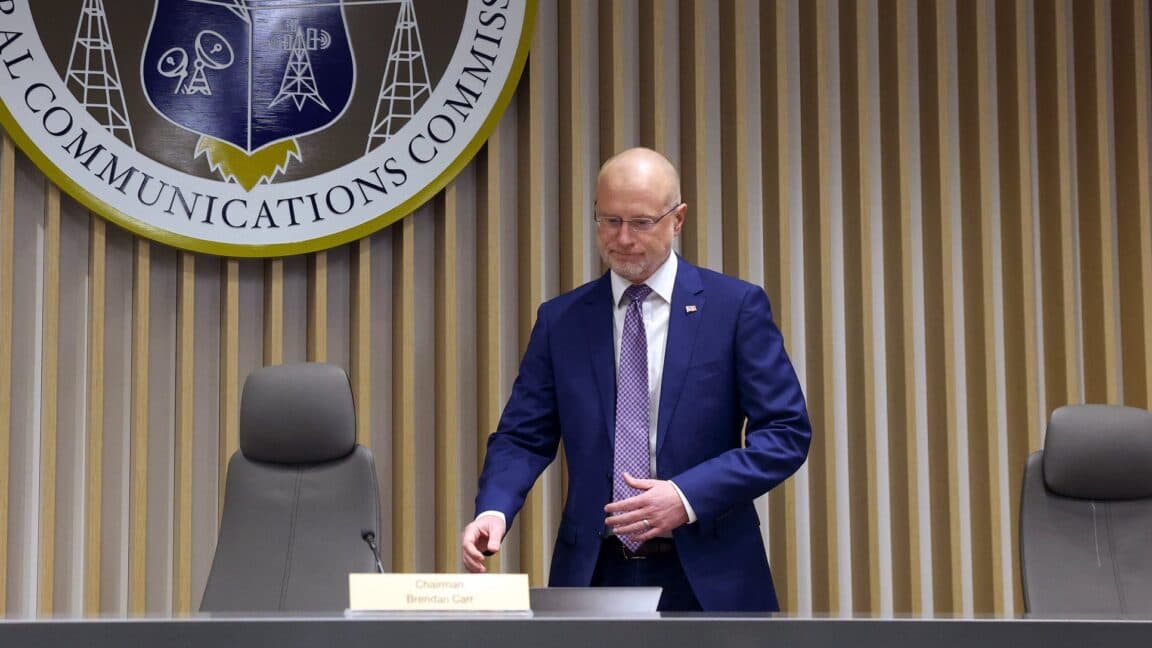
Trump Threatens Broadcasters' Licenses as Iran War Coverage Draws Scrutiny
Key Takeaways
- FCC Chair Brendan Carr threatened to revoke broadcasters' licenses over Iran war coverage.
- Threats followed President Trump's criticisms of media coverage and referenced public interest standards.
- Bipartisan backlash accused the move as unconstitutional and anti-First Amendment.
License Revocation Threats
President Donald Trump and FCC Chairman Brendan Carr have escalated their confrontation with mainstream media over coverage of the U.S.-Israeli war against Iran.
“President Trump and the Federal Communications Commission chairman are demanding more positive media coverage of the Iran war”
On Saturday, Trump attacked 'the fake news media' on Truth Social, specifically targeting The New York Times and The Wall Street Journal.
Trump claimed they 'actually want us to lose the War' and that their coverage was 'the exact opposite of the actual facts.'
Carr, a Trump appointee, boosted Trump's comments on X, warning that 'broadcasters that are running hoaxes and news distortions - also known as the fake news - have a chance now to correct course before their license renewals come up.'
He emphasized that 'The law is clear. Broadcasters must operate in the public interest, and they will lose their licenses if they do not.'
Trump later endorsed Carr's warning, writing that he was 'so thrilled to see Brendan Carr... looking at the licenses of some of these corrupt and highly unpatriotic 'news' organizations.'
Constitutional Backlash
The Trump administration's threats have sparked immediate and fierce backlash from lawmakers, constitutional experts, and free speech advocates who warn of authoritarian overreach and First Amendment violations.
Sen. Elizabeth Warren of Massachusetts stated that 'Constitutional law 101: It's illegal for the government to censor free speech it just doesn't like about Trump's Iran war,' adding that 'This threat is straight out of the authoritarian playbook.'

Sen. Mark Kelly of Arizona emphasized that 'When our nation is at war it is critical that the press is free to report without government interference. It is literally in the Constitution.'
California Gov. Gavin Newsom called the threats 'flagrantly unconstitutional,' while Sen. Ed Markey warned that the administration's statements 'could undermine public access to information during the war.'
Sen. Chris Murphy said the messages marked a 'truly extraordinary moment,' stating 'We aren't on the verge of a totalitarian takeover. WE ARE IN THE MIDDLE OF IT.'
Media Pushback
Major news organizations and media professionals have pushed back strongly against the administration's threats, defending their journalistic independence and constitutional role.
“Every day brings a new complaint — or three — from the Trump administration about the American news media’s coverage of the Iran war”
CNN Chairman and CEO Mark Thompson issued a statement declaring, 'We stand by our journalism. Politicians have an obvious motive for claiming that journalism which raises questions about their decisions is false.'
Independent news network MediasTouch described Carr's message as 'one of the most anti-American messages ever posted by a government official.'
Journalists have also raised alarms, with Séamus Malekafzali writing that 'The FCC is threatening the licenses of news stations that report on the effects of Iranian attacks on the American military.'
Free speech advocates have been particularly vocal, with Aaron Terr of FIRE stating that 'The First Amendment doesn't allow the government to censor information about the war it's waging.'
Pattern of Pressure
Carr's threats are part of a broader pattern of the FCC chair using his position to pressure media organizations that criticize the Trump administration.
Critics point to Carr's history of targeting specific media entities and personalities, including his public pressure on ABC to 'change conduct' regarding late-night host Jimmy Kimmel following criticisms of President Trump.

After Carr famously remarked on a podcast, 'We can do this the easy way or the hard way,' ABC temporarily suspended the show.
The FCC has also announced a probe into the daytime talk show The View, despite claims from free-speech advocates that such investigations border on state-sponsored censorship.
Carr has repeatedly pointed to the agency's 'public interest' standard and a rarely invoked 'news distortion' policy as potential tools to scrutinize stations' programming, a significant departure from his earlier stance.
War Context & Motives
The escalation of media criticism comes amid concerns about the Iran war's progress and its public reception, with analysts suggesting the administration may be trying to control the narrative rather than address substantive issues.
“The chairman of the Federal Communications Commission is threatening to revoke TV broadcasters’ licenses over their coverage of the U”
CNN senior political commentator David Axelrod observed that 'It feels like a decision has been made that if the war news isn't better, better to attack those who report news of the war,' theorizing that Trump is 'envious' of countries without a First Amendment.

The administration's rhetoric has intensified as the war continues, with Trump going on a 'tear against 'corrupt media outlets'' and even calling for some outlets to be 'brought up on Charges for TREASON' over what he claimed was false information about Iranian military victories.
However, experts note that while the FCC does have authority to oversee license renewals based on public interest, terms like 'distortions' and 'fake news' are subjective and rarely used in formal regulatory decertification without proof of intentional broadcast hoaxes that cause immediate physical harm.
The situation reflects a growing debate about the role of journalism during wartime and the tension between national security concerns and press freedoms.
More on USA

Attorney General Pam Bondi Subpoenaed by House Panel Over Epstein Files
26 sources compared
Joe Kent Resigns as National Counterterrorism Center Director Over Iran War
65 sources compared
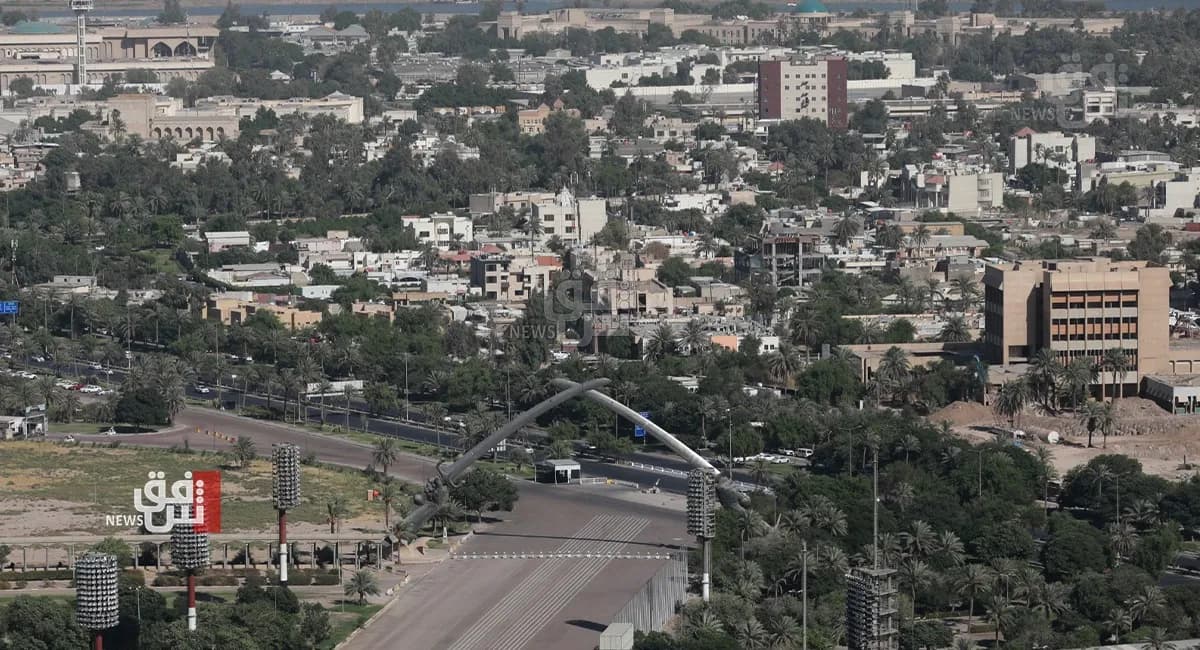
Drones attack U.S. Embassy in Baghdad as regional war escalates
31 sources compared
Drones and rockets attack U.S. Embassy in Baghdad; no injuries reported.
10 sources compared