
Trump Threatens to Delay Xi Summit Over Iran War and Strait of Hormuz
Key Takeaways
- Trump warned Beijing summit could be delayed to press China over Strait of Hormuz.
- Logistical delays tied to coordinating Iran war could postpone the Beijing summit.
- Trump seeks China's help to reopen the Strait of Hormuz as leverage over the summit.
Trump's Summit Threat
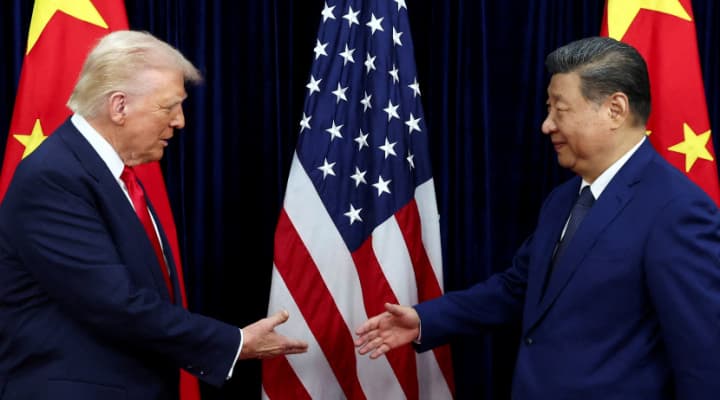
President Donald Trump has threatened to delay his planned summit with Chinese President Xi Jinping scheduled for late March unless Beijing assists in reopening the strategically critical Strait of Hormuz.
“Trump's Iran war duties, not China disputes, could delay Beijing summit, Bessent says By David Lawder and Elizabeth Howcroft PARIS, March 16 (Reuters) - Any potential delay to a planned summit this month between the U”
The strait has been effectively blocked by Iran amid the ongoing U.S.-Israel conflict.
Trump framed China's cooperation as a matter of self-interest, claiming Beijing sources about 90% of its oil through the vital waterway.
The strait normally handles roughly one-fifth of the world's daily oil supply.
Trump emphasized growing urgency, stating his trip to Beijing slated for the end of this month would be too late to address the crisis.
This underscores the high stakes of the situation for global energy markets and diplomatic relations between the world's two largest economies.
China's Rejection
China has firmly rejected Trump's demands, dismissing the proposal as an attempt to spread the risk of 'a war that Washington started and can't finish.'
The state-run Global Times characterized the request as unreasonable.
Chinese Foreign Ministry spokesman Lin Jian sidestepped direct questions about sending ships to the strait during a regular briefing in Beijing.
Instead, Lin emphasized the importance of high-level engagement between the two countries.
Lin stated 'Head-of-state diplomacy plays an irreplaceable strategic guiding role in China-U.S. relations.'
Analysts suggest China's reluctance stems from its long-standing policy of non-interference in overseas conflicts.
International Response
The international community has responded cautiously to Trump's calls for military assistance in securing the Strait of Hormuz.
“Soybean prices are particularly vulnerable to tensions between the two sides as China is a major buyer of American produce”
While the president has reached out to approximately seven countries and claimed to have received 'some positive response,' key allies have expressed reluctance.
Australia explicitly stated it will not be sending a ship to the strait.
Transport Minister Catherine King explained that while providing aircraft assistance to the UAE, 'that's not something we've been asked or that we're contributing to.'
Similarly, Japan indicated that any decision to dispatch naval vessels would face 'high hurdles.'
Neither China nor the UK confirmed plans to send ships despite being specifically named by Trump.
The French government did engage in diplomatic discussions, with President Emmanuel Macron speaking with Iranian President Masoud Pezeshkian.
Economic Impact
The crisis in the Strait of Hormuz has triggered significant economic consequences, with oil prices surging to their highest levels since July 2022.
Brent crude rose to approximately $106.12 per barrel while U.S. oil reached $101.53.

This reflects market anxiety over the disruption of this critical energy chokepoint.
The conflict has also impacted global fertilizer supplies, with reports indicating that Iran's actions are 'crippling global fertilizer supply.'
Despite China's supposed heavy reliance on Hormuz oil, analysts suggest Beijing may be more insulated than Trump's comments imply.
The country has spent decades diversifying its energy sources and building strategic reserves.
Seaborne oil imports through the strait now account for less than half of China's total oil shipments.
Summit Preparations
Despite the mounting tensions, preparations for the Trump-Xi summit continue, with both Chinese and U.S. officials engaging in preliminary talks.
U.S. Treasury Secretary Scott Bessent and Chinese Vice Premier He Lifeng led two days of discussions in Paris aimed at preparing for the highly anticipated meeting.

The summit is scheduled for March 31 to April 2.
Bessent characterized the talks as 'constructive' and emphasized the 'stability in the relationship,'
while leaving open the possibility of postponement due to Trump's war-related duties.
The White House indicated the summit will likely take place but could be delayed.
Satellite imagery showed Iran has continued to ship large amounts of crude oil to China since the war broke out.
This suggests Beijing's energy supply may not be as severely impacted as initially feared.
More on USA

Trump Threatens to Delay Xi Summit If China Fails to Defend Strait of Hormuz
12 sources compared

White House Chief of Staff Susie Wiles Has Early-Stage Breast Cancer, Trump Says
13 sources compared

Trump Urges Beijing to Secure Hormuz Strait as Australia Rejects U.S. Naval Escort Mission
32 sources compared

ICE Detains Afghan asylum seeker Paktyawal; He Dies in Texas Custody.
15 sources compared