
Iran threatens retaliation against US and Israeli energy infrastructure after Trump's 48-hour ultimatum
Key Takeaways
- Trump threatens to obliterate Iran's power plants unless Strait of Hormuz is reopened.
- Iran warns it will strike Gulf energy and water infrastructure if its sites are attacked.
- Oil prices set to surge amid the ultimatum and Gulf infrastructure threats.
Trump's Ultimatum
President Donald Trump issued a 48-hour ultimatum to Iran on Saturday, threatening to 'obliterate' Iranian power plants if Tehran did not fully reopen the strategic Strait of Hormuz within 48 hours.
“Following Trump’s threat, the Iranian army said it would target all energy infrastructure belonging to the US in the region if Iran’s fuel and energy infrastructure were attacked”
Trump specifically stated that 'America will hit and obliterate their various POWER PLANTS, STARTING WITH THE BIGGEST ONE FIRST!' as the U.S. deployed additional Marines and heavy landing craft to the region.
Iran responded immediately, with Parliament Speaker Mohammad Bagher Ghalibaf warning that 'vital infrastructure as well as energy and oil infrastructure across the entire region will be considered legitimate targets and will be irreversibly destroyed' if Iranian facilities were attacked.
Iran's powerful Revolutionary Guards Corps further escalated tensions, declaring that 'The Strait of Hormuz will be completely closed and will not be opened until our destroyed power plants are rebuilt' should Trump proceed with his threat.
Israeli Strikes Response
Following Trump's threat, Iranian missiles struck two southern Israeli cities near the country's main nuclear research center, wounding at least 180 people in attacks on Dimona and Arad.
The Israeli military acknowledged it was unable to intercept the missiles, marking the first time Iranian projectiles penetrated Israel's air defense systems in the heavily protected Dimona area.

Prime Minister Benjamin Netanyahu toured the destruction in Arad, calling it a 'miracle' that no one was killed while urging all residents to heed air raid sirens.
Netanyahu issued a direct appeal to international leaders, stating 'I ask the leaders of the world, the leaders of the free world, the leaders of the moderate states, what more are you waiting for,' and emphasized that 'Israel and the United States are working together for the entire world.'
Israeli officials acknowledged that Iran's missile launches have gradually decreased in frequency since the war began, but the strikes demonstrated Tehran's continued ability to inflict damage.
Global Market Impact
The escalating threats of infrastructure attacks sent shockwaves through global markets, with analysts warning that the situation had reached a 'global tipping point' that could trigger a long-term energy crisis.
“Skip to content Energy Oil prices set to surge amid Trump’s Iran ultimatum and Gulf infrastructure threats Oil prices hit near four-year highs as Trump threatens Iran and Tehran warns of Gulf infrastructure attacks, raising energy risks Florence Tan Sun 22 Mar 2026 Share Share × Copy to clipboard”
The Strait of Hormuz, through which roughly one-fifth of global oil supply normally passes, has been effectively closed due to attacks on commercial ships and threats of further strikes, creating what one market analyst called 'the worst oil crisis since the 1970s.'
European gas prices surged as much as 35% last week, and oil prices jumped to their highest in nearly four years.
Spanish Prime Minister Pedro Sánchez issued a stark warning, stating 'We stand at a global tipping point. Further escalation could trigger a long-term energy crisis for all humanity. The world should not pay the consequences of this war.'
The economic impact has been particularly severe for Gulf Arab states, which consume around five times as much power per capita as Iran and rely heavily on desalination plants for drinking water, making them especially vulnerable to infrastructure attacks.
Legal Concerns
International legal experts have raised grave concerns about the potential targeting of civilian infrastructure, warning that such actions could constitute war crimes under international law.
Rachel VanLandingham, a professor at Southwestern Law School and retired U.S. Army lieutenant colonel, stated that 'International law bars targeting purely civilian targets like power plants,' and that plants confirmed to be dual-use can only be targeted if the strategic advantage outweighs the harm to civilians.

She emphasized that 'Causing excessive suffering to civilians makes it a war crime under international law.'
Meanwhile, Iran's military spokesman Ebrahim Zolfaghari vowed that his country would retaliate against such strikes by targeting infrastructure used by Israel, the United States and American allies, including desalination plants that are described as 'a lifeline for much of the Middle East.'
This legal and moral dilemma has created a dangerous standoff where both sides are threatening to attack civilian infrastructure, potentially imperiling millions of people across the region.
War Escalation
The confrontation between Iran and the U.S.-Israel alliance has entered its fourth week with no signs of de-escalation, as the conflict expands across multiple fronts.
“Millions of people in Lebanon and Iran have been displaced”
Israeli Defense Minister Israel Katz ordered the military to step up the demolition of bridges and houses in Lebanon, while Israel's military chief announced that the Israeli campaign against Hezbollah had 'only just begun.'
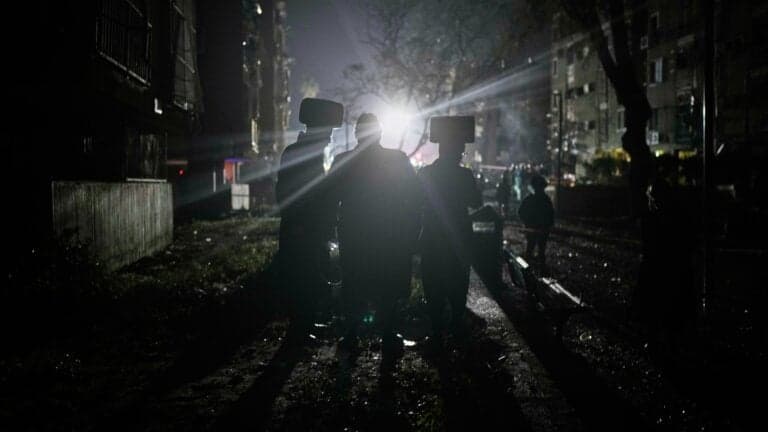
The fighting has intensified in southern Lebanese towns as Israel continues ground operations, with the Israeli military expanding its list of targets to include all bridges over the Litani River.
Meanwhile, Iran's Parliament Speaker Ghalibaf claimed that if the Israeli regime is unable to intercept missiles in the heavily protected Dimona area, 'it is, operationally, a sign of entering a new phase of the battle.'
The war has already killed over 2,000 people, mostly in Iran, with Lebanese authorities reporting that Israeli strikes have killed more than 1,000 people and displaced over 1 million in Lebanon alone.
The international community remains divided, with German Chancellor Friedrich Merz expressing concerns about the war's destabilizing impact on energy costs and 'potential to trigger large-scale migration' while maintaining coordination with Trump.
More on Gaza Genocide

Israeli Settlers Torch Palestinian Homes and Cars in West Bank
11 sources compared

Trump Administration Sues Harvard University Over Civil Rights Violations Against Jewish and Israeli Students
50 sources compared

Protesters heckle Australian PM Albanese at Sydney mosque over Israel stance
18 sources compared

Iran Fires Missiles at Israel, Killing Three Palestinian Women and a Foreign Worker
23 sources compared