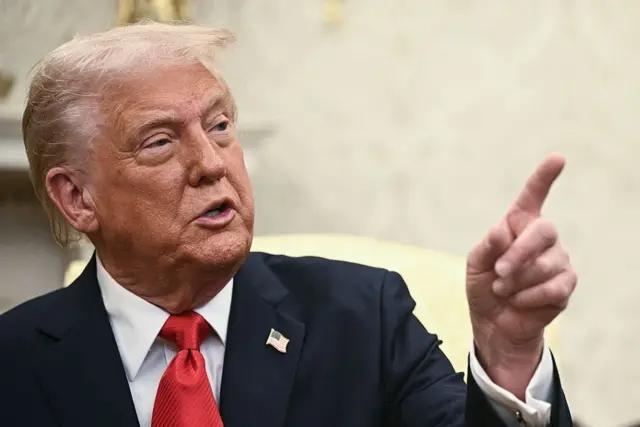
Trump Urges Iran To Release Eight Women Facing Execution Ahead Of Negotiations
Key Takeaways
- Trump urged Iran to release eight women reportedly facing execution ahead of negotiations.
- Appeal posted on Truth Social ahead of ceasefire talks with Iran.
- Detainees include a 16-year-old and another teenager.
Trump’s appeal on Truth Social
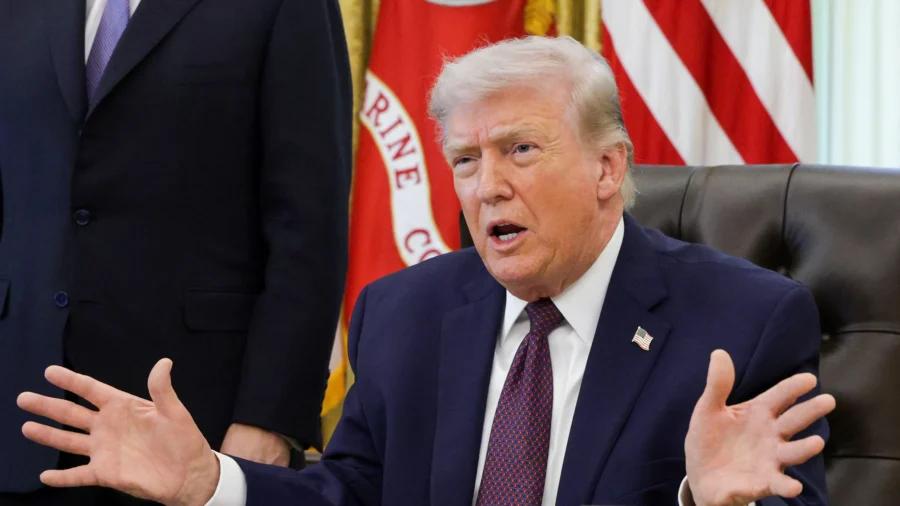
US President Donald Trump urged Iran’s leadership to release eight women he said are facing execution, framing the request as a goodwill gesture ahead of negotiations with “my representatives.”
In a post on Truth Social, Trump wrote, “To the Iranian leaders, who will soon be in negotiations with my representatives: I would greatly appreciate the release of these women. I am sure that they will respect the fact that you did so. Please do them no harm! Would be a great start to our negotiations!!!”

The appeal was tied by multiple outlets to a repost on X by US-based pro-Israel activist Eyal Yakoby, who claimed that eight women were facing execution by hanging.
Firstpost said Trump’s post included a repost of Yakoby’s claim and that the post “did not include any names,” though it included photographs.
The Hill similarly described Trump’s Truth Social post as urging Iran “not to execute eight women accused of crimes against the Islamic Republic amid ceasefire talks in Islamabad, Pakistan.”
New York Post and The Hill both said the post referenced Yakoby’s images of eight women, including one identified as Bita Hemmati.
The Hill also reported that Trump’s post included a screenshot from a “23-year-old commentator, Eyal Yakoby,” who shared images of eight women that he said were sentenced to death.
Who the women are
Across the US and international press, the eight women in Trump’s appeal were described through a mix of identifications and claims about their cases, with outlets citing different human-rights organizations and reporting that some details could not be independently verified.
The Hill said the eight women were identified as Bita Hemmati, Ghazal Ghalandari, Golnaz Naraghi, Venus Hossein Nejad, Panah Movahedi, Ensieh Nejati, Mahboubeh Shabani and Diana Taher Abadi by the Lawfare Project, a Jewish human rights nonprofit based in New York.

It added that Hemmati is “believed to be the first woman protester sentenced to death by Iran,” and said she was accused of encouraging a January uprising in Tehran and was subjected to “torture and interrogation eventually resulting in a confession on state television,” according to the National Council of Resistance of Iran.
The Hill also reported that Naraghi is a “37-year-old emergency medicine specialist at a hospital in Tehran” arrested in January, and that Shabani was accused of assisting injured protesters and was arrested in February, citing the Hengaw Organization for Human Rights.
New York Post provided additional case descriptions, saying the regime accused Hemmati of crimes including “using explosives and weapons” and “throwing objects such as concrete blocks,” and it said Hemmati was arrested alongside her husband and two other men who lived in their apartment building, with all four “sentenced to death.”
It also said the post included Diana Taherabadi, 16, and Mahboubeh Shabani, 33, and described Taherabadi as charged with “waging war against God, a capital offense in the Islamic republic.”
The New York Post further stated that “Details on the other women featured in Yakoby’s post — Ghazal Ghalandari, Panah Movahedi, and Ensieh Nejat — could not be independently verified.”
Iran’s judiciary pushes back
Iran’s judiciary and state-linked media responded to Trump’s appeal by denying that the eight women were facing execution, and it also disputed the underlying claim that they were at risk of hanging.
The Times of Israel reported that “Iran’s judiciary denies that eight women arrested over protests that shook the Islamic Republic this year are at risk of execution,” citing the judiciary’s official Mizan Online website.
In that denial, Mizan Online said, “Trump was misled once again by fake news,” and it added that “The women who were claimed to be on the verge of execution, some of them have been released, while others face charges that, if convictions are upheld, would at most result in imprisonment.”
The Jerusalem Post similarly said the IRNA News Agency later claimed that Iran’s judiciary denied Trump’s assertion that the women were at risk of being educated.
The Times of Israel added that US-based Iranian dissident Masih Alinejad posted the names of all eight women on her X account, while the judiciary insisted some had been released and others faced charges that would at most result in imprisonment if convictions were upheld.
Washington Examiner and other outlets also included Iran’s denial of Trump’s earlier claims about stopping executions, quoting Prosecutor-General Mohammad Movahedi Azad as saying, “The judiciary is an independent institution and does not take orders from foreigners.”
Ceasefire timing and negotiation setting
The Trump appeal landed as US-Iran ceasefire and negotiation timelines were being reported with specific dates and clock times, and several outlets tied the women’s release request to the same diplomatic window.
Firstpost said Washington and Tehran were expected to resume negotiations in Islamabad and that US Vice President JD Vance, along with envoys Steve Witkoff and Jared Kushner, was scheduled to travel to Pakistan for a second round of talks.

It also described a two-week ceasefire that Trump said is set to expire on Wednesday evening (Washington time), adding that he described Iran as having violated it “numerous times” and said an extension was “highly unlikely” if no agreement is reached before the deadline.
The جريدة الدستور report said Iran’s state television announced that the ceasefire “began on April 8 and lasted 14 days” and would end at dawn today, Wednesday, Tehran time, and it aligned that timing with the start of the 14-day ceasefire.
That same report said Pakistan, which mediates, announced the ceasefire would end at “23:50 GMT on Tuesday,” and it noted that it had been expected the truce would end during Tuesday night into Wednesday.
It also said Trump told Bloomberg that it could end after one day, “i.e., Wednesday evening Washington time.”
In addition, Firstpost said Iran had reportedly demanded “the lifting of the US naval blockade as a precondition,” and NTD News said the US military imposed a blockade of Iranian ports as economic pressure.
Competing narratives and stakes
The reporting around Trump’s appeal shows a sharp split between the US president’s framing of the women’s release as a negotiation “start” and Iran’s judiciary denial that they are on the verge of execution, with human-rights groups and activists describing the stakes in stark terms.
“President Trump publicly implored Iran to release eight women whom the regime is allegedly set to execute as a means of building goodwill with the United States”
The Times of Israel said Trump recirculated an image originally created by the Lawfare Project and that the judiciary’s Mizan Online statement accused him of being misled by “fake news.”
It also quoted Hiwa’s executive director Sardar Pashaei saying, “Last week, when I appeared on Fox News, I held up photos of several women political prisoners facing execution and called on President Trump to include humanitarian issues in any negotiations with Iran, in order to help save their lives.”
Pashaei added a negotiating condition, saying, “My message was very clear: the condition of ‘no nuclear weapons’ should go hand in hand with ‘no execution of political prisoners’.”
In the same report, Hiwa said “Right now, dozens of prisoners are at risk of execution” and that “In just the past month, more than 16 prisoners have been hanged,” while also claiming “At least five women political prisoners are currently facing execution.”
Meanwhile, The Hill and New York Post both described Trump’s post as a goodwill request and detailed the women’s alleged charges, including Taherabadi’s “waging war against God” accusation and Shabani’s alleged role in assisting wounded protesters.
Mint added a broader execution context, saying a joint report estimated that in 2025 the Islamic Republic executed “four people every day,” and it said “Over 1,600 people were reportedly executed last year.”
More on USA

Donald Trump Extends U.S.-Iran Ceasefire Until Talks Conclude, Keeps Blockade of Iranian Ports
24 sources compared

Tucker Carlson Says He’ll Be Tormented After Apologizing for Trump Support
11 sources compared

Mexico Investigates CIA Employees’ Deaths After Chihuahua Drug Lab Raid Car Crash
23 sources compared

Sheila Cherfilus-McCormick Resigns From Congress Before House Ethics Committee Expulsion Vote
32 sources compared