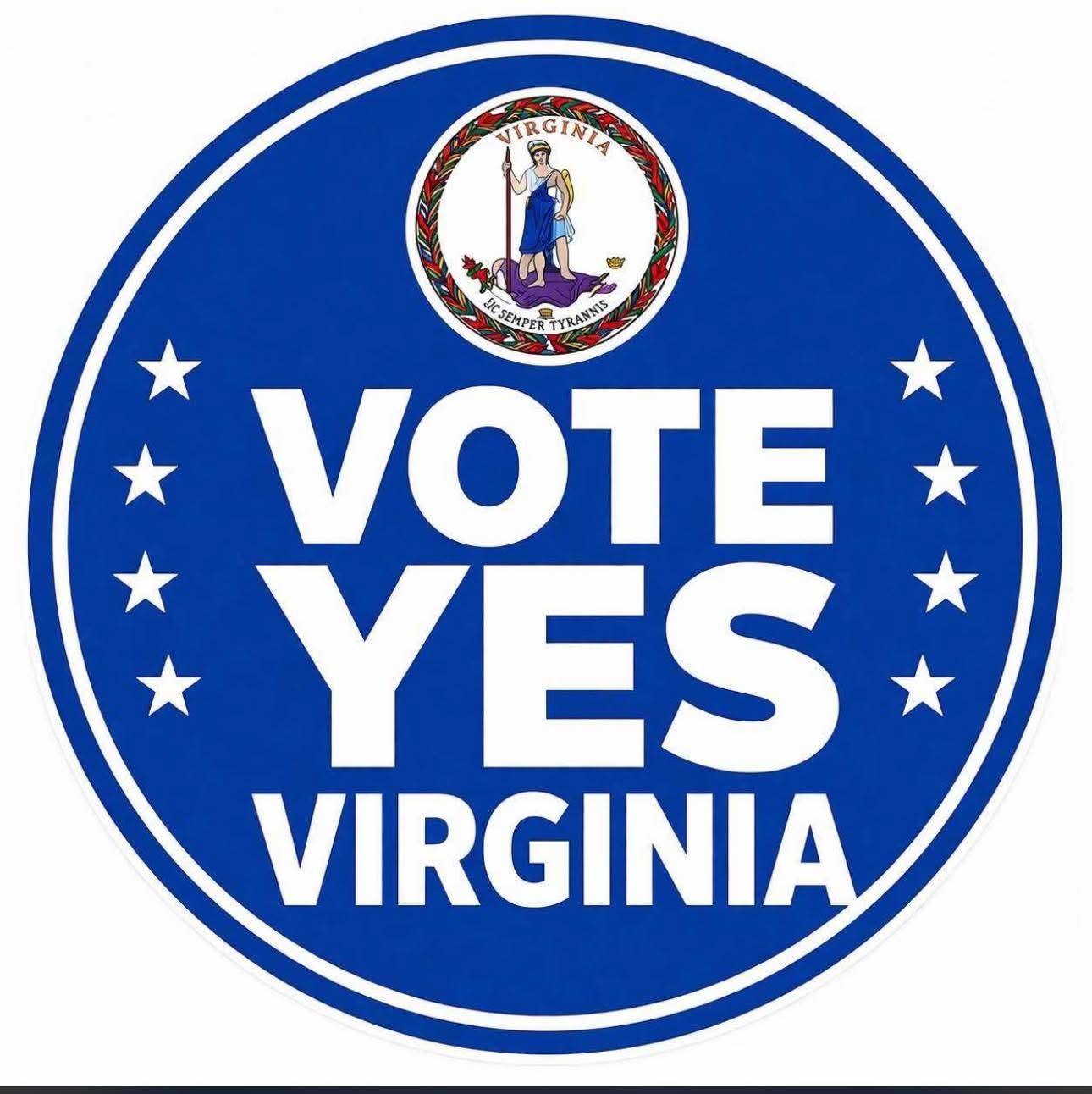
Trump Urges Virginians To Vote No On Redistricting Measure Before April 21 Vote
Key Takeaways
- Trump urged Virginians to vote no on redistricting during a tele-rally with Johnson.
- Ballot measure would grant Democrats power to redraw Virginia's congressional districts, enabling four pickups.
- April 21 ballot asks Virginians to approve a constitutional redistricting amendment.
Trump’s last-minute pitch
President Donald Trump made a last-minute pitch to Virginians on Monday evening, urging voters to reject a redistricting ballot measure that could give Democrats as many as four pickup opportunities in the House this November.
In a tele-rally call with Speaker Mike Johnson (R-L.) one day before the Virginia referendum, Trump called the proposal “This referendum is a blatant partisan power grab that nobody’s really ever seen anything like it,” and said, “It’s the liberal extremist Gov. Abigail Spanberger, too bad, and the far-left Democrats in Richmond after Spanberger promised Virginia voters that she would never do this.”
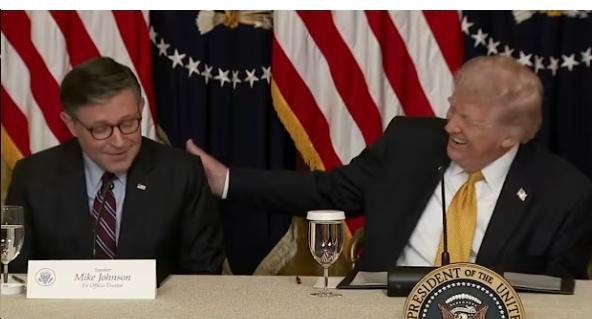
Trump warned that “if it passes, Virginia Democrats will eliminate four out of five congressional seats, so you’re going to get just wiped out in terms of representation in Washington. That’s what it’s all about.”
He added, “Please get out and vote and vote no. It’s very simple,” and concluded, “Just vote no.”
The Hill described the referendum as a Tuesday vote in which Democratic lawmakers are asking voters if they can pass a new House map ahead of the 2030 census, with the measure temporary and allowing Democrats to install a map that gives their party a 10-1 edge in the congressional delegation.
The Hill also said Virginia’s current House delegation has a narrow Democratic 6-5 edge, and that nearly $100 million has poured in between both the “yes” and “no” campaigns for the referendum.
Washington Examiner similarly reported that Trump joined Johnson in a virtual rally on the eve of the April 21 vote, urging supporters to “just vote no,” and framed the measure as a Democrat-backed “partisan power grab.”
How the fight escalated
The Virginia referendum is presented in the sources as the latest move in an escalating redistricting arms race that began in July 2025, when Texas Republican lawmakers redrew their state’s congressional map to favor Republicans at President Donald Trump’s urging.
NBC4 Washington said Democrats hold six of Virginia’s 11 congressional seats, and that if a plan passed by the legislature in February and signed by Democratic Gov. Abigail Spanberger is enacted, the party could gain the upper hand in 10 districts, a net pickup of four seats.
The Hill described the referendum as a response to redistricting moves in states such as Texas and Missouri, where the GOP pressed lawmakers to redistrict midcycle to add more House pickup opportunities in a midterm environment.
Democracy Docket framed the stakes as a national fight, quoting Eric Holder, chairman of the National Democratic Redistricting Committee, saying, “This is really a national fight,” and adding, “It’s not a fight only about Virginia.”
Democracy Docket also said the Tuesday special election would allow Virginia voters to decide how the state responds to GOP gerrymanders in Texas, Missouri, North Carolina and, if Gov. Ron DeSantis (R) gets his way next week, Florida.
The Guardian described the question before voters as whether to temporarily set aside Virginia’s congressional maps intended to advantage neither party and replace them with a new version that could allow Democrats to win all but one seat in the 11-member delegation in the November midterm elections.
The Guardian also tied the Virginia vote to the nationwide redistricting war instigated by Donald Trump last year, describing a tit-for-tat between red and blue states.
Legal fights and voter ID
As Virginians prepared to vote on April 21, Democracy Docket reported that the Republican National Committee filed a lawsuit challenging voter identification in Fairfax County, a Democratic stronghold with a large immigrant population in the suburbs of Washington, D.C.
The suit, submitted Friday, alleged that the county’s election procedures don’t explicitly require officials to challenge the eligibility of voters who present a Driver Privilege Card (DPC), a form of ID used by noncitizens.
Democracy Docket said the issue was relatively minor because Fairfax County law already requires voters using a DPC to vote to present another form of identification confirming their eligibility, but it emphasized that the timing—just days before Virginians head the polls—underscored the special election’s high stakes.
The RNC asked the Circuit Court of Fairfax County to block the county from using its current DPC policy, and Democracy Docket quoted the RNC’s court-filing framing that the county’s “loophole” is being used “to allow unqualified, non-citizen individuals to vote in elections.”
Democracy Docket also reported that in a statement posted to social media Saturday, the RNC said it “will NOT allow non-citizens to vote in Virginia’s referendum election.”
The same source said two plaintiffs in the case are Republican members of Congress whose district maps could be impacted by the redistricting election.
Democracy Docket added that the Virginia Supreme Court ruled twice that the election can proceed while litigation remains pending, but that even if voters approve the measure, the plan will still need to survive legal challenges.
Confusion, dark money, and ads
NPR reported that voters said they felt confused and misled on Virginia’s redistricting vote, describing how campaign messaging made it hard to interpret what Gov. Abigail Spanberger was telling people to do.
NPR quoted Randi Buerlein saying, “I’m looking at this booth, and it has a big picture of our governor saying, 'Don’t be fooled,'” and added that Buerlein said, “She's on TV every day saying, 'Vote yes.' But they're making it look like she's saying, 'Vote no.'”

NPR said the new map could result in Democrats gaining four seats in the U.S. House and that the pro-redistricting side had massively outspent opponents, while voters described contradictory direct mail and TV ads.
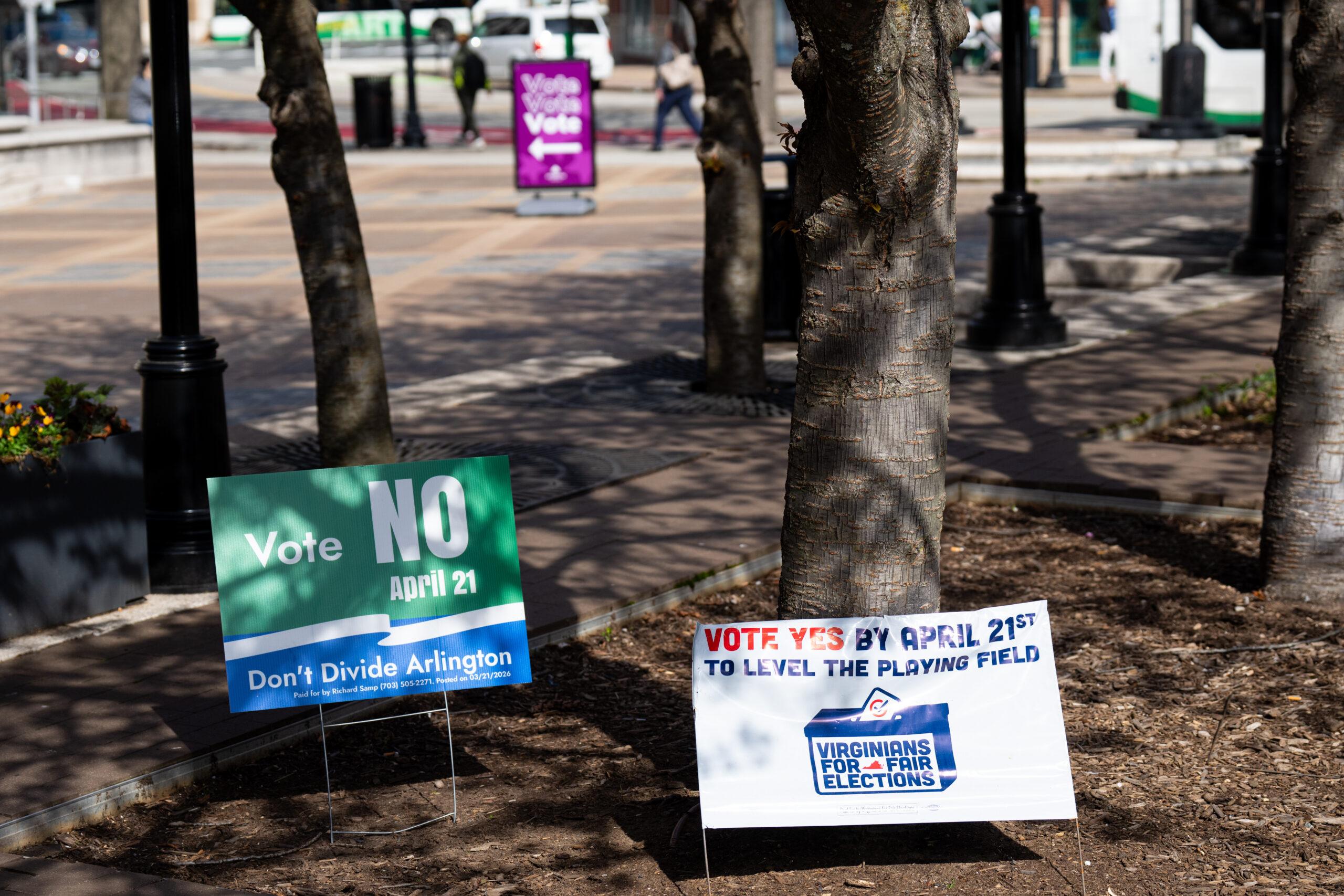
NPR also highlighted confusion over the referendum committee names, saying “Virginians for Fair Elections is the group encouraging people to vote for redistricting. Virginians for Fair Maps is against redistricting.”
The story included a response from Finn Lee, the campaign manager for Virginians for Fair Maps, who said, “Any confusion was created by defying court orders, misleading ballot language and the hypocrisy of politicians. This ad simply serves to educate voters,” in an email.
NPR described how the anti-redistricting TV spot used a 2017 video appearance of Barack Obama speaking against gerrymandering, while Obama appeared in ads encouraging people to vote yes.
It also discussed dark money, saying 501(c)(4)s structured so donors do not need to be disclosed made up the bulk of campaign contributions on both sides, and that The Federalist called the Virginia Independent “campaign mailers masquerading as 'newspapers.'”
What happens next
The Guardian described the referendum as a “critical step” for Virginia’s role as a swing state, with the outcome potentially affecting control of the House in a closely divided Congress.
“Voters say they feel confused and misled on Virginia's redistricting vote When Randi Buerlein arrived to vote early in Virginia's redistricting election, she said she didn't like what she saw”
It said Glenn Youngkin warned activists that the map Republicans were pushing would be “the most important election” in the commonwealth’s 237-year history, and he warned that Democrats’ plan would override Virginia’s voice and push voters into “the most partisan, most gerrymandered map in America, worse than Illinois, worse than California.”

The Guardian reported that polls showed 52% of voters back the new maps and 47% oppose them, citing a survey his school conducted with the Washington Post, and it described the danger for Democrats as energizing the Republican base.
It also said Democrats characterized supporting Virginia’s referendum as a way to retaliate against Trump’s efforts in other states, and quoted Spanberger at a virtual rally saying, “It is responsive, it is temporary, and a yes vote is our way to stand up and ensure that efforts in other states do not go unmatched.”
The Guardian included a quote from Hakeem Jeffries telling the event, “This is a critical step forward for the people of the Commonwealth of Virginia, but it has national and international implications, because we can cut Donald Trump’s presidency in half, legislatively.”
The Hill and Washington Examiner both emphasized the vote’s timing and the immediate effect on the 2026 elections, with Washington Examiner stating that if approved, a new map already passed by Democratic lawmakers would take effect for the 2026, 2028, and 2030 elections.
NBC4 Washington added that under the proposal, state lawmakers would retain the power to redraw district boundaries until October 2030, when authority would revert to the state’s nonpartisan redistricting commission.
More on USA

Trump Says U.S. Seized Iranian-Flagged Touska After Navy Disabled Engine Near Strait of Hormuz
68 sources compared

Virginia Voters Decide Redistricting Referendum Tuesday, Potentially Shifting House Map
10 sources compared
Betty Yee Suspends California Governor Campaign After Eric Swalwell Exit Over Sexual Assault Allegations
12 sources compared

Trump Says US Navy Seized Iranian-Flagged Touska After Crew Refused Warnings
57 sources compared