
Trump's Peace Board Proposes Hamas Disarmament in Cairo Talks
Key Takeaways
- Written disarmament proposal delivered to Hamas during Cairo meetings last week.
- Proposal outlines mechanisms for Hamas disarmament and weapons handover.
- Trump-chaired Peace Council led the disarmament proposal.
Disarmament Framework
Trump's Peace Board, led by envoy Nikolai Mladenov and assistant Aryeh Lightstone, presented a written disarmament proposal to Hamas during Cairo talks last week.
“Two informed sources said that the Peace Council, chaired by U”
The proposal demands the complete surrender of all heavy and light weapons as a condition for Israeli troop withdrawal and Gaza reconstruction.

The proposal was delivered amidst ongoing Gaza genocide that has killed over 72,000 Palestinians since October 2023.
The framework agreement emphasizes that 'the complete disarmament of all armed groups without exception' is the key condition for launching reconstruction efforts.
U.S. officials are considering amnesty for militants as an incentive for compliance.
This creates what one source described as a 'meaningful incentive' for the group but with significant implementation challenges.
Israeli Occupation
Israel maintains firm control over approximately half of the Gaza Strip while Hamas governs the remainder housing about two million Palestinians.
Most Palestinians in Hamas-controlled areas have become homeless during the devastating two-year Gaza genocide.

The Israeli occupation continues to systematically violate the October 10, 2025 ceasefire agreement.
This violation has resulted in 677 additional Palestinian martyrs and 1,813 wounded according to Gaza's health ministry.
Senior Hamas leaders have consistently rejected any disarmament arrangements.
They view disarmament as threats to the group's survival and protection of Palestinians under Israeli occupation.
The proposal demands Hamas surrender weapons while Israel shows no signs of withdrawing from occupied territories.
This creates an asymmetric power dynamic that makes genuine peace unlikely.
Hamas Concerns
Hamas faces significant internal and external concerns about accepting the disarmament proposal.
“Sources say a written US proposal asked Hamas to disarm during recent Cairo talks”
They fear surrendering weapons would leave Palestinians vulnerable to attacks by other groups.
The group has not yet officially commented on the specific details of the Cairo proposal.
Previous statements indicate deep skepticism about U.S. and Israeli commitments.
Hamas representatives may view the amnesty offer as insufficient compensation.
This is especially given the historical context of broken agreements.
The proposal asks Hamas to disarm while Israel maintains control over half of Gaza.
This creates what one analyst described as a 'precarious' situation for Palestinian security.
Funding Crisis
Serious funding and implementation questions surround the Trump administration's Gaza peace plan.
Significant portions of the $7 billion in financial commitments secured from Gulf states have not yet materialized.
American officials acknowledge that funding these reconstruction commitments remains uncertain.
Only a small portion of pledged funds has actually been provided despite Trump's February announcements.
Experts express substantial doubts about the plan's viability.
They note real progress depends on concrete security guarantees and transparent funding.
The funding gap creates a credibility crisis for the proposal.
Palestinian groups question whether the international community will follow through on rebuilding promises.
Regional Context
The disarmament talks have been suspended since the start of the US-Israeli war against Iran.
“Donald Trump's Peace Board, which includes Kosovo, has presented Hamas with a written proposal on how it could hand over its weapons, a step that the Palestinian militants have so far refused to take, as the US president continues with his plan for the future of Gaza, Reuters writes”
This suggests regional tensions may undermine diplomatic efforts in Gaza.
Trump's plan envisions a phased approach with ceasefire preceding demilitarization.
Experts question whether this sequencing is realistic given ongoing violence.
The Gaza genocide has created 'widespread destruction affecting 90% of infrastructure'.
The international community struggles with both immediate humanitarian crisis and political solution.
Current efforts focus on providing relief to war-torn Gaza.
The fundamental power imbalance casts doubt on lasting peace prospects.
More on Gaza Genocide

Trump Administration Sues Harvard University Over Civil Rights Violations Against Jewish and Israeli Students
50 sources compared
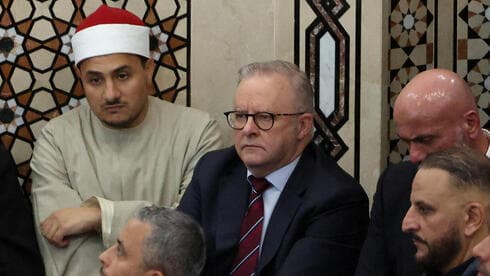
Protesters heckle Australian PM Albanese at Sydney mosque over Israel stance
18 sources compared

Iran Fires Missiles at Israel, Killing Three Palestinian Women and a Foreign Worker
23 sources compared

UEFA Cancels Finalissima as Argentina Rejects Alternatives Amid Middle East War
11 sources compared