UAE Investors Increase AI Stock Holdings Despite Military Tensions With Iran
Key Takeaways
- AI stocks viewed as compelling buying opportunities amid tensions.
- Investors kept cryptocurrency exposure despite escalating Middle East tensions.
- eToro data show UAE investors buying AI on dips.
UAE investors keep crypto
Investors in the United Arab Emirates (UAE) have continued to maintain exposure to crypto-related assets even as tensions rise in the Middle East, according to data discussed by Cointelegraph and reported by DigitalToday.
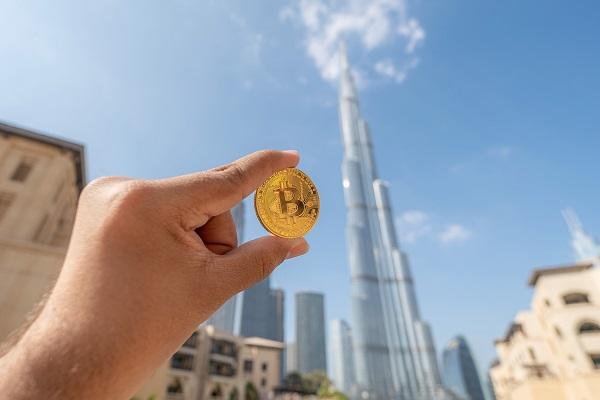
“DUBAI, UAE – April 2025: Investors across the United Arab Emirates demonstrate remarkable resilience by maintaining their cryptocurrency allocations despite escalating geopolitical tensions throughout the Middle East”
The reporting says Cointelegraph covered an April 16 update based on “the latest data released by eToro,” showing UAE investors increased holdings of software and AI infrastructure-related stocks that fell sharply in the first quarter.

eToro market analyst Josh Gilbert (조시 길버트) said, "UAE investors became more selective about what risks they were willing to take rather than avoiding risk," and added, "Investment decisions were driven by long-term themes rather than short-term volatility."
By stock, the holding increase rate was highest for ServiceNow at 125 percent, with buying also confirmed across Super Micro Computer at 65 percent, Adobe at 54 percent, and Oracle at 38 percent.
On the crypto side, Gilbert said shares of Strategy, “known as a company that holds bitcoin (BTC), were still among the top holdings,” which the reporting frames as an “indirect exposure strategy” that includes “related stocks as well as direct crypto investment.”
The same reporting ties the behavior to the backdrop of “military tensions with Iran,” while also stating that the local digital asset ecosystem “has remained relatively stable.”
AI sell-off becomes entry
The same set of reporting describes UAE investors as leaning into an “artificial intelligence sell-off” rather than de-risking broadly, with Cryptonews.net framing the pattern as “buy the dip” behavior.
Cryptonews.net says new eToro data shared with Cointelegraph on Wednesday showed users in the UAE boosted holdings of software and AI infrastructure names whose share prices fell sharply in the first quarter.

It quotes Josh Gilbert telling Cointelegraph that UAE investors became more selective over where they took risk in Q1, and that investor behavior was driven by long-term themes rather than a risk-off mindset.
The article points to specific increases—ServiceNow (+125%), Super Micro Computer (+65%), Adobe (+54%), and Oracle (+38%)—as the clearest signal of the shift toward AI infrastructure and software names.
It also reiterates that “Strategy Inc. remained the eighth-most-held stock” among UAE investors, linking the crypto exposure to equity holdings rather than only direct token positions.
Cryptonews.net connects the resilience to conflict-driven volatility, stating that Deutsche Bank said an April 13 report found the shock was “more likely to sharpen rather than derail demand for AI, cybersecurity and sovereign digital infrastructure in the region.”
In the same narrative, the reporting says the conflict exposed new risks for Gulf tech infrastructure, including “reported strikes on Amazon Web Services data centers in the UAE and Bahrain” and threats against the planned “1GW Stargate campus in Abu Dhabi.”
Exchanges and firms keep running
Beyond equities, the reporting says crypto operators in Dubai continued operating through the period of conflict, with HashKey MENA and Binance both described as maintaining business continuity.
“As tensions rise in the Middle East, investors in the United Arab Emirates (UAE) have moved to selectively buy AI and technology stocks, focusing on specific names”
Cryptonews.net says on the ground in Dubai, crypto players told Cointelegraph that the conflict had “slowed but not derailed the city’s hub ambitions,” and it quotes HashKey MENA managing director Ben El-Baz saying operations remained “broadly functional,” aided by “cloud-based trading and custody systems less dependent on a physical location.”
The same article states that “remote work and travel disruptions were unavoidable,” but it still describes the operational posture as resilient.
It then says “Other companies, including Binance, also continued normal operations, despite reports to the contrary,” and adds that a Binance spokesperson told Cointelegraph employees were given “the option of temporary relocation as a precautionary measure,” while the “vast majority” chose to remain.
Cryptonews.net also notes that “major conferences such as Token2049 were postponed,” placing the disruption in the events calendar rather than in day-to-day trading operations.
DigitalToday similarly says “Global exchange Binance also continued normal operations,” and that Binance “provided temporary relocation options to some employees as a preventive measure, but most staff were reported to have remained locally.”
DigitalToday also states that “The large event Token2049 was postponed,” aligning the two accounts on the same named event.
Regulation offers clarity
The reporting also emphasizes that Dubai’s regulatory framework for virtual assets continued during the conflict, with VARA presenting guidance and rules rather than pausing oversight.
DigitalToday says “The regulatory environment also did not waver,” and that “Dubai's Virtual Assets Regulatory Authority (VARA) maintained and expanded its activity-based regulatory framework amid the turmoil,” adding that it “additionally presented token issuance guidelines and rules for crypto derivatives.”
It quotes VARA head of market assurance Sean McHugh (숀 맥휴) saying, "In times of market instability, investors look for clarity rather than places where regulation is lax."
Cryptonews.net provides a similar regulatory framing, saying “Dubai’s Virtual Assets Regulatory Authority (VARA) has continued to roll out its activity-based framework throughout the turmoil,” including “detailed guidance on token issuance and formal rules for crypto derivatives.”
It quotes Sean McHugh telling Cointelegraph that in periods of stress, serious market participants do not seek “the lightest-touch jurisdiction, they look for the clearest one,” and it adds that Dubai’s “combination of transparent licensing, visible supervision and active enforcement” is meant to persuade institutions to treat the emirate as “a strategic base rather than an opportunistic punt.”
DigitalToday also connects the regulatory posture to the broader investment behavior, stating that “Ultimately, the UAE market appears to be maintaining a long-term investment direction centred on AI and digital assets despite geopolitical tensions.”
In the same vein, Cryptonews.net says regulators bet that clear rules will anchor capital, tying the regulatory activity to the continued operations of exchanges and custody systems.
What’s at stake next
While the reporting stresses continuity, it also lays out risks and the infrastructure pressures that could affect both tech and crypto markets.
“DUBAI, UAE – April 2025: Investors across the United Arab Emirates demonstrate remarkable resilience by maintaining their cryptocurrency allocations despite escalating geopolitical tensions throughout the Middle East”
DigitalToday says “Short-term risks remain,” and it lists “the burden has increased for building data centres, logistics and cross-border technology infrastructure,” while also citing “rising oil price volatility” as a factor that could affect tech stock valuations.
It also says “Reports said Amazon Web Services (AWS) data centres in the UAE and Bahrain were attacked,” and it raises “security concerns” around “the 1-gigawatt (GW) Stargate project being pursued in Abu Dhabi.”
Cryptonews.net similarly ties the conflict to volatility and says Deutsche Bank highlighted that “the Gulf, and the UAE in particular, is unlikely to abandon the AI race,” while also pointing to the conflict’s exposure of risks for data centers and cross-border build-outs.
On the crypto side, the reporting notes that Binance continued normal operations and that VARA continued rolling out its framework, but it still places the market under stress by describing postponed events like Token2049 and disruptions to travel and remote work.
Cryptonews.net quotes Ento Capital’s senior executive officer Hayssam El Masri saying the conflict is “refining” rather than derailing the GCC story, and it quotes him describing investor behavior shifting “from “confidence-driven to risk aware,” but are generally not exiting the region.”
DigitalToday likewise says the operating environment centered on Dubai continued “without major disruption,” and that reliance on physical infrastructure was assessed as low because of “cloud-based trading and custody systems.”
More on Crypto

Circle Internet Financial Faces Class-Action Over $230M Drift Protocol USDC Hack Inaction
12 sources compared
UK FCA Proposes Full Crypto Regulation Including Custody Rules by 2027
11 sources compared
Ripple Partners With Kyobo Life to Pilot Korea’s First Tokenized Government Bond Settlement
14 sources compared
Pakistan Central Bank Lifts Seven-Year Ban Allowing Banks To Serve Licensed Crypto Firms
13 sources compared