USA03 January, 20265 min read
United States Captures Nicolás Maduro in Caracas, Flies Him to New York for Trial
This article is an automated aggregation of coverage from news outlets. Our editorials offer in-depth analysis curated by the NewsCord team.
Maduro and his wife were captured in Caracas during an overnight U.S. raid. They were flown to New York to face U.S. charges.

Military Capture Operation
The United States conducted an extraordinary military operation early Saturday morning that resulted in the capture of Venezuelan President Nicolás Maduro from his high-security military compound in Caracas. The operation, labeled 'Operation Absolute Resolve,' involved elite U.S. military teams including the Army's Delta Force and the 160th Special Operations Aviation Regiment, with approximately 150 aircraft participating in the coordinated strikes. The pinpoint attacks targeted key military installations including the Generalissimo Francisco de Miranda Air Base, Port La Guaira, Higuerote Airport and Fuerte Tiuna, with Maduro and his wife Cilia Flores seized just steps from the steel doors of their compound.
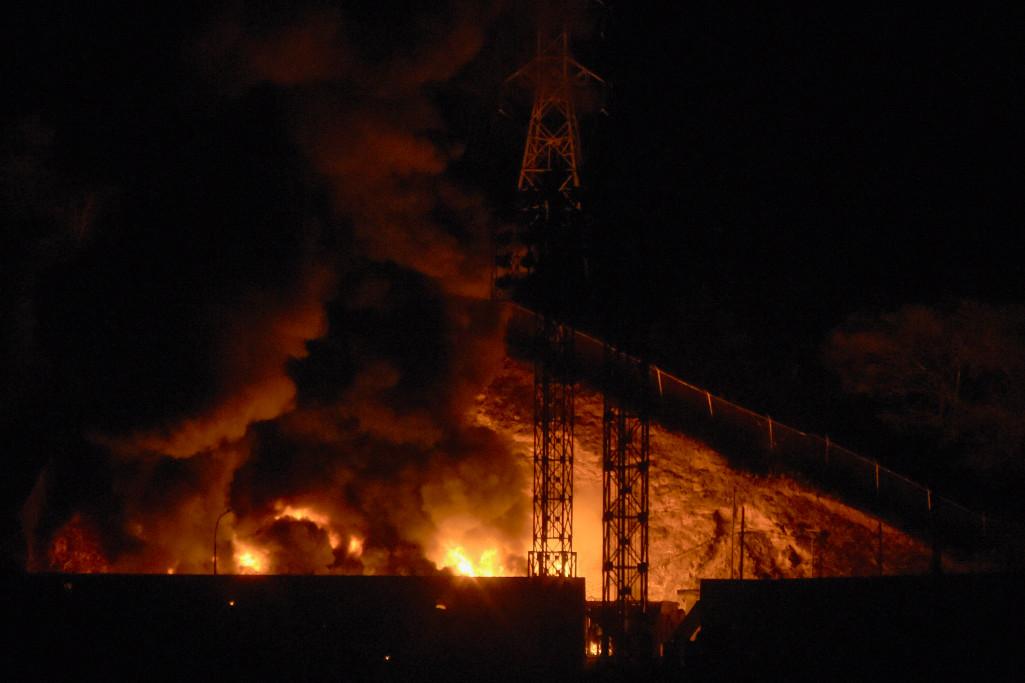
“Some 150 aircraft took part in Operation Absolute Resolve, which came after months of mounting pressure by the Trump administration and lasted just under two and half hours. Pinpoint strikes at 2 a.m. around the capital city of Caracas targeted the Generalissimo Francisco de Miranda Air Base, Port La Guaira, Higuerote Airport and Fuerte Tiuna, sending plumes of smoke and fire into the night air.”
The operation lasted fewer than 30 minutes and was described as a 'spectacular assault' by President Trump, who stated that U.S. troops were able to blast through Maduro's security 'a matter of seconds.' Venezuelan officials reported at least 40 to 80 people were killed in the strikes, including civilians and soldiers, with one strike reportedly hitting a three-story apartment complex that killed an 80-year-old woman.
Transfer and Legal Charges
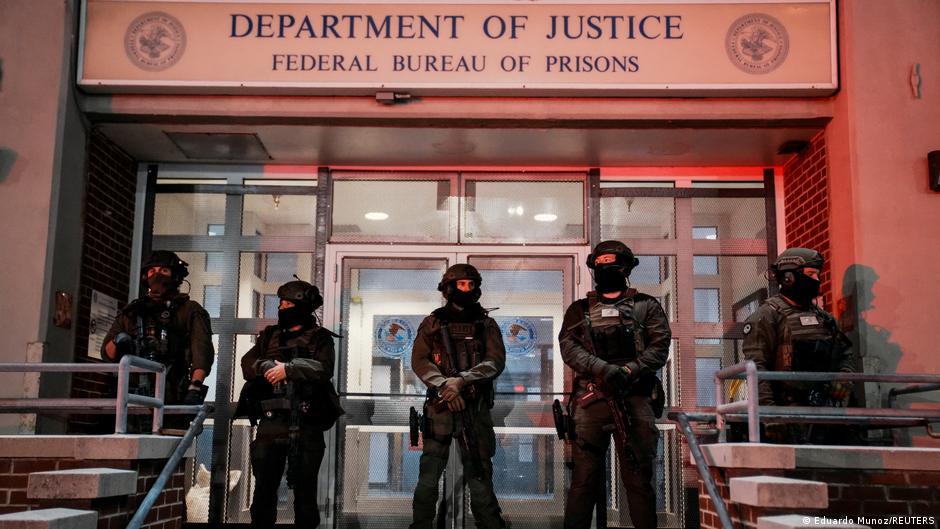
Following his capture, Maduro and his wife were transported out of Venezuela and flown to the United States to face criminal charges. The ousted Venezuelan leader arrived at Stewart Air National Guard Base in Newburgh, NY on Saturday afternoon, roughly 12 hours after being taken into custody by joint U.S. military forces. Photos showed Maduro appearing blindfolded, wearing soundproof headphones, handcuffed, and clasping a plastic bottle of water while wearing a grey Nike sweatsuit aboard the USS Iwo Jima during transport.
After landing in New York, Maduro was taken by helicopter to the city and subsequently transported to the Metropolitan Detention Center in Brooklyn where he will await trial. The couple faces a litany of serious charges including Narco-Terrorism Conspiracy, Cocaine Importation Conspiracy, Possession of Machineguns and Destructive Devices, and Conspiracy to Possess Machineguns and Destructive Devices against the United States. Maduro's son, Nicolas Ernesto Maduro Guerra known as 'The Prince,' is also being charged alongside his parents for the illegal trafficking of thousands of tons of cocaine according to an unsealed Department of Justice indictment.
International Law Violations
The U.S. military operation has raised significant legal concerns under international law, with legal experts warning of multiple violations.
“Rebecca Hamilton, a professor of law at the American University in Washington, DC, has told DW that the US attack on Venezuela and the capture and indictment of its president have already resulted in many violations of international law, and more may emerge in the coming days. She explained that Trump's claim that the United States would take over and 'run' Venezuela is a crime of aggression. 'You cannot, under international law, just go and take over another country, let alone loot its oil, as also seems to be part of the emerging plan,' Hamilton said. 'And then finally this idea that you can haul Maduro before a US court when he is a sitting head of state, violates another international law rule around something called head of state immunity,' she added. 'It doesn't matter, in fact, whether or not the allegations against Maduro are correct as a factual or legal matter, as long as he is the sitting head of state. He can't be brought before a US domestic court,' Hamilton stressed.”
Professor Rebecca Hamilton of American University's Washington College of Law told DW that the attack on Venezuela and capture of its president constitutes 'many violations of international law,' specifically identifying Trump's claim that the U.S. would 'take over and run' Venezuela as a crime of aggression.
According to Hamilton, international law prohibits one nation from simply taking over another country, especially with the apparent intention of looting its oil resources as part of the 'emerging plan.'
She also emphasized that hauling a sitting head of state before a domestic court violates the principle of head of state immunity, stating that 'it doesn't matter, in fact, whether or not the allegations against Maduro are correct as a factual or legal matter, as long as he is the sitting head of state. He can't be brought before a U.S. domestic court.'
Just Security further explained that the operation violates Article 2(4) of the UN Charter's prohibition on the use of force against other states, unless justified by self-defense or UN Security Council authorization.
The analysis notes that unlike previous U.S. boat strikes in international waters, this operation striking Venezuela and abducting its president is 'clearly a violation' of the foundational principle of the international legal system.
Leadership Vacuum
Significant uncertainty surrounds Venezuela's future leadership following Maduro's capture and removal. President Trump has stated that the United States will 'run' Venezuela 'until such time as we can do a safe, proper and judicious transition,' though specific details of these plans remain undisclosed. Venezuelan Vice President Delcy Rodríguez, one of Maduro's most trusted aides since 2018, has been sworn in as president according to Trump, but she has publicly pushed back against this narrative, demanding the immediate release of Maduro and calling him Venezuela's 'only president.'
Meanwhile, Nobel Peace laureate and opposition leader María Corina Machado, who organized a winning presidential campaign in 2024, has insisted that Edmundo González—widely seen as the victor of those elections—should be sworn in as the legitimate president. French President Emmanuel Macron has publicly expressed support for Machado's call, creating an international diplomatic dilemma. The Trump administration had reportedly settled on Rodríguez as an acceptable replacement due to her management of Venezuela's crucial oil industry, with officials believing she would protect and champion future American energy investments in the country.
Mixed Global Reactions
The capture of Maduro has elicited mixed reactions both within Venezuela and internationally.
“Venezuelan diaspora around the globe celebrated the arrest, but Gov.”
Venezuelan diaspora communities around the globe celebrated the arrest, with many expressing relief at the removal of what they viewed as a repressive regime.

However, the operation has also sparked protests in several cities around the world, indicating significant international disagreement over the U.S. action.
Within Venezuela itself, the response has been divided, with small pro-government rallies breaking out in some areas of Caracas, while most streets in the country of 29 million remained deserted.
Many Venezuelans expressed uncertainty about the future, with one Caracas resident telling AP, 'What will happen tomorrow? What will happen in the next hour? Nobody knows.'
In response to the political upheaval, residents have been stocking up on supplies, with long lines snaking through supermarkets and outside gas stations as Venezuelans, accustomed to crises, prepared for further uncertainty.
The operation represents a historic moment as the first time in more than three decades that the United States has captured a sitting foreign leader and flown him out of the country to face criminal charges in American courts.