
University of Utah Researchers Unveil AI-Driven Bionic Hand.
Key Takeaways
- AI integrated with sensors improves grip precision.
- AI makes bionic hands more intuitive, reducing cognitive load for users.
- Abandonment due to control issues is reported; AI development targets this problem.
Prosthetic Abandonment Crisis
University of Utah researchers have developed an AI-driven bionic hand system that addresses the significant problem of prosthetic abandonment.
“A University of Utah team merges artificial intelligence and advanced sensors to deliver more intuitive, precise prosthetic hand control for amputees, reducing cognitive strain and improving daily life”
Studies show up to 50 percent of upper limb amputees discontinue use of advanced bionic devices.
%3Aquality(85)%2Ftpg%2Fsources%2F891e932d-a91c-4448-962b-09a974802624.jpeg&w=3840&q=75)
This high abandonment rate stems primarily from control difficulties and cognitive burden rather than hardware limitations.
Modern prosthetics require users to manually manage grip force and finger position through muscle signals or mobile apps.
The Utah NeuroRobotics Lab engineered a solution that replicates natural hand reflexes.
Natural hands adjust grip strength in 60-80 milliseconds without conscious thought.
This makes simple daily activities exhausting for prosthetic users.
Research published in Nature Communications shows this distributed sensor approach represents a paradigm shift.
The system makes devices function more like natural extensions of the user rather than tools requiring constant command.
AI Sensor Integration
The technological breakthrough integrates artificial intelligence with proximity and pressure sensors.
This creates an intuitive 'co-pilot' system that operates independently of conscious thought.
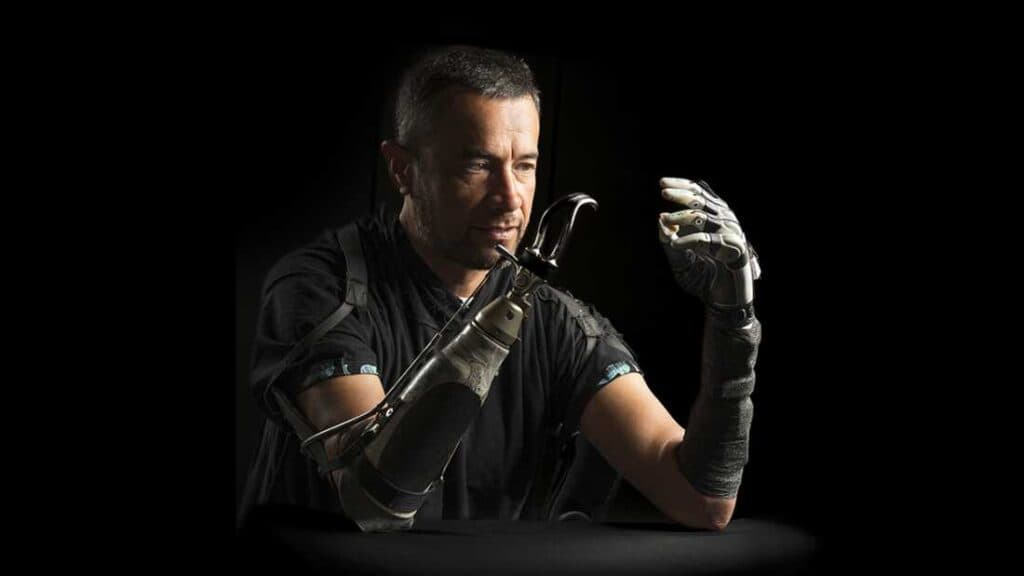
The research team modified an existing TASKA Prosthetics hand with custom fingertips.
These fingertips feature optical proximity sensors and pressure detectors.
The sensors are sensitive enough to detect even a cotton ball landing on the fingers.
These distributed sensors provide rich data for an AI-driven neural network.
The AI can predict and adjust each finger's movement automatically.
Fingers operate in parallel to maintain object stability and security.
This sensor-rich approach is superior to camera-based alternatives in energy efficiency.
The system provides multi-angle perception that mimics human tactile feedback.
This represents a fundamental shift from user-controlled to shared autonomy.
The device assists the user rather than requiring constant direction.
Clinical Testing Results
Clinical testing with four transradial amputees demonstrated remarkable improvements.
“Researchers at the University of Utah are using artificial intelligence (AI) to make bionic hands more intuitive, giving them something closer to a mind of their own”
Participants completed everyday activities requiring little to no training.
Test subjects successfully performed tasks like drinking from cups.
They also picked up small objects using the AI-assisted prosthesis.
The prosthesis automatically adjusted finger positioning to maintain secure grips.
The shared-control system blends human and AI inputs.
This allows assistance without overriding the user's intent when releasing objects.
Unlike previous systems, this approach requires no extensive learning period.
Users don't need constant mental attention while using the device.
The system restores intuitive control by offloading fine-motor adjustments.
As one researcher noted, simple tasks become simple again.
This changes the experience from conscious effort to natural interaction.
Neural Interface Future
The Utah NeuroRobotics Lab is pursuing next-generation neural interfaces.
These interfaces would enable thought-based control while restoring tactile feedback.
Current research blends enhanced sensors with neural interfaces.
Users could control prostheses directly with their thoughts.
They would receive sensory feedback from the device simultaneously.
George explained the team plans adaptive algorithms for real-time learning.
These algorithms would evolve as users interact with different scenarios.
This creates a symbiotic relationship between human and machine.
Current experiments avoided changing behavior during initial learning.
This prevented confusion for new users.
Future iterations will incorporate continuous learning capabilities.
This evolution eliminates the distinction between natural and artificial body parts.
Clinical Implications
The broader implications extend beyond individual users to clinical practice.
“A University of Utah team merges artificial intelligence and advanced sensors to deliver more intuitive, precise prosthetic hand control for amputees, reducing cognitive strain and improving daily life”
The technology could transform prosthetic rehabilitation approaches.
Reduced training requirements make devices more intuitive for clinicians.
Prosthetic hands feel like natural extensions rather than cumbersome tools.
Success in addressing abandonment could increase acceptance rates.
This leads to better quality of life outcomes for amputees.
Improved functional independence is another key benefit.
As technology matures, greater dexterity and user satisfaction will follow.
This revolutionizes how rehabilitation specialists approach upper limb prosthetics.
The dream of genuine embodiment appears increasingly attainable.
This involves convergence of AI, advanced sensing, and neuroscience research.
The distinction between machine and self may disappear.
More on Technology and Science
ByteDance Halts Seedance 2.0 Global Launch Over Copyright Disputes
12 sources compared

Blizzard Bomb Cyclone Batters Midwest, Triggers Widespread Power Outages
10 sources compared

Apple Cuts China App Store Commissions to 25% After Regulator Pressure
25 sources compared

FBI Investigates Hacker Who Uploaded Malware-Laced Games to Steam
12 sources compared