South America20 May, 20263 min read
Uruguay Confronts Plan Condor After 1976 Murders Of Zelmar Michelini And Héctor Gutiérrez Ruiz
This article is an automated aggregation of coverage from news outlets. Our editorials offer in-depth analysis curated by the NewsCord team.
Uruguay confronts Plan Condor crimes, marching for answers. 1976 killings in Buenos Aires anchor Uruguay's Condor-era reckoning.

Uruguay’s Condor wounds
Uruguay still confronts Plan Condor’s unfinished wound after the May 20, 1976 murders of Zelmar Michelini and Héctor Gutiérrez Ruiz in Buenos Aires alongside Rosario Barredo and William Whitelaw. In interviews with EFE in Montevideo, Santiago Gutiérrez described the killings as “the assassination of the formal party system” in Uruguay, while Rafael Michelini said they were “the beginning of the end” of the civic-military dictatorship that ruled the country from 1973 to 1985. Rafael Michelini told EFE that the murderers sought to transmit that “no one was safe from terror,” and he said his father, Gutiérrez Ruiz, Barredo, and Whitelaw were killed by the Uruguayan dictatorship.
The article links the murders to a wider pattern of repression across borders, describing Plan Condor as coordinated surveillance, kidnapping, torture, and murder, and it notes that Chile, Argentina, Uruguay, Paraguay, Bolivia, and Brazil shared intelligence and repression under Cold War anti-communism. It also frames the stakes for Uruguay’s democracy through the memory of the disappeared, saying the danger for a post-dictatorship society is not only denial but “fatigue.”
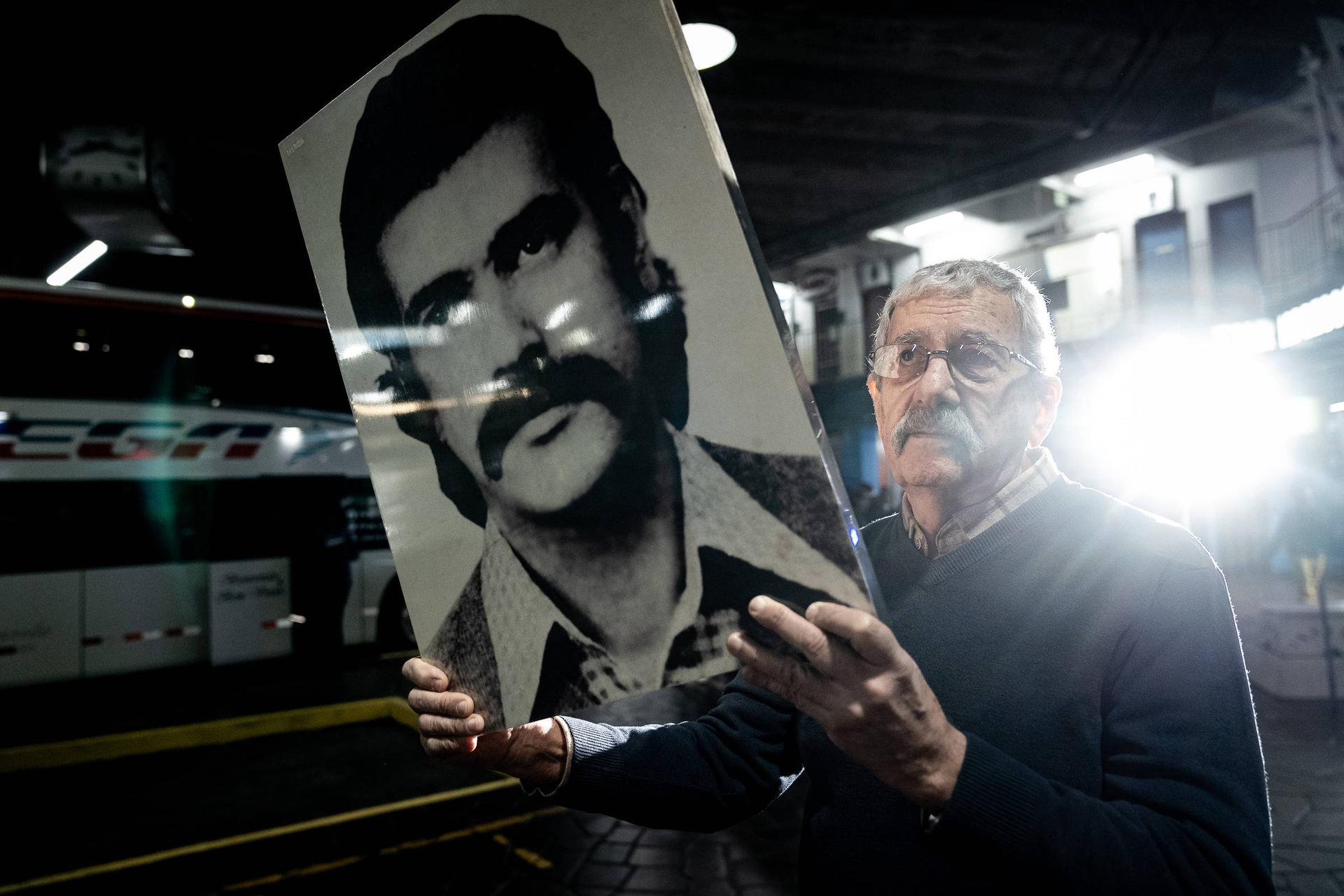
Marcha do Silêncio
Horácio Goicoechea, 83, a Uruguayan born in Paso de los Toros, said he has waited for answers since 1977 after his younger brother, Gustavo Goycoechea Camacho, was missing. He described how, in the early hours of December 23, armed men invaded the place where Gustavo lived with his wife, Graciela Basualdo, and their two-year-old son in Buenos Aires, and how neighbors were ordered to switch off the lights and go back to sleep at gunpoint. Goicoechea said he decided in 2023 to represent the family at the Marcha do Silêncio, a protest that every May 20 gathers a crowd on Avenida 18 de Julio in Montevideo asking where the disappeared are.
This year, in its 31st edition, the list gained eight more names and now recognizes 205 people, while the article says Famidesa continues to include 43 cases clarified over the years through identification of remains in excavations or other forms of investigation. On Thursday the 14th, the National Institution of Human Rights and the People’s Defender (INDDHH) announced it is handling 243 reports of forced disappearances for political reasons that occurred between 1968 and 1985, including years before the dictatorship was installed in Uruguay.

Peñarol fans and detention
In Brazil, Ezequiel, 29, and Alexis, 20, remain in pretrial detention for two months after traveling to support Peñarol during the club's away leg against Botafogo in the Libertadores Cup.
“‘The holidays are very hard for them. They are without their families.”
Subrayado reported that this Friday, December 27, marks 65 days since their detentions, and relatives and friends demonstrated in front of the Foreign Ministry in downtown Montevideo seeking answers and asking to be received by the minister.
Yaquelín said her son celebrated his birthday on November 20 while imprisoned in Brazil, and Leticia, Alexis’s mother, said, “The holidays are very hard for them. They are without their families.”
Miguel, father of one of the people who is free but cannot leave Brazil due to a court order, said, “We do not see the Foreign Ministry showing concern about such an incident,” and he described that “Many of the guys went to take a photo (...) and when they returned they were ambushed.”
The article says there are 19 detainees and that Miguel claimed there is “a pending response from the State for the mothers, and for the other families waiting for the return of our friends and brothers.”