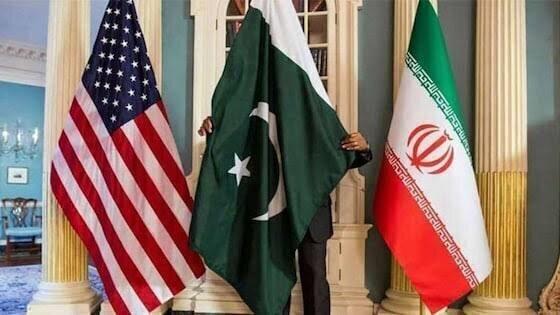
U.S. And Iran Sign War-Ending Memorandum At Buergenstock In Switzerland On June 19
Key Takeaways
- Memorandum aims to end the U.S.-Iran war and launch 60 days of negotiations.
- Signing venue disputed: Buergenstock resort vs Geneva, with Pakistan hosting.
- Deal halts hostilities immediately and seeks reopening the Strait of Hormuz.
Switzerland signing set
The United States and Iran are scheduled to sign a memorandum of understanding aimed at ending their war on Friday, June 19, at Buergenstock in the canton of Nidwalden in central Switzerland, according to a statement issued by the Swiss government.
“An interim US-Iran accord aimed at ending their war could be signed on Friday at the Buergenstock mountaintop resort in central Switzerland, according to a statement issued by the Swiss government”
The Swiss foreign ministry said the location was proposed by Pakistani and Qatari mediators as well as by the US and Iran, and it said Iran and the United States had already signed the preliminary agreement digitally.

Iranian Foreign Minister Abbas Araghchi said a further round of negotiations is due to begin immediately after the signing on Friday, and he said the talks should be concluded within 60 days.
On the U.S. side, President Donald Trump said on Monday that Vice President JD Vance would travel to Switzerland for the signing, while Iran’s Deputy Foreign Minister Majid Takht-Ravanchi said parliamentary Speaker and chief negotiator Mohammad Bagher Ghalibaf is to attend.
The framework agreement is described as being due to be signed at a hotel overlooking Lake Lucerne, which previously hosted a conference on Ukraine in 2024, and it is intended to end the war launched by the US and Israel at the end of February.
Hormuz, blockade, and disputes
A U.S.-Iran memorandum of understanding is also tied to reopening the Strait of Hormuz and keeping traffic toll-free for 60 days, with Yonhap reporting that senior U.S. officials said the MOU states the strait will be open toll-free for 60 days.
Yonhap quoted a U.S. official saying, "The strait will be open toll-free for 60 days, and we expect that to become part of the final agreement as well," while another official said traffic would increase and that there may not be a "return to normal" in the next two weeks.

In Israel, the proposed U.S.-Iran cease-fire drew backlash, with the New York Post reporting that critics warned the deal could undermine Israel’s military campaign and leave security concerns posed by Tehran unaddressed.
The New York Post said the Israeli newspaper Yediot Aharonot described the agreement as a "bad deal," and it added that Trump told Fox News’ chief foreign correspondent Trey Yingst that he asked Israeli leader Benjamin Netanyahu, "What the f–k are you doing?" in response to the strikes.
The Fox News liveblog also reported that Israel Defense Minister Israel Katz said Israeli forces would remain in Lebanon, Syria and the Gaza Strip "indefinitely" and warned Iran against retaliating for recent Israeli strikes in Lebanon, hours after the MOU announcement.
What comes next
The agreement’s immediate operational impact is framed around a 60-day window for negotiations, with Al Jazeera saying the MoU would end weeks of war and start 60 days of negotiations in Geneva on Friday.
“The United States and Iran are to sign a memorandum of understanding (MoU), ending weeks of war and starting 60 days of negotiations, in the Swiss city of Geneva on Friday”
Al Jazeera also quoted Ian Lesser, distinguished fellow at the German Marshall Fund of the United States, saying, "Swiss neutrality, the presence of United Nations and multinational agencies" make Geneva an ideal location for such deals.
In the U.S.-Iran framework, the BBC reported that Pakistan’s Prime Minister Shehbaz Sharif said the signing ceremony would be held in Geneva on June 19 and that mediators would facilitate meetings this week ahead of technical talks and the formal signing ceremony.
The BBC also reported that Trump wrote on Truth Social that the deal with the Islamic Republic is now complete and stated that Hormuz would be opened without transit fees while the United States would immediately lift the naval blockade.
CNN Arabic reported that Israeli Defense Minister Israel Katz said his forces would not withdraw from southern Lebanon under the U.S.–Iran agreement, and it quoted the hardline Israeli National Security Minister Itamar Ben-Gvir saying, "the Trump agreement does not bind us, and Israel is not a partner in it, and it is not subordinate to the United States."
More on Iran

Purported U.S.-Iran Memorandum Of Understanding Circulates, Including Lebanon War End And Strait Reopening
12 sources compared

JD Vance Says Trump Could Give Iran Access To $300 Billion Reconstruction Fund
23 sources compared

Trump Says US-Iran Deal Is Signed, Reopens Strait of Hormuz by Friday
15 sources compared
Trump, Iran Sign Initial Deal To End War, Reopen Strait Of Hormuz
12 sources compared