U.S. and Israel Attack Iran
Key Takeaways
- Global oil briefly surged to nearly $120 per barrel before retreating.
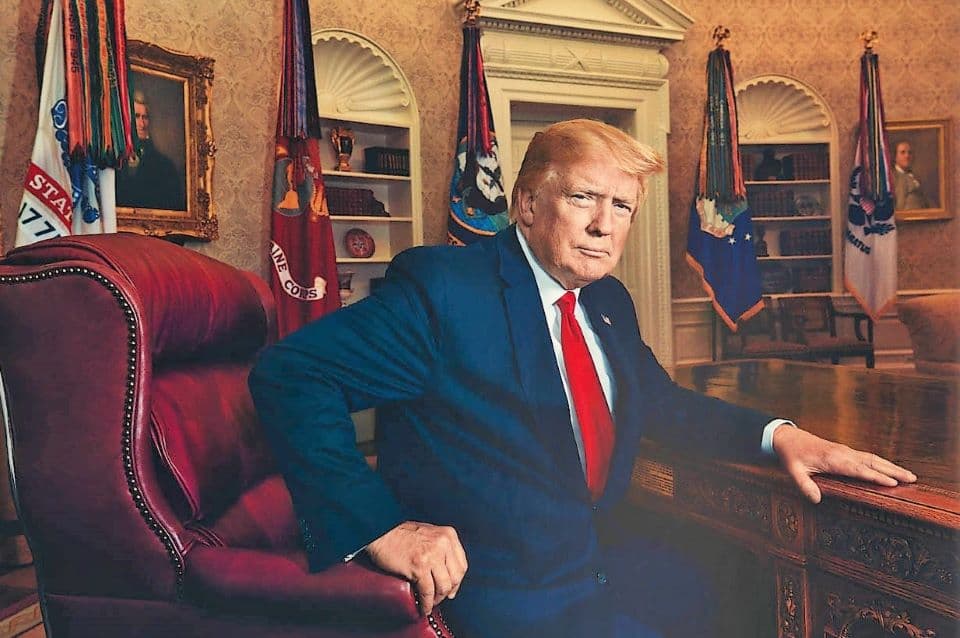
- US president Donald Trump claimed Iran had effectively lost its military capabilities.
- Trump's shifting signals briefly unsettled global markets and Asia's energy security.
Strikes ended talks
A US-Israeli air campaign against Iran began immediately after what Omani mediators described as a near-breakthrough in nuclear negotiations, sharply collapsing diplomatic efforts that had been scheduled to continue.
“Global oil markets briefly surged to nearly $120 a barrel on Monday before retreating after remarks by Donald Trump suggested that the conflict between the United States, Israel and Iran might soon wind down”
Only two weeks before the strikes began, Iranian officials were engaged in negotiations with the United States over the country’s nuclear program, and a fourth round of negotiations had been scheduled to finalize the agreement.
Instead, the US-Israeli air campaign began the following day, a timing that Iranian leaders said reinforced deep suspicion about American diplomacy and echoed earlier incidents when talks fell apart amid military action.
Talks' proposed terms
Omani officials had publicly presented the talks as approaching a concrete deal: Badr Albusaidi, Oman's foreign minister, announced a tentative understanding in which Iran would accept strict limits and verification on enrichment.
According to Omani officials, Iran had agreed to never stockpile enriched uranium and to accept full verification by the International Atomic Energy Agency.
Under the proposed framework Iran would also downgrade its enriched uranium to the lowest possible level to address Western proliferation concerns.
Iran's political shift
Iran's internal political landscape hardened after the assassination of its supreme leader, accelerating consolidation by hardline factions and complicating any swift return to diplomacy.
“Global oil markets briefly surged to nearly $120 a barrel on Monday before retreating after remarks by Donald Trump suggested that the conflict between the United States, Israel and Iran might soon wind down”
The assassination prompted the clerical establishment to appoint his son, Mojtaba Khamenei, as supreme leader, and analysts say the new leadership is unlikely to return quickly to negotiations with Washington given widespread perceptions that diplomacy has been used as cover for military escalation.
Tehran has publicly ruled out a ceasefire or surrender while attacks continue.
Destroyed diplomacy
Diplomatic channels and verification mechanisms that underpinned years of negotiation have been severely damaged, leaving little institutional route back to talks.
Even if leaders wished to reopen diplomacy, much of the diplomatic infrastructure that previously supported negotiations has been destroyed; the Omani mediation channel has effectively collapsed, many negotiators are dead, and verification frameworks built over years of diplomacy have been dismantled by the conflict.
U.S. political economics
Beyond the battlefield, economic and political pressures are shaping Washington's constraints: analysts say domestic political pressure in the United States is unlikely to spike unless American casualties rise sharply, while global oil prices and financial markets could exert more decisive influence.
“Global oil markets briefly surged to nearly $120 a barrel on Monday before retreating after remarks by Donald Trump suggested that the conflict between the United States, Israel and Iran might soon wind down”
Political analysts note that domestic pressure is unlikely to intensify unless American casualties increase dramatically, while oil prices above $100 per barrel threaten to push global inflation higher and analysts at Goldman Sachs estimate a prolonged conflict could drive US inflation back toward 3 percent or higher.
A sustained spike in energy costs would pose a political risk for the Trump administration ahead of the 2026 midterms, and financial markets may therefore become a more decisive constraint than congressional oversight or public protest.
More on Iran

Iran Wounds About 140 U.S. Troops Since War's Start, Pentagon Says
11 sources compared

US Strikes Injure About 140 Troops as Hegseth Vows Most Intense Day Yet of Attacks
15 sources compared

US Destroys Iran Mine-Laying Vessels in 'Most Intense Day' of Strikes
11 sources compared

US Vows Most Intense Day of Strikes Inside Iran, Hegseth Says
15 sources compared