
U.S. Charges Sinaloa Governor Rubén Rocha Moya With Drug Trafficking, Weapons Offenses
Key Takeaways
- Rubén Rocha Moya, Sinaloa governor, charged with drug trafficking and weapons offenses.
- Indictment unsealed in New York accuses him and nine officials of aiding illicit narcotics imports.
- Charges allege collaboration with the Sinaloa Cartel, including bribery and political support.
Indictment in New York
A U.S. indictment unsealed Wednesday in New York accused the governor of Mexico’s Sinaloa state and nine other current and former Mexican officials of aiding drug trafficking and weapons offenses, with prosecutors alleging they helped the “massive importation of illicit narcotics into the United States.”
“NEW YORK -- The governor of Sinaloa and nine other current and former Mexican officials were charged with drug trafficking and weapons offenses in a U”
The Associated Press reported that the governor of Sinaloa, Rubén Rocha Moya, 76, was among the 10 defendants charged in Manhattan federal court, and that charges against him included “narcotics importation conspiracy and possession of machine guns and destructive devices.”

The BBC similarly described the indictment as charging Rocha alongside nine other current and former Mexican government officials, and said the indictment claims elected leaders “conspired with leaders of the Sinaloa Cartel to import massive quantities of narcotics into the United States in exchange for political support and bribes.”
CBS News said the indictment was unsealed Wednesday in New York and that the charges against Rocha included narcotics importation conspiracy and possession of machine guns and destructive devices, plus “another conspiracy count.”
If convicted, CBS News reported Rocha could face “life in prison or a mandatory minimum of 40 years behind bars,” while the AP said the same potential penalties applied if convicted.
U.S. federal officials announced the charges in a news release, and none of the defendants were in custody, according to the AP and CBS News.
The AP also reported that Mexico’s government said it had received multiple extradition requests from the U.S. without identifying those requested, and it did not say how it would respond.
Alleged cartel ties
Prosecutors tied the accused officials to the Sinaloa Cartel faction known as “Los Chapitos,” which the AP said is run by the sons of Joaquín “El Chapo” Guzmán, the ex-cartel leader now serving a life sentence in a U.S. prison.
The AP reported that authorities said the defendants played critical roles in helping the cartel ship fentanyl, heroin, cocaine and methamphetamine from Mexico into the U.S., and that the Sinaloa Cartel is among eight Latin American crime groups designated as terrorist organizations by the U.S. government.
The BBC said the indictment claims Rocha abused his position as governor to protect one faction of the cartel, known as Los Chapitos, and it described the Sinaloa Cartel as “a designated terrorist organization that relies on corruption and bribery to drive violence and profit.”
In a statement, DEA Administrator Terrance Cole told the BBC that the group “used positions of trust to protect cartel operations, enabling a pipeline of deadly drugs into our country.”
U.S. Attorney Jay Clayton’s remarks were quoted by both the AP and BBC, including the line that “the Sinaloa Cartel, and other drug trafficking organisations like it, would not operate as freely or successfully without corrupt politicians and law enforcement officials on their payroll.”
The UPI report added that the Justice Department said all 10 suspects had “partnered with the Sinaloa Cartel to distribute massive quantities of narcotics to the United States,” and it described the cartel as “a ruthless criminal organization that has flooded this community with dangerous drugs for decades.”
Beyond the broad allegations, AZFamily’s report on the AP material said the indictment described “one Arizona incident that occurred in May 2022,” when U.S. law enforcement in Phoenix seized “189,000 fentanyl pills, 4.4 pounds of fentanyl powder, one pound of cocaine and 15 pounds of methamphetamine.”
Rocha rejects charges
Rocha and Mexican officials pushed back on the indictment, framing it as an attack on Mexico’s ruling party and on national sovereignty.
“NEW YORK (AP/AZFamily) — The governor of Sinaloa and nine other current and former Mexican officials were charged with drug trafficking and weapons offenses in a U”
The AP reported that Rocha “categorically and completely rejects” the accusations as baseless and called them an “attack” on Mexico’s ruling party and its leaders, quoting Rocha’s post on X: “It is part of a perverse strategy to violate (Mexico’s) constitutional order, specifically on national sovereignty, ” and “We will show them that this slander doesn’t have any sort of foundation.”
CBS News also quoted Rocha’s statement on social media, saying he “categorically and absolutely” rejects the charges and calling them an “attack,” and it repeated Rocha’s language about “a perverse strategy to violate the constitutional order” and “this slander doesn’t have any sort of foundation.”
The BBC reported that the Mexican government released a statement saying the U.S. documents requesting arrest and potential extradition lacked sufficient evidence, and it said the organization “do not include the elements of proof” against those whose arrest and eventual extradition was being requested.
The BBC added that the final decision would lie with the Attorney General’s office, according to the Mexican Foreign Ministry statement.
Fox News Digital described Mexico’s Secretariat of Foreign Affairs (SRE) firing back, saying the U.S. documents “do not have evidentiary elements” and that it forwarded the requests to Mexico’s Attorney General’s Office for evaluation of legal viability.
Fox News Digital also reported that Mexico sent a formal diplomatic reprimand called an “extrañamiento” to the U.S. Embassy to protest how the charges were publicized.
Diplomatic friction and stakes
The indictment landed in the middle of a broader dispute between Washington and Mexico over anti-corruption efforts and sovereignty, with U.S. officials describing an enforcement push and Mexico disputing the evidentiary basis.
The AP said the indictment unsealed Wednesday came as U.S. Ambassador to Mexico Ron Johnson last week said the U.S. administration would launch an anti-corruption campaign targeting Mexican officials he said were linked to organized crime, quoting Johnson: “Corruption not only hinders progress, it distorts it. It increases costs, weakens competition, and erodes the trust upon which markets depend. It is not a problem without victims.”
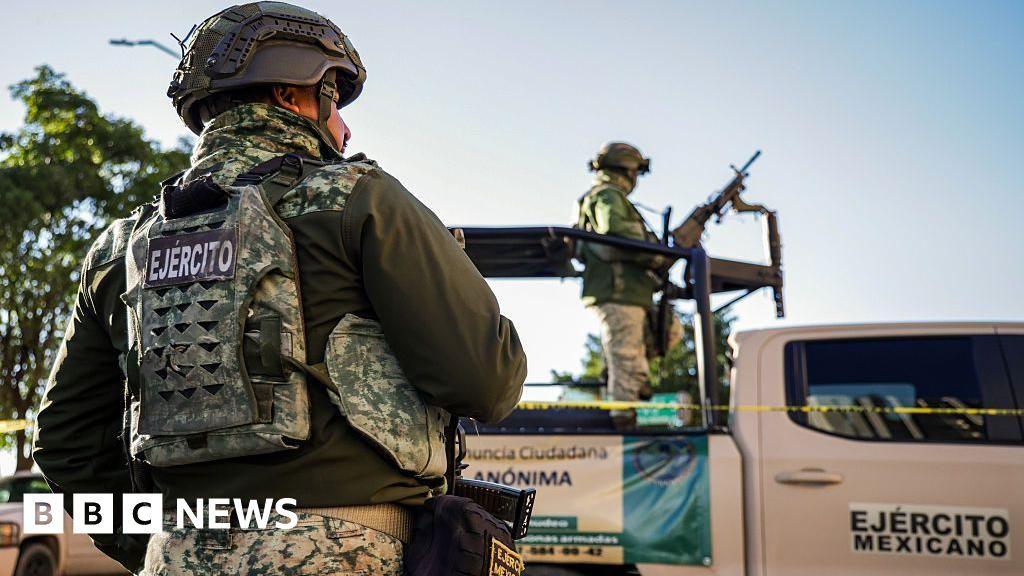
The AP reported that Sheinbaum responded Monday by saying her government has not seen “any evidence” of the charges of corruption, and it described the political conundrum for Sheinbaum because some defendants were members of Morena.
The BBC described the indictment as a “significant headache for President Sheinbaum” and said it represented a “latest step in an aggressive strategy by the Trump Administration to clamp down on drug cartels and official corruption in Mexico.”
Fox News Digital said Mexico criticized the U.S. decision to publicly announce the indictments, saying existing bilateral treaties mandate strict confidentiality, and it reported that Mexico’s SRE confirmed the U.S. Embassy received extradition requests Tuesday night but argued the documents lacked “evidentiary elements.”
Fox News Digital also quoted U.S. Ambassador Ron Johnson saying the embassy “takes note” of the unsealing of criminal charges and that “corruption that enables organized crime and harms both our countries will be investigated and prosecuted wherever U.S. jurisdiction applies.”
The stakes also include specific alleged conduct tied to U.S. law enforcement and cartel violence, with ABC7 Los Angeles reporting that the indictment said Juan Valenzuela Millan received “more than $1,600 every month” from the Chapitos in exchange for using the Culiacan Municipal Police to carry out arrests, kidnapings and murder.
Different outlets, different emphases
While the core allegation—U.S. charges against Rubén Rocha Moya and nine other Mexican officials for aiding the Sinaloa Cartel—was consistent across outlets, the reporting diverged in how it framed evidence, legal process, and the alleged mechanics of cartel influence.
“The governor of Sinaloa and nine other current and former Mexican officials were charged with drug trafficking and weapons offenses in a U”
The Associated Press emphasized the political conundrum for Claudia Sheinbaum because “Some officials were members of Mexico’s progressive ruling party, Morena,” and it described Rocha as a “staunch ally of Sheinbaum’s mentor, former President Andrés Manuel López Obrador,” while also noting Rocha’s denial that the accusations were baseless.

The BBC foregrounded the Mexican government’s response, saying the documents requesting arrest and extradition “lacked the sufficient evidence” and that they “do not include the elements of proof,” and it quoted DEA Administrator Terrance Cole calling the cartel a “designated terrorist organization” that “relies on corruption and bribery.”
CBS News, by contrast, highlighted the legal exposure and the timeline of the unsealed indictment, stating the charges were unsealed Wednesday in New York and that none of the defendants were in custody, while also repeating Rocha’s “categorically and absolutely” rejection.
UPI provided a more granular breakdown of charges and named additional defendants, including Juan Valenzuela Millan, aka Juanito, and said he faced “additional charges of kidnapping resulting in death and conspiracy to commit kidnapping resulting in death,” while also listing that “Each of the suspects face the same three charges.”
The Los Angeles Times described the indictment as a “34-page” document filed in U.S. District Court in New York and said it “outlines an alleged pattern of bribes, murders, kidnappings and other crimes linked to high-ranking lawmakers and security chiefs,” while also asserting that the indictment alleges the Chapitos helped Rocha Moya get elected by kidnapping and intimidating rivals.
AZFamily’s report, drawing from AP, added an Arizona-focused seizure narrative, stating that the indictment described a May 2022 Phoenix incident involving “189,000 fentanyl pills” and other quantities.
More on Crime
Beran A Pleads Guilty to Jihadist Plot Against Taylor Swift Concert in Vienna
12 sources compared
Beran A Pleads Guilty to Plotting Taylor Swift Concert Attack in Vienna
21 sources compared

89-Year-Old Gunman Opens Fire at Social Security Office and Courthouse in Athens
10 sources compared
Jay Bryant Pleads Guilty to Federal Murder Charge in Jam Master Jay 2002 Killing
14 sources compared