USA03 March, 20262 min read
US Department of State Orders Non‑Emergency Staff To Leave Six Arab Countries Amid Iran War
This article is an automated aggregation of coverage from news outlets. Our editorials offer in-depth analysis curated by the NewsCord team.
Ordered non-emergency U.S. personnel and family to leave Qatar, Kuwait, Bahrain, Iraq and Jordan Closed several U.S. diplomatic missions across the region, including the U.S. Mission to Saudi Arabia

16 outlets told this the same way.
Outlets did split on Trump Interrupted by Protesters at San Antonio Rally for Ken Paxton →
U.S. Middle East evacuations
On March 3, the U.S. Department of State ordered non-emergency U.S. government personnel and their family members to leave multiple Middle Eastern posts amid rising security concerns.
“The U.S. Department of State ordered non‑emergency staff at its missions in Kuwait, Iraq, the UAE, Qatar, Bahrain and Jordan to leave, citing a ‘threat of armed conflict’ and other security concerns, and urged U.S. citizens in those countries to follow local media and official U.S. alerts.”
Notices named Kuwait, Iraq, the United Arab Emirates, Qatar, Bahrain and Jordan, with some overlapping lists that include Qatar and Kuwait in others.
U.S. actions were described as prompted by a "threat of armed conflict" and escalating hostilities in the region.
U.S. diplomatic disruptions
The staffing changes have had concrete operational impacts.
The U.S. Embassy in Kuwait was closed “until further notice,” and consular appointments were canceled.

U.S. personnel were restricted from using Baghdad International Airport.
Several diplomatic missions across the region were shut or operating at reduced staffing.
The U.S. Mission in Saudi Arabia was reported closed after an attack, and Americans were advised to shelter in place.
Reporting on Iran strikes
U.S. officials and many outlets framed staff departures as linked to recent U.S.-Israeli strikes on Iran and ensuing Iranian retaliation. Reporting contains sharp and possibly conflicting claims about the strikes’ effects.
“The article links the moves to an ongoing U.S.-Israeli military campaign against Iran and reports that several senior Iranian officials — including Supreme Leader Ali Khamenei — were killed; that extraordinary claim is unverified here and should be checked against authoritative news and government sources.”
Some pieces include unverified assertions that Iran’s Supreme Leader Ali Khamenei and senior officials were killed. At least one source explicitly flags those extraordinary claims as unverified and in need of authoritative confirmation.
Escalation across the Gulf
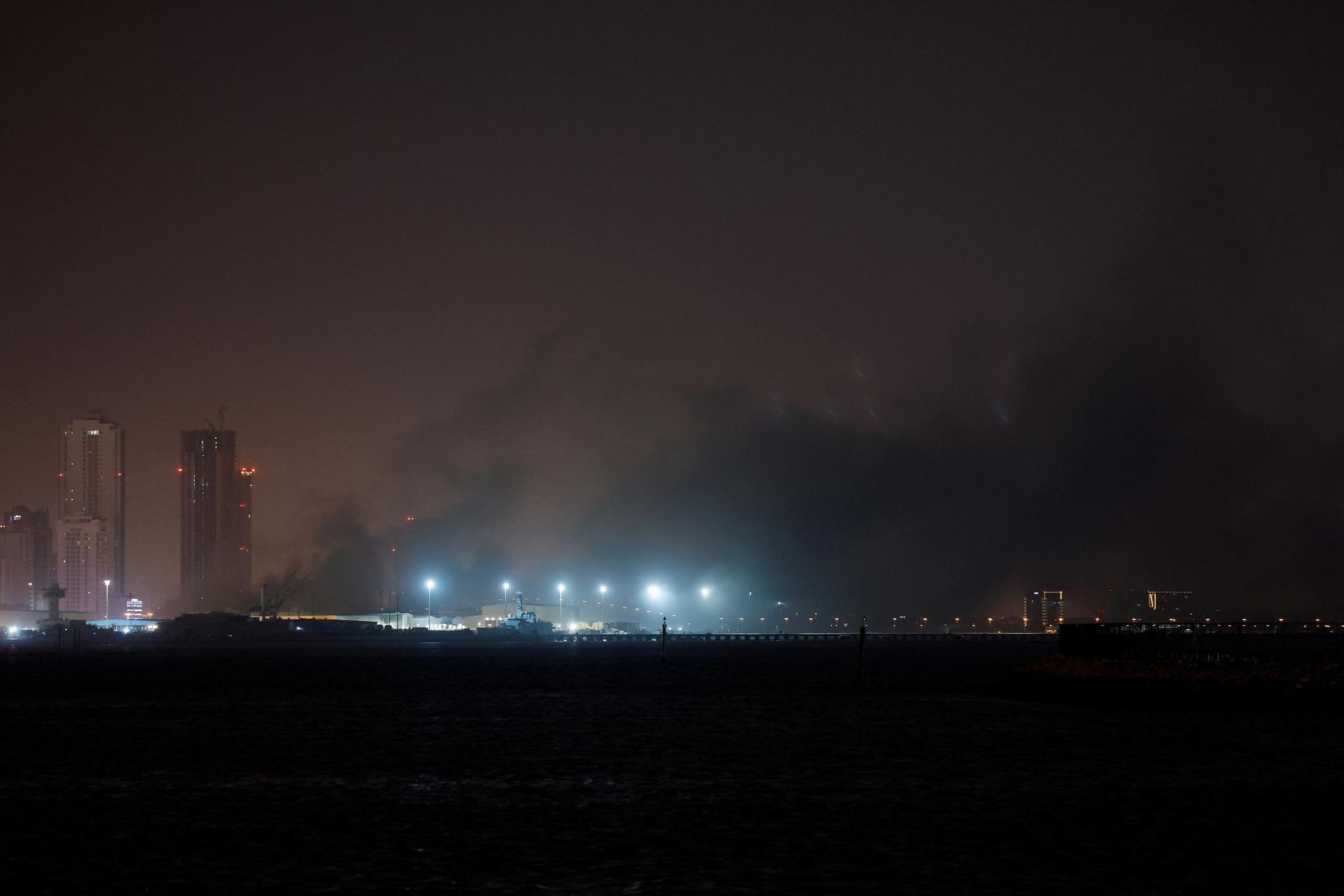
Departmental orders followed tangible escalatory incidents across the Gulf. Outlets reported Iranian strikes broadening to Gulf states that host U.S. forces. A Revolutionary Guard strike hit a U.S. air base in Bahrain.
A drone attack damaged a building in Manama. Pro‑Iranian protesters attempted to breach Baghdad’s Green Zone. Jordan said it intercepted more than a dozen missiles and temporarily evacuated some embassy staff.

Evacuations and legal concerns
Officials and commentators warn of broader consequences and limitations on U.S. assistance.
“The move, reported by Reuters, leaves only essential staff at those posts as officials reassess risks following Iranian retaliation after U.S.-Israeli strikes and amid fears of wider regional escalation. It follows a broader U.S. alert urging Americans to leave parts of the Middle East from Egypt eastward amid plans for intensified strikes on Iran.”
Travel alerts urged Americans to leave parts of the Middle East from Egypt eastward.
Some outlets said evacuation flights had not yet begun.
The U.S. Embassy in Israel said it could not evacuate or directly assist citizens and advised self‑planning.
International organizations raised humanitarian law concerns over reported strikes inside Iran.