
U.S. Deploys USS Tripoli With 3,500 Sailors, Marines To Signal Amphibious Escalation Toward Iran
Key Takeaways
- USS Tripoli arrived in CENTCOM area of responsibility in the Middle East.
- About 3,500 sailors and Marines aboard the Tripoli.
- Flagship for the Tripoli Amphibious Ready Group and 31st MEU.
Tripoli Arrival Signals Escalation
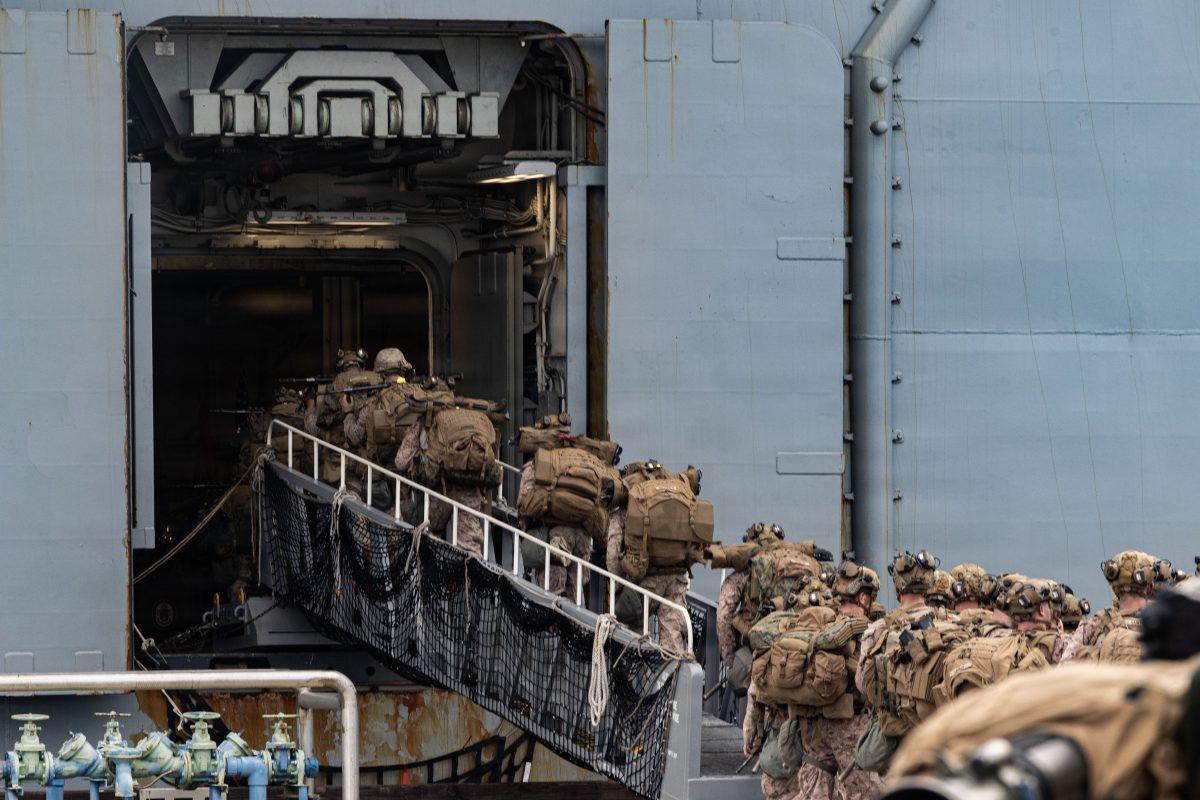
The USS Tripoli’s arrival in the U.S. Central Command area of responsibility, carrying roughly 3,500 sailors and Marines, marks a new, explicit forward amphibious presence in the West Asia theater.
“The United States Central Command (CENTCOM) announced the arrival of about 3,500 U”
CENTCOM described Tripoli as the flagship of the Tripoli Amphibious Ready Group/31st Marine Expeditionary Unit, equipped with transport and attack aircraft and other amphibious assets to project power and respond quickly to contingencies.

The deployment is part of a broader push that includes a Boxer ARG carrying thousands more Marines en route, signaling a scalable posture that could enable coastal operations, evacuations, or potential ground action if diplomacy fails.
The move signals a substantial escalation in the U.S. posture toward Iran and its allies, reflecting a willingness to mass amphibious and expeditionary power in the region.
Reports have floated the possibility of up to 10,000 additional ground troops, which would mark a major expansion of force options if the administration approves a larger deployment.
Plans and Posture: Ground Forces on the Table
The plan outlines include 2,500 Marines from the 31st MEU aboard the Tripoli, with additional Marine forces from San Diego en route and approximately 2,000 troops from the Army’s 82nd Airborne Division reportedly on the way.
The Pentagon reportedly is weighing plans to deploy up to 10,000 more ground troops, a move that could elevate the near-Iran force posture well beyond current contingents.

Some outlets frame the troop buildup as a precautionary step designed to preserve diplomatic options and deterrence, while others describe it as creating the option for a possible ground operation if diplomacy fails.
The broader context includes ongoing joint strikes with Israel against targets in Iran, and regional attacks that have targeted U.S. and allied bases, all contributing to a perception of intensifying risk in West Asia.
Non-Western sources emphasize that the strategic calculus includes the Strait of Hormuz and regional proxies, with some framing of these moves as a response to Tehran’s resistance and to protect supply routes.
Force Composition and Capabilities
The Tripoli Amphibious Ready Group/31st Marine Expeditionary Unit aboard the Tripoli is described as carrying transport and strike fighter aircraft, as well as amphibious assault and tactical assets.
The vessel is prepared to host a larger air wing, including F-35B stealth fighters and V-22 Osprey tiltrotor aircraft, expanding the range of offensive and defensive options available in the CENTCOM region.
Analysts note that the combination of amphibious assets and a forward air presence enhances the U.S. ability to secure coastal nodes, support evacuations, and potentially conduct ground operations if diplomacy collapses.
Other Western and non-Western outlets point to the Tripoli’s status as a flagship for an ARG/MEU, underscoring its role as a scalable, forward-deployed platform rather than a single, isolated ship.
Regional Reactions and Context
Iranian leadership framed their actions within Wave 85 operations and broader 'The Faithful Promise 4' campaigns alongside missiles and drones directed at U.S. and allied sites; Tasnim and related reports frame these actions as part of a retaliatory cycle in West Asia.
Arab and Asian outlets note the ongoing cross-border tension, including Iranian drone and missile strikes and Israeli actions against Iranian industrial facilities, creating an environment in which naval and air deployments are intended to deter or respond to perceived threats.
Western outlets report that attacks have targeted bases hosting U.S. forces and allied assets, contributing to a perception of expanding battlefield geography within West Asia and beyond the Strait of Hormuz.
The arrival of Tripoli, in this context, is read variously as deterrence, a signal of readiness for potential ground operations, and a flexible platform for reinforcing maritime security and evacuation capabilities if the crisis expands.
Implications for Public Understanding
The presence of the Tripoli, along with the Boxer group and potential 82nd Airborne forces, signals that the United States is maintaining option-based flexibility in West Asia while diplomacy unfolds.
“More than 3,500 personnel and strike aircraft are aboard the amphibious ship, signaling heightened US readiness in the region without revealing specific operational plans”
Sources describe a high-stakes environment in which the U.S. seeks to deter escalation, with feet-in-the-water posture that can quickly morph into ground action if diplomacy fails.

Non-Western outlets emphasize that strategic calculations include the Strait of Hormuz and regional proxies, implying that Triploli’s arrival is as much about maritime security as it is about potential land operations.
The mix of official statements and independent reporting suggests readers should watch for any shift in ground-force deployments or new ceasefire proposals that would recalibrate the risk balance in the region.
More on USA
Trump Signals U.S. Could Target Cuba, Hinting at Military Action
12 sources compared

Trump Signs Executive Action Redirecting Funds To Immediately Pay TSA Officers
57 sources compared

Vance Pledges To Drill Into Government UFO Files Within Three Years, Calls Them Demons
17 sources compared

House Republicans Pass Eight-Week DHS Funding Including ICE, CBP Through May 22
24 sources compared