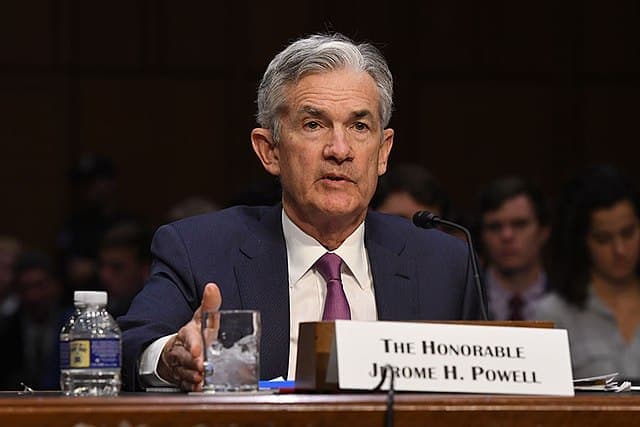
Federal judge blocks DOJ subpoenas involving Fed Chair Powell
Key Takeaways
- Judge quashes two DOJ subpoenas to Fed Board over Powell's $2.5B renovation testimony.
- Judge says subpoenas issued for improper purpose, to harass Powell.
- Powell-related DOJ probe suffers setback as subpoenas quashed; ruling unsealed Friday.
Judge Blocks Subpoenas
Federal Judge James Boasberg delivered a scathing rebuke to the Justice Department's investigation of Federal Reserve Chair Jerome Powell, blocking grand jury subpoenas as politically motivated harassment.
“The president has pushed for Powell's removal for months”
In a 27-page ruling, the Obama-appointed judge found 'abundant evidence' that the subpoenas were issued with the 'dominant (if not sole) purpose' of pressuring Powell either to yield to presidential demands or resign, rather than for legitimate law enforcement purposes.

Boasberg concluded that the government had produced 'essentially zero evidence' to support the criminal investigation, declaring its justifications 'so thin and unsubstantiated that the Court can only conclude that they are pretextual.'
The ruling specifically quashed two subpoenas seeking records about the Federal Reserve's $2.5 billion headquarters renovation project, which formed the basis of Powell's testimony to Congress last year.
Political Feud Context
The legal battle stems from a broader political feud between President Trump and Powell that has intensified since Trump's return to the White House in January 2025.
Trump has repeatedly demanded that Powell slash interest rates, calling him 'Too Late Powell' and threatening to remove him from his position despite his nomination during Trump's first term.

The investigation focused on Powell's June 2025 testimony to the Senate Banking Committee regarding cost overruns in the Fed's headquarters renovation project, which ballooned from an initial $1.9 billion estimate to $2.5 billion due to design changes and 'unforeseen conditions.'
Powell publicly revealed the DOJ investigation in January, calling it an 'unprecedented action' that should be seen in the context of 'the administration's threats and ongoing pressure' against the Federal Reserve's independence.
DOJ Response
The Justice Department's response to the ruling was swift and confrontational, with Acting U.S. Attorney Jeanine Pirro immediately denouncing Boasberg as an activist judge.
“Judge quashes subpoenas in Justice Department’s investigation of Fed chair Jerome Powell Judge quashes subpoenas in Justice Department’s investigation of Fed chair Jerome Powell WASHINGTON (AP) — A federal judge on Friday quashed Justice Department subpoenas issued to the Federal Reserve in January, a severe blow to an investigation that has already attracted strong criticism on Capitol Hill”
Pirro blasted the decision as 'without legal authority' and declared that 'Jerome Powell is now bathed in immunity,' while vowing to appeal the ruling to the D.C. Circuit Court.
She held an emergency news conference at the Department of Justice, calling the ruling a 'travesty of justice' that creates a 'special class' of citizen immune from the grand jury process.
Pirro's criticism was echoed by the administration's characterization of the investigation as legitimate, focusing on the potential misappropriation of billions in taxpayer-adjacent funds related to the Fed's renovation project.
However, key Republican lawmakers including Sen. Thom Tillis of North Carolina praised the ruling, calling it confirmation of 'how weak and frivolous the criminal investigation of Chairman Powell is and it is nothing more than a failed attack on Fed independence.'
Fed Independence
The ruling has significant implications for Federal Reserve independence, a cornerstone principle of American monetary policy that seeks to insulate central bank decisions from political influence.
The Federal Reserve is 'considered independent from the US political system, to avoid its decisions being wielded for political aims,' according to Al Jazeera's analysis.
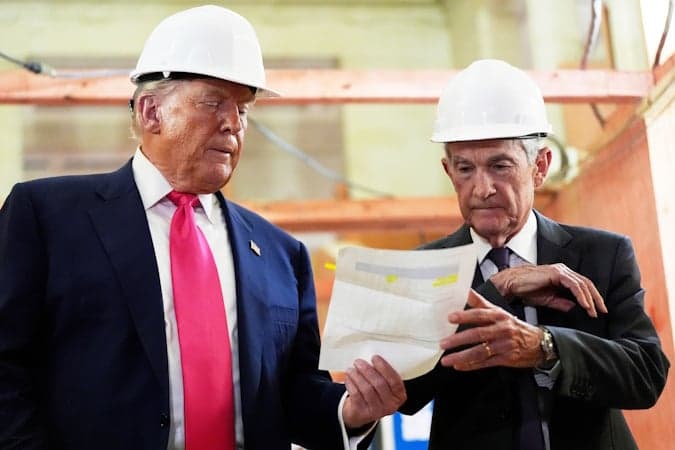
The judge's finding that the subpoenas were intended to pressure Powell into voting for lower interest rates highlights the administration's broader strategy to bring independent government institutions under executive control.
Economists have warned that Trump's demands for rapid interest rate cuts could undermine the value of the dollar and lead to long-term economic weakening, despite potential short-term stock market gains.
The case represents a critical test of whether the Federal Reserve can maintain its independence in the face of unprecedented presidential pressure, particularly as Powell's term as chairman expires in May and Trump has nominated former Fed governor Kevin Warsh to lead the central bank.