
U.S. House Extends FISA Section 702 Spy Powers Until April 30 After GOP Revolt
Key Takeaways
- House approves short-term extension of Section 702 surveillance until April 30.
- GOP revolt blocked a longer renewal, triggering the stopgap measure.
- Unanimous consent passed the extension; it now goes to the Senate.
Spy Powers Standoff
The U.S. House voted overnight Friday to extend Section 702 of the Foreign Intelligence Surveillance Act for two weeks, agreeing by unanimous consent to extend the program until April 30 after GOP infighting derailed longer renewals sought by President Donald Trump and Speaker Mike Johnson.
Politico reported that “House Republicans early Friday passed a short extension of key government spy powers after GOP infighting tanked a longer renewal sought by President Donald Trump and Speaker Mike Johnson,” and said the House agreed “to extend Section 702 of the Foreign Intelligence Surveillance Act, or FISA, until April 30.”
Axios similarly said, “The House voted overnight to extend Section 702 of the Foreign Intelligence Surveillance Act for two weeks after a bloc of 20 Republicans derailed a longer-term renewal,” and described the program as set to lapse Monday.
AP said the House approved “a short-term renewal until April 30” in a “post-midnight vote after Republicans revolted and refused President Donald Trump’s push for a longer extension,” and noted the House rushed back into session late Thursday.
AP also reported that “Shortly after 2 a.m. they quickly agreed to the 10-day extension,” while CBS News said the measure passed “in a post-midnight session by unanimous consent.”
CNN framed the same sequence as “The House agreed early Friday morning on a short-term extension of a critical foreign surveillance program after GOP leaders suffered a middle-of-the-night defeat in their attempt to renew it on a longer term basis,” and said the program was set to expire in three days.
Across outlets, the immediate next step was consistent: the extension “now heads to the Senate,” with Congress racing against the expiration date before the program lapses.
How the Fight Escalated
The House’s short-term extension came after multiple failed attempts to pass longer renewals of Section 702, with Politico describing “Earlier in the morning GOP hard-liners tanked attempts to pass five-year and 18-month renewals.”
Axios said the revolt was “a significant setback for House Speaker Mike Johnson (R-La.) and the White House,” and described how leadership “couldn't muscle the longer extension despite an aggressive whip effort.”
AP reported that lawmakers first unveiled a new plan that would have extended the program for five years “with revisions,” then tried to salvage a shorter 18-month renewal that Trump had demanded and Johnson had previously backed.
CNN said the deal leadership negotiated “would have extended the nation’s spy powers for five years with some changes to the program,” but that “Instead, Speaker Mike Johnson and his team were forced to pivot at the last minute to a short-term patch after two embarrassing floor defeats on the long-term plan.”
NPR added that “Earlier in the morning GOP leaders had pushed for either a five-year renewal or the 18-month renewal President Trump had demanded, but both votes tanked,” and said Section 702 “was set to expire Monday.”
The timeline also included procedural maneuvering and late-night negotiations, with Politico noting that “The House agreed by unanimous consent to extend Section 702…until April 30” after “Earlier in the morning GOP hard-liners tanked attempts” at longer renewals.
Tampa Free Press described the collapse as a “Midnight Meltdown” that forced a “frantic pivot,” resulting in “a stopgap measure passed by unanimous consent at 2:09 a.m. that keeps the lights on only until April 30.”
The Hill described the lead-up as leaders moving forward on “a last-minute, late-night compromise” after Trump called for “unify” and pass “clean” 18-month reauthorization, while Freedom Caucus members rebelled.
Voices From Both Sides
Speaker Mike Johnson portrayed the two-week extension as time to resolve “nuances” and “questions,” telling reporters, “We were very close tonight. There’s some nuances with the language, and some questions need to be answered, and we’ll get it done,” and adding, “The extension allows us the time to do that.”
“Skip to main content 3 hours ago - Politics & Policy House GOP rebellion derails FISA renewal Kate Santaliz email (opens in new window) sms (opens in new window) facebook (opens in new window) twitter (opens in new window) linkedin (opens in new window) bluesky (opens in new window) Add Axios as your preferred source to see more of our stories on Google”
Politico reported that Johnson said, “We were very close tonight,” and CNN quoted him saying, “We were very close tonight,” along with his view that “What we’re trying to do is thread the needle of ensuring that we have this essential tool to keep Americans safe, but also safeguard our constitutional rights and making sure that the abuses of FISA in the past are no longer possible.”
Democrats attacked the process as chaotic, with AP quoting Rep. Jim McGovern, D-Mass., saying, “Are you kidding me? Who the hell is running this place?”
CBS News similarly quoted McGovern asking, “Does anybody actually know what the hell is in this thing? ” and “Are you kidding me? Who the hell is running this place?”
The Hill quoted Rep. Jamie Raskin, D-Md., criticizing the warrant language as “This is supposed to be the big concession,” and saying, “The FBI will be the judge of its own warrant. In other words, we’re right back to the problem that got us here in the first place.”
On the Republican side, CNN quoted Rep. Andy Ogles leaving the floor at 1:30 a.m. ET saying, “Sh*t amendment. Sh*t rule.”
Trump’s pressure campaign was also reflected in the quotes, with The Hill reporting Trump wrote on Truth Social, “I am asking Republicans to UNIFY, and vote together on the test vote to bring a clean Bill to the floor,” and AP quoting Trump’s Truth Social message, “We need to stick together.”
The accounts also included national security framing from officials and lawmakers, with CNN quoting Sen. Angus King, saying, “FISA is the single most important national security asset we have in the intelligence field,” and with AP describing U.S. officials saying the authority is critical to disrupting “terrorist plots, cyber intrusions and foreign espionage.”
Numbers, Votes, and Divergent Framing
While the core outcome—an extension until April 30—was shared, the reporting diverged on the mechanics and vote arithmetic, and even on how long the stopgap was.
AP described “Shortly after 2 a.m. they quickly agreed to the 10-day extension,” while Politico and Axios both emphasized a two-week extension to April 30, and NPR said the House extended until April 30 after votes tanked earlier in the morning.

PIX11 reported that the House passed the short-term extension “pushing the deadline from April 20 to April 30,” and said the vote was “in a 200-220 vote at about 1:15 a.m. Friday morning,” with “12 Republicans voted with almost all Democrats against accepting the deal.”
PIX11 also described a procedural failure in “a 197-228 vote,” saying “20 Republicans voting against it and four Democrats” voted in a way it called “highly unusual.”
CNN described the long-term effort as collapsing after “two embarrassing floor defeats,” and said the program was set to expire in three days, while Tampa Free Press described a “stopgap measure passed by unanimous consent at 2:09 a.m.” that “keeps the lights on only until April 30.”
The Hill and Politico both described the underlying dispute as revolving around privacy protections and warrant requirements, but they framed the concessions differently: The Hill said the late Thursday bill “nodded to the warrant issue, restating many restrictions already in the law,” while Raskin said the language was “meaningless” because “The FBI will be the judge of its own warrant.”
NPR added a different consequence framing, saying that if FISA 702 lapses, “intelligence collection could continue but would likely be subject to lawsuits from the technology and telecommunications communications who are compelled to provide the communications to the government.”
CBS News emphasized the process criticism and quoted McGovern’s questions about what lawmakers were voting on, while Axios and Politico emphasized the GOP revolt as a setback for Johnson and the White House.
What Comes Next
The immediate stakes are tied to the Senate’s timeline and the risk of lapse, with multiple outlets stressing that the program expires Monday and that the Senate must act quickly.
“The House agreed early Friday morning on a short-term extension of a critical foreign surveillance program after GOP leaders suffered a middle-of-the-night defeat in their attempt to renew it on a longer term basis”
Axios said, “The measure now heads to the Senate with little time to spare before the program expires Monday,” and Politico similarly warned, “The measure now heads to the Senate, which faces a tight deadline before the program expires Monday.”
CNN said, “The measure to reauthorize FISA through April 30 now goes to the Senate before it can move to the president’s desk,” and described the program as “set to expire in three days.”
NPR stated that Section 702 “was set to expire Monday” and that the stopgap “now heads to the Senate.”
The consequences of failure were described in different ways: NPR said that if FISA 702 lapses, “intelligence collection could continue but would likely be subject to lawsuits,” while AP and CNN emphasized intelligence and national security needs, with AP saying U.S. officials say the authority is critical to disrupting “terrorist plots, cyber intrusions and foreign espionage.”
CNN also reported that Trump administration officials argued in conversations that “the country is at war and the national security program is paramount amid threats from Iran,” and CBS News said proponents stressed it was “imperative that it be kept in place as the war with Iran continues.”
The political stakes were also explicit in the quotes and framing: Politico said the vote’s failure “illustrates the growing likelihood that GOP leaders and Trump must agree to further changes” to secure Republican votes for a long-term extension.
Looking ahead, CNN quoted Sen. Angus King warning of the importance of the tool, saying, “FISA is the single most important national security asset we have in the intelligence field,” and said Democrats in the Senate were pushing for reauthorization while warning of “serious consequences” if FISA lapses.
More on USA
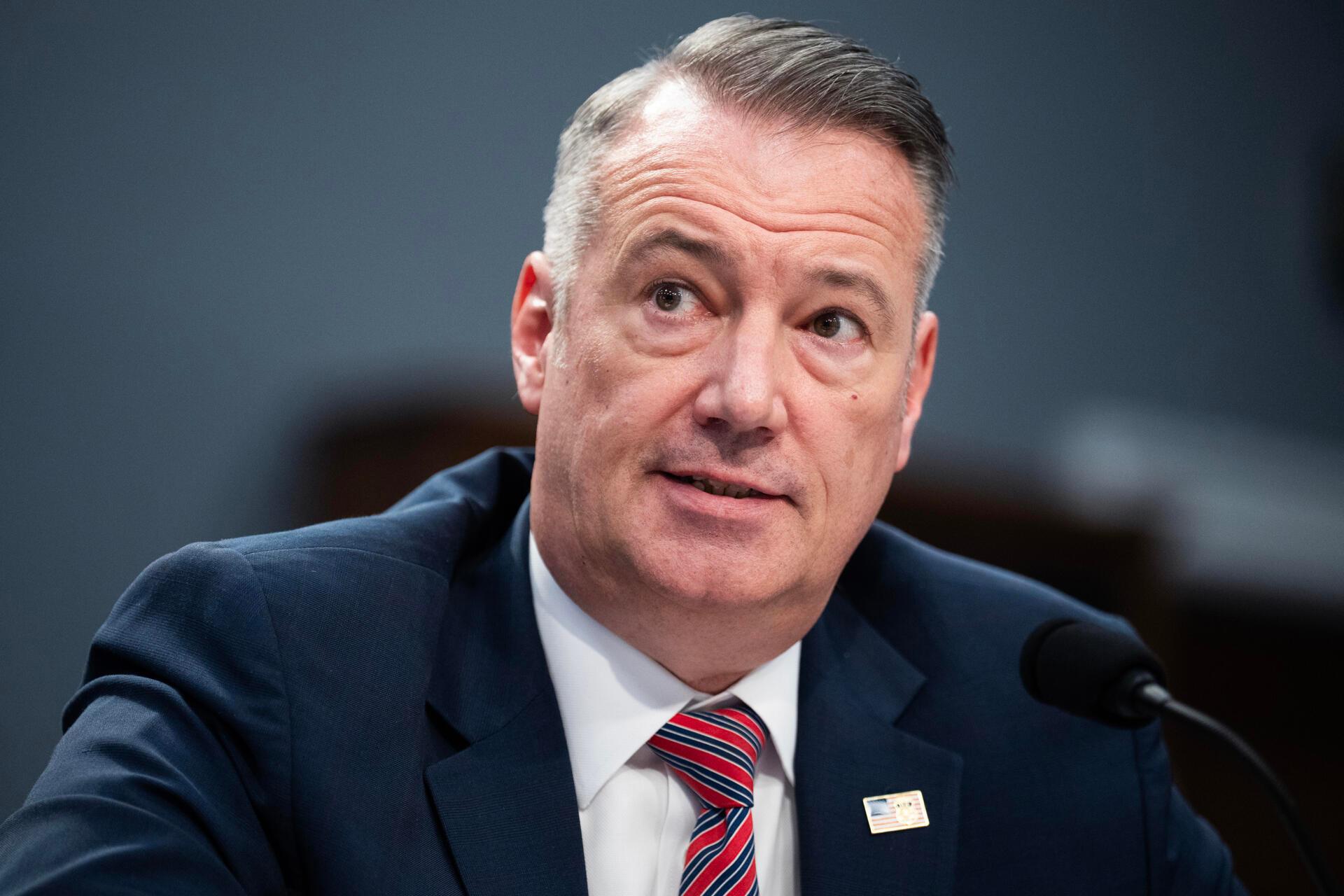
Todd Lyons Submits Resignation Letter to Homeland Security Secretary Markwayne Mullin
18 sources compared

Hennepin County Prosecutors Charge ICE Officer Gregory Donnell Morgan Jr. With Felony Assault
24 sources compared

Analilia Mejia Defeats Joe Hathaway in New Jersey 11th District Special Election
16 sources compared

Homeland Security Secretary Markwayne Mullin Announces Acting ICE Director Todd Lyons Resignation May 31
13 sources compared