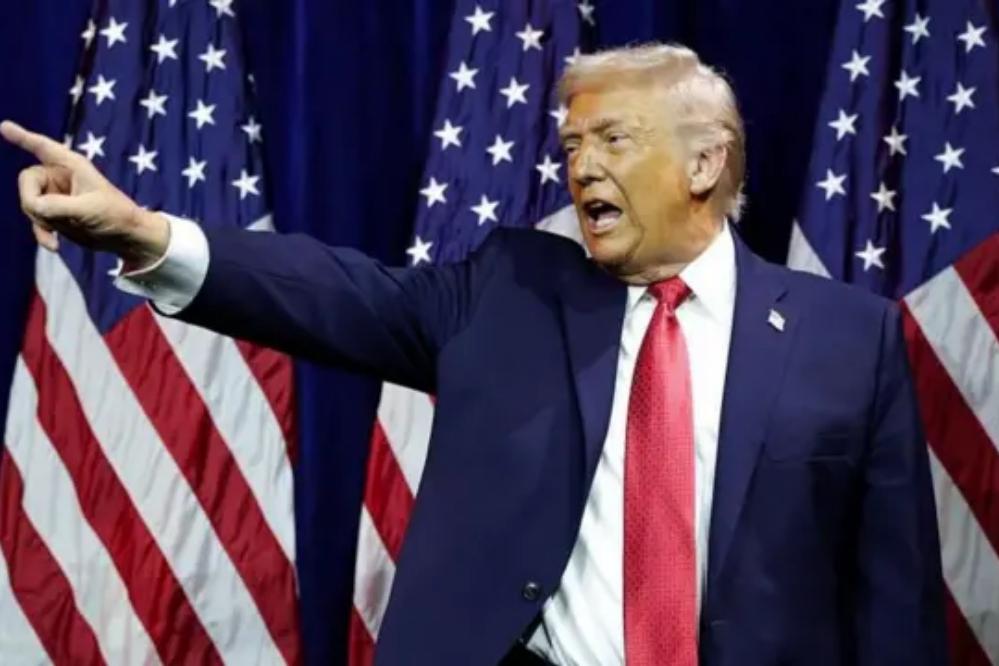
US House Passes War Powers Resolution Limiting Trump’s Iran War Powers 215-208
Key Takeaways
- House passes war powers resolution to end or restrict Trump's Iran actions without congressional authorization.
- Vote tally 215-208, with four Republicans joining Democrats.
- Represents a rare rebuke to Trump over Iran policy.
House rebukes Trump
The US House of Representatives passed a Democratic-led war powers resolution on Wednesday to limit President Donald Trump’s ability to continue the war with Iran, voting 215-208 with four Republicans joining all Democrats.
Trump hit back in a Truth Social post, writing: "Yesterday, in a meaningless vote, the House voted, 4 bad Republicans and all of the Dumocrats, to limit my War Powers".

The resolution would require Trump to withdraw US forces or seek congressional approval for the conflict, and CNN reported that it passed 215 to 208 with Republican Reps. Thomas Massie, Brian Fitzpatrick, Tom Barrett and Warren Davidson crossing party lines.
NBC News said the measure was offered by Rep. Gregory Meeks of New York and directed Trump to remove U.S. armed forces from hostilities with Iran unless Congress votes to declare war or authorizes using military force against it.
Michael Glennon, a professor at Tufts University, said the vote sent "a political impact" because Congress had gone on record that "the US armed forces need to be withdrawn from hostilities in the Persian Gulf."
Quotes and GOP splits
Trump attacked the four Republicans who joined Democrats, writing on Truth Social that "The four Republicans, that’s a whole other story - They’re GRANDSTANDERS!"
CNN reported that Tom Barrett said, "I think that people are frustrated, certainly," as he described the pain his constituents felt stemming from the war.

NBC News quoted Foreign Affairs Committee Chairman Brian Mast, R-Fla., calling the action "just a total BS vote," and saying it would "weakens the president’s hands as he’s negotiating with Iran."
In a separate framing, Al Jazeera said the House vote was "a stark rebuke against Trump’s decision" to join Israel in attacking Iran on February 28, launching an ongoing conflict.
Al Jazeera also reported that Thomas Massie posted that "The People’s House is sending a message: end this war," after he cosponsored the resolution opposing the war.
What happens next
The House vote sends the resolution to the Senate, where the Guardian said it was unclear whether the House version, a concurrent resolution, carries the force of law even if it also passes in the Senate.
NPR reported that even if the measure passed in Congress, it would almost certainly be vetoed by President Trump, whose administration has questioned the constitutionality of the War Powers Act.
The Guardian said the 1973 War Powers Resolution makes the 90-day threshold important because a president must seek congressional approval to continue waging war after hostilities have continued for that length of time.
NBC News said the resolution was mostly symbolic and would not immediately stop the war, but it would provide a symbolic — if not legal — step against further military action.
In the background of the vote, the BBC reported that the House measure was to adopt the war powers resolution, which would require Trump to withdraw US forces or seek congressional approval, while the White House dismissed its merits and described it as an unconstitutional attempt to restrict presidential power.
More on USA

Donald Trump Announces Promenade Connecting Lincoln Memorial to Potomac River in Washington, D.C.
11 sources compared

Senate Advances Immigration Bill After Republicans Remove $1bn for Trump White House Ballroom Security
15 sources compared

American Student James Weston Higginbotham Missing in Kyoto After Argument With Family Over Artificial Intelligence
20 sources compared

Obama Presidential Center Opens June 19 on Chicago’s South Side After $850 Million Project
16 sources compared